








Dried herbs for mice: scent, variety and something to search for
Mice discover their world mainly with their noses. A new scent in the enclosure is already a reason for them to start sniffing, dragging and nibbling. Dried herbs, flowers, vegetables and seeds are therefore a simple way to make your mice's life more varied. They provide variety in scent, taste and texture, without you having to overhaul the whole menu. Mouse food remains the basis; herbs are the small addition around it.
All the products in this category are from Zooply, our own premium brand. Zooply specialises in herbs and treats, because that is exactly where things most often go wrong for many animals. The range is wide in varieties, but for each variety we deliberately choose one quality. We use these herbs every day for our own animals in the shop and breeding facility.
In short
- ✓ Dried herbs are a natural addition, not a staple food; mouse food remains the basis.
- ✓ For a mouse a pinch is enough: think of a few leaves or flowers per mouse.
- ✓ Mix herbs through the food or hide them in the bedding for a treasure hunt.
- ✓ Change the variety regularly, so it stays interesting.
- ✓ Only give dried fruit and fatty seeds in very small amounts.
What will you find in the Dried herbs category?
Leafy herbs
Zooply Nettle Leaf, Dandelion Leaf, Ribwort Plantain, Birch Leaf, Lucerne, Parsley Stalks, Dill Stalks and Echinacea are dried leaves and stems, each with its own scent and texture. According to the product information most of them are sugar-free and can be given daily. Mice nibble on them a little, but also like to use leafy herbs to drag around and work into their nest. A small pinch at a time is enough.
Dried flowers
Zooply Chamomile, Marigold, Marigold Petals, Blue Cornflower, Rosebuds, Rose Petals and Sunflower Petals are light in texture and colourful. The Zooply Flower Mix and the Zooply Meadow Flower Mix combine several varieties in one bag; according to the product information the Meadow Flower Mix consists of marigold, chamomile, rose, cornflower and parsley. For mice, flowers are mainly interesting to smell and to mix through the nesting material.
Dried vegetables
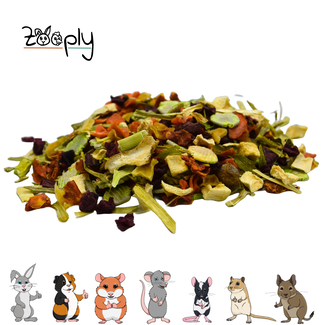
Zooply Carrot Slices, Carrot Pieces, Pumpkin, Parsnip, Beetroot, Bell Pepper, Spinach and Cucumber Slices are dried vegetables. For a mouse a small piece is enough. They are handy if you want to give your mice something other than seeds now and then, without working with fresh food that can go off in the nest. There are also mixed vegetable treats: the Zooply Vegetable Mix, Dutch Pot, Grandma's Vegetable Soup, Poké Bowl with Vegetables and the Salad Bar.
Flakes, grains and seeds
Zooply Corn Flakes, Wheat Flakes, Pea Flakes, the Flake Mix, Puffed Grains and Carob fit in well with what mice naturally eat. They are light and crunchy and easy to mix through the food or hide in the bedding. Zooply Sunflower Seeds, Pumpkin Seeds and Peanuts in Shell are rich in fat. Mice find them delicious, but a single seed per mouse is enough. You can break open a peanut in its shell, so your mice do not eat the whole peanut in one go. Zooply Linseed Chunks are a compact 500-gram addition with linseed.
Dried insects
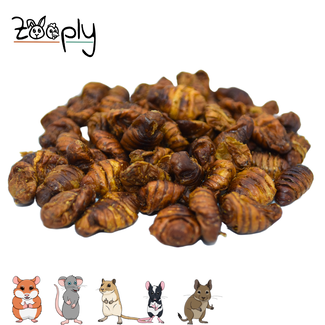
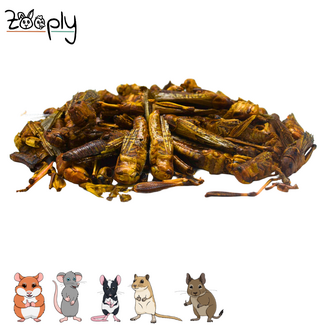
You will also find Zooply Mealworms, Crickets, Grasshoppers, Silkworms and the Zooply Insect Mix in this category. According to the product information the Insect Mix contains mealworms, silkworms, grasshoppers and crickets and is formulated for hamsters, rats, gerbils, mice and degus, among others. Insects provide animal protein, which mice need alongside their seeds. Give a small piece per mouse; break large insects into pieces first.
Dried fruit and seasonal mixes
There is a wide choice of dried fruit, such as Zooply Apple Slices, Apple Cubes, Banana Slices, Banana Pieces, Pear, Cranberry, Raspberry, Strawberry, Rowan Berries, Rosehip, Pineapple, Papaya and Coconut, and mixes such as the Fruit Mix, Yellow Fruit Mix, Red Fruit Mix, Vegetable and Fruit Mix and Vegetable & Fruit Pieces Mix. Fruit naturally contains sugar; that is why the product information for many Zooply fruits says "sugar-free: no". For mice, fruit is therefore a treat for now and then, in a piece the size of a seed. The Zooply Spring Mix, Summer Mix, Autumn Mix and Winter Mix and the Herb Dream combine vegetables, fruit, flakes and herbs by season.
How do you give dried herbs to mice?
Mice are small, so the amount is small too. A good rule of thumb: what you can pick up between your thumb and forefinger is already plenty for a small group of mice for a day. You can offer herbs in three ways.
Mixing through the food. Mix a pinch of leafy herbs or flowers through the daily portion of mouse food. The food then smells different and your mice search through it more actively.
Hiding in the bedding. Scatter a little through the top layer of bedding and lightly work it in. Your mice then have to sniff and dig, exactly the behaviour they show in the wild. This works well with flowers, flakes and a few seeds.
Putting by the nest. Put a small pinch of flowers or leafy herbs near the nest. Mice drag it inside themselves and work it into their nest. That way you have enrichment without adding a single extra calorie.
Which herbs suit mice best?
Mice are naturally seed and plant eaters that also eat insects. Leafy herbs, flowers, flakes and the occasional insect suit them best. They contain little sugar and give plenty of scent and texture. Dried vegetables are a good second choice. Fruit and fatty seeds are tasty, but belong among the exceptions: mice quickly become overweight if they get sweet or fatty extras every day.
It is better to alternate than to give everything at once. For example, choose chamomile and dandelion leaf this week, and marigold and lucerne next week. That way there is always something new to discover and you also see which varieties your mice appreciate most.
New on the menu? Start with a very small amount and see how your mice react. If their droppings stay normal and they eat their usual food well, you can keep giving it.
Storing herbs properly
The Zooply herbs come in a resealable bag. Press it firmly closed after use and store it dry, cool and dark. That way the scent and colour stay good for longer. Do not give herbs that feel clammy or smell musty any more. Also remove leftovers in the enclosure that have become wet, for example in a wee corner.
Useful combinations
Herbs work best in an enclosure that invites searching. These categories tie in with them:
- Mouse food: Zooply Mouse Food as the daily basis, with a pinch of herbs mixed through it.
- Bedding: a thick layer in which you can hide herbs and seeds.
- Dried flowers and grasses: for even more natural enrichment in the bedding.
- Nesting materials: mice love to mix flowers and leaves through their nest.
- Snacks: millet spray and the Zooply field range for extra foraging fun.
Frequently asked questions about dried herbs for mice
Do mice really eat dried herbs?
Partly. Mice nibble on leaves, flowers and flakes, but they also use herbs to drag around, work into their nest or keep in a little store. That is all normal. Even if not everything gets eaten, it has done its job: your mice have been busy smelling, searching and building.
How often can I give herbs?
According to the product information, leafy herbs and flowers can be given daily in a small amount. For mice, a pinch a day for the whole group is enough. Give fruit, nuts and fatty seeds a few times a week at most. Above all, watch that your mice keep eating their usual food well and do not get heavier.
Aren't these herbs mainly for rabbits and guinea pigs?
Many Zooply herbs are formulated for rabbits, guinea pigs and rodents together. They work just as well for mice; you just give much less. With mixed products, do check the contents: the Zooply Vitamin C Mix, for example, is mainly intended for guinea pigs, which cannot make vitamin C themselves. Mice make this vitamin themselves and do not need this mix.
Can I use herbs to tame my mice?
Yes, something with a clear scent works especially well, such as a flake, a piece of dried carrot or a single insect. Put it on your flat hand in the enclosure and let your mice come to you. Keep the pieces small: it is about trust, not about an extra meal.
Can I mix herbs through the nesting material?
Yes, as long as it is dry leaves and flowers. Mice do it themselves too when they get the chance. Do not put fruit or vegetables in the nest; they can attract moisture and go mouldy. Replace nesting material containing herbs in the same way as normal nesting material: only the wet or dirty parts.
Why does my mouse eat the fruit but not the leafy herbs?
Fruit is sweet and therefore more attractive to almost every mouse. If they already get fruit often, leafy herbs become less interesting. Leave the fruit out for a while and offer leafy herbs and flowers, for example hidden in the bedding. Most mice will then start nibbling on those too of their own accord.
Buying dried herbs for mice at Knaagplaza
At Knaagplaza, the webshop of 't Knaagplein, you will find a wide range of dried herbs, flowers, vegetables and seeds from Zooply, our own premium brand. We use them every day for our own animals. Give a pinch at a time, alternate and hide it where your mice have to search, and with very little effort you make their enclosure a lot more interesting.