




Gerbil enclosure: the foundation for burrowing group animals
Gerbils, also known as Mongolian gerbils, live in the wild in extensive tunnel systems underground. They dig, build chambers, drag nesting material around and come up to search for seeds. A good gerbil enclosure makes that behaviour possible. Above all, that means plenty of floor space and the possibility of a deep layer of bedding in which the tunnels hold their shape.
In this main category you will find everything to house your gerbils: permanent enclosures, runs for temporary use and terrariums. Whichever enclosure you choose, the furnishings make the difference. For our own animals we use Zooply, our own premium brand, for the bedding, the hay that holds the tunnels together and the bathing sand for coat care.
At a glance
- ✓ Choose an enclosure based on floor space and the height of the base, not on the number of levels.
- ✓ Provide at least about 20 cm of bedding, mixed with hay or straw.
- ✓ Keep gerbils in a pair or small group of the same sex and give them enough space together.
- ✓ A run is only for short-term use under supervision, never a replacement for the enclosure.
- ✓ Place the enclosure somewhere quiet, draught-free, out of full sun and not next to the radiator.
What will you find in the Cages category for gerbils?
Cages
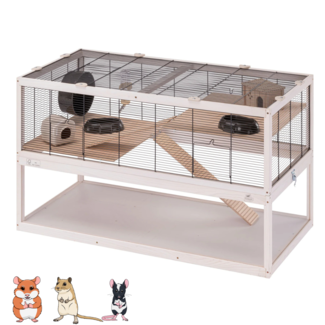
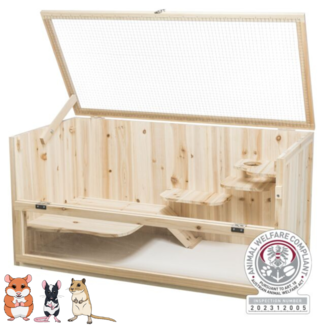
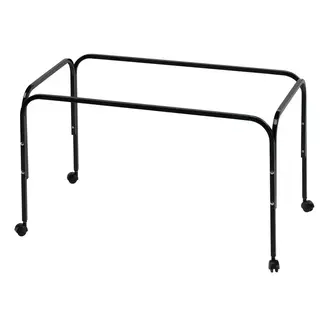
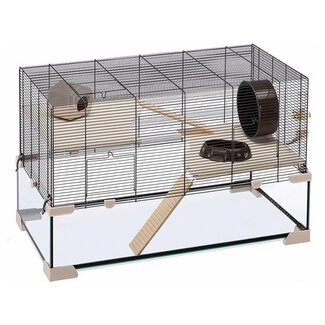
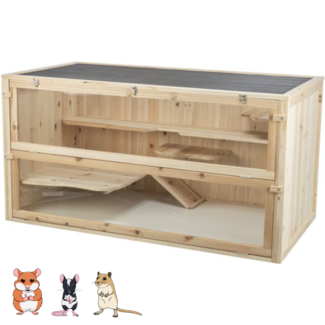
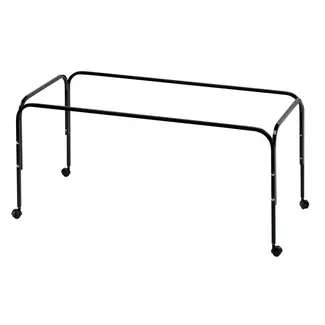
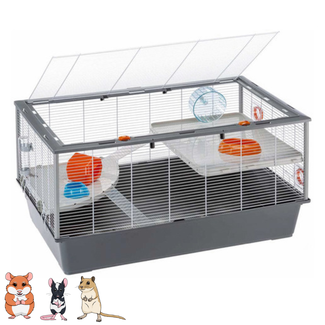
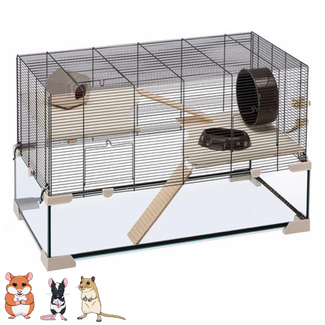
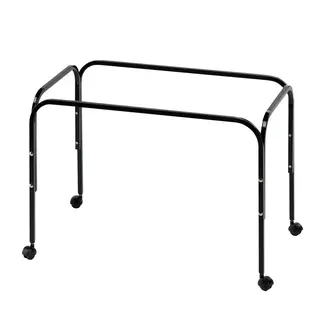
In the Cages subcategory you will find enclosures with a glass or acrylic base and wooden enclosures with acrylic, in lengths of roughly 80 to 120 cm. For gerbils, the larger models with a deep base are the most interesting, such as the Ferplast cages with an acrylic base of 100 and 120 cm and the spacious Trixie wooden enclosure of 115 × 60 × 60 cm. There are also matching stands on wheels for the Ferplast enclosures, so the enclosure stands at a comfortable viewing height and you can easily wheel it around.
Runs
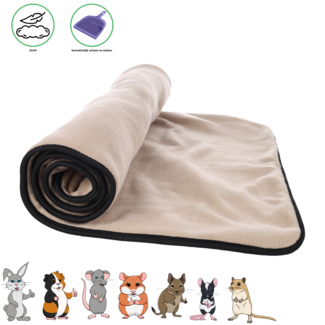
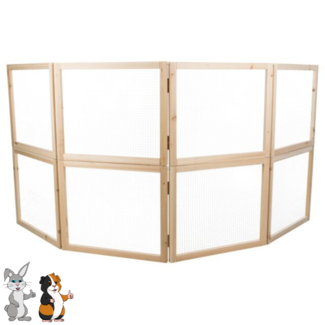
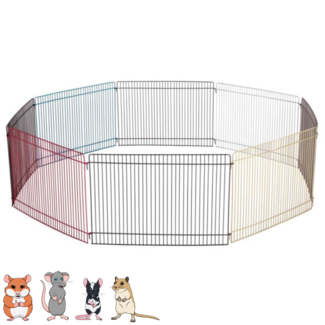
In the Runs subcategory you will find a metal playpen, a wooden indoor run and a fleece blanket. For gerbils, a run is only intended as a temporary, safe place, for example while you clean the enclosure. Gerbils are good at jumping, climbing and gnawing, so always stay with them.
Terrariums
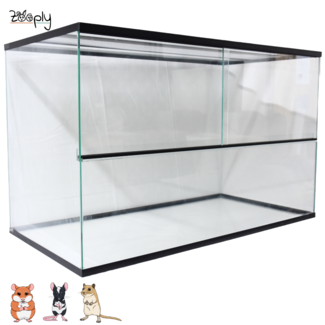
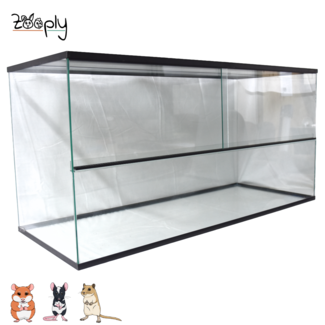
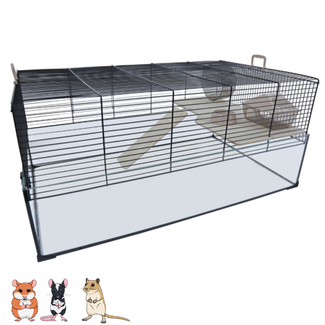
In the Terrariums subcategory you will find glass enclosures. A glass tank has solid walls, so the bedding stays inside. With any glass enclosure, make sure there is enough ventilation and never place it in the sun.
Why the digging layer is so important
A gerbil in an enclosure with a thin layer of sawdust cannot express its most important behaviour. You then often see gerbils digging against the glass in a corner for hours, chewing the bars or running back and forth restlessly. In an enclosure with a deep digging layer you see something completely different: gerbils disappear underground, build a nest, create storage chambers and come up relaxed to eat and play.
For such a digging layer you need an enclosure with a high, solid base, or a glass tank. An ordinary cage with a shallow plastic base is less suitable for gerbils. You cannot fill it deeply, and gerbils chew the plastic edges to pieces.
How do you choose the right enclosure?
Floor space
The bigger, the better. An enclosure from the shop is often the minimum. Gerbils use the floor to dig, run and create zones. With more floor space you have room for a deep digging corner, a sand bath, a wheel, hiding places and a feeding spot, without the enclosure becoming cluttered.
Material
Glass, acrylic and metal are sturdy and cannot be gnawed through. Wood looks natural, but gerbils gnaw it; check wooden edges and corners regularly. Plastic parts that gerbils can reach are the quickest to break.
Ventilation
Gerbils are desert animals that like it dry. An enclosure must be well ventilated, so moisture and odour can escape. Draughts are undesirable, though. A glass or acrylic base with bars or mesh above it combines those two well.
Accessibility
You want to be able to reach the food, the water and the sand bath without dismantling the whole enclosure. An enclosure with a large door at the front or a roof that opens completely makes daily care much easier.
Setting up a gerbil enclosure
Start with the floor: a deep layer of low-dust bedding with hay or straw mixed through it. Then put the fixed points in place: a sand bath with fine bathing sand, a wheel with a solid running surface on a firm base, a heavy food bowl and a water bottle with the spout well above the bedding. Provide at least one hiding place per gerbil and preferably one extra, and put down nesting material. In the main category Accessories you will find houses, tunnels, wheels and everything for gerbil scaping.
Preventing escapes
Gerbils are curious and will find any weak spot. With a new enclosure, check the bar spacing, how well the doors fit and the corners where the base and top section meet. Young gerbils are small and wriggle through openings an adult cannot get through. A glass tank without a top section needs a well-fitting, ventilated lid: gerbils are good jumpers, especially from a platform or a house standing close to the edge. So do not place tall items against the edge. And after cleaning, always check that everything is properly closed again.
The first week in a new enclosure
Set up the enclosure completely before your gerbils go in: bedding, hay, nesting material, hiding places, sand bath, food and water. Put the gerbils in together, with the transport box open on the floor, and let them come out by themselves. Give them peace and quiet for the first few days. They will start digging and building straight away, and that is exactly what you want to see. Do not rearrange the enclosure in that first week and give the food they were used to. After that you can calmly start taming by resting your hand in the enclosure and letting them come to you.
Location and surroundings
Gerbils are startled by loud noises and fast movements. Choose a quiet room where the enclosure stands stably, not next to the TV, speakers or a door that opens and closes often. Out of full sun, especially with a glass tank, and not next to the radiator. Gerbils are active in short bursts both during the day and at night, so a bedroom is less practical if you are a light sleeper.
Cleaning with respect for the tunnel system
Thanks to the dry droppings and the small amount of urine, a gerbil enclosure stays fresh for a long time. Remove wet patches and food leftovers in between and scoop the sand bath clean. Only do a big clean when it is really necessary, and then leave some of the clean, old bedding and nesting material behind. That way the familiar group scent is preserved and you keep the peace in the group.
Useful combinations
- Bedding: the digging layer and the nesting material, with Zooply as our own brand.
- Accessories: houses, tunnels, wheels, toys and gerbil scaping.
- Care & Grooming: food bowls, water bottles, transport boxes and sand baths.
- Hay: Zooply hay to mix through the bedding.
- Gerbil Food & Snacks: the daily diet for the new enclosure.
Frequently asked questions about gerbil enclosures
What is the best enclosure for gerbils?
The best enclosure is as large as possible, with a high, solid base that holds a deep layer of bedding. Whether that is a glass tank, a cage with a glass or acrylic base or a wooden enclosure with acrylic depends on your space and preference. More important than the type are the floor space, the digging depth, good ventilation and a secure closure.
How many gerbils can live together in one enclosure?
Gerbils are kept in a pair or a small group of the same sex that have been together from a young age. We advise against keeping a gerbil on its own. Every extra animal needs more space, more hiding places and more feeding spots. If you are unsure about the group size, feel free to ask us.
Can I keep a gerbil in a hamster cage?
Many enclosures are made for several species of small rodents. For gerbils, what matters most is whether you can fit a deep digging layer in it. A cage with a shallow plastic base, like many standard hamster cages have, is usually not suitable for that. An enclosure with a high glass or acrylic base is.
Do gerbils need a run?
No, a run is not a must. A roomy enclosure with good furnishings gives gerbils everything they need. A run is handy, though, as a temporary, safe place during cleaning, provided you stay with them the whole time.
How often should I clean a gerbil enclosure?
Remove wet patches and food leftovers in between, and scoop the sand bath clean regularly. A full clean is needed much less often than with other rodents, because gerbils pee very little. With a big clean, always leave some old, clean material behind for the familiar scent.
Is a bigger enclosure always better for gerbils?
In principle yes, as long as you furnish it well. A large enclosure with a thin layer of bedding and few hiding places feels open and unsafe to gerbils. Fill the space with a deep digging layer, several hiding places and sheltered routes along the edge, and your gerbils will use every centimetre.
Gerbil enclosures at Knaagplaza
At Knaagplaza, the webshop of 't Knaagplein, you will find enclosures in which your gerbils can dig, build and settle down together. Furnish the enclosure with Zooply bedding, Zooply hay and Zooply Bathing Sand, our own premium brand that we use every day for our own animals. Not sure which enclosure suits you? Feel free to ask us.