







Degu scaping: furnishing the enclosure as a natural landscape
With degu scaping, you furnish your degus' enclosure as a little piece of nature. Instead of a bare tank with a house and a food bowl, you create a landscape with branches to climb, cork and coconut to hide in, moss and leaves to root around in and a top layer in which there is something to find. Degus originally come from Chile, where they live among shrubs and rocks and dig tunnels. The more your enclosure resembles that, the more natural behaviour you will see: digging, climbing, foraging, gnawing and resting together.
In this category you will find everything natural and untreated for that, with the scaping products from Zooply, our own brand, as the foundation: Zooply Forest Mix, Scatter Flowers, Scatter Herbs, Millet Spray Pieces, Zooply Stone Moss and Zooply Rodent Moss. There are also grapevine branches, coconuts, pine cones, moss, leaves, fibres and climbing material from Esve, Back Zoo Nature, Trixie and Happy Pet. For degus, one rule always applies: choose versions without fruit or other sugars.
In short
- ✓ Only use safe, untreated natural materials; degus gnaw on everything in their landscape.
- ✓ Start with a thick digging layer and build routes, hiding places and foraging spots on top.
- ✓ Choose forage mixes without fruit; degus are sensitive to sugar.
- ✓ Nuts and sunflower seeds are fatty: scatter those versions sparingly.
- ✓ Do not change everything at once; degus like fixed routes and fixed places.
What will you find in the Degu scaping category?
Zooply Forest Mix, Scatter Flowers and Scatter Herbs
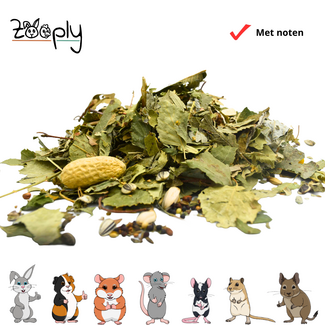
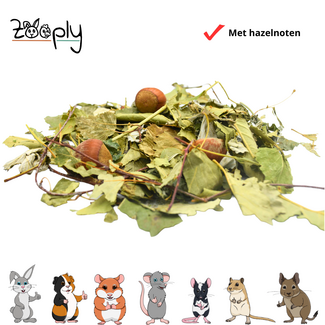
With the Zooply forage mixes, you turn the top layer of the enclosure into a foraging area. The Zooply Forest Mix with various leaves (100 grams) consists of leaves only and gives a calm, natural woodland look over the bedding or over moss. The Forest Mix with leaves and seeds (250 grams) combines those leaves with seeds, so there is something to find between the leaves. There are also the Forest Mix with nuts (250 grams), with walnuts and with hazelnuts (each 100 grams).
The Zooply Scatter Flowers (200 grams) are colourful flower mixes, supplemented with lucerne and seeds, with peas and seeds, with various seeds, or with sunflower seeds. The Zooply Scatter Herbs (250 grams) are mixes of leaves and flowers with seeds, in versions with millet and with peas. According to the product information, you scatter a small handful over the bedding and mix it lightly through the litter. It is intended as foraging fun, not as main food. Store the mixes dry and dark.
For degus, choose the versions without fruit. Mixes with nuts or sunflower seeds are fattier; use them now and then and in small amounts, and count them towards what your degus get that day.
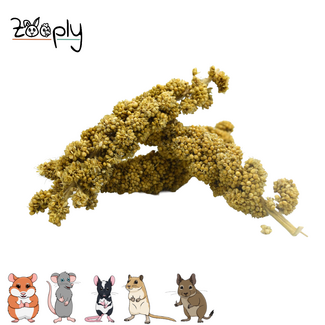
Zooply Millet Spray Pieces
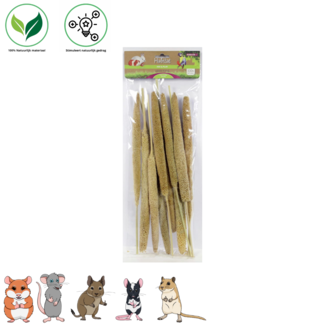
The Zooply Millet Spray Pieces (125 grams) are short stems with seeds attached. Your degu holds them and gnaws the seeds off by itself. Put them down loose or stick them upright in the bedding, and it becomes a little treasure hunt. According to the product information, you give them as a small supplement alongside unlimited hay and the main food. The bag has a zip-lock closure.
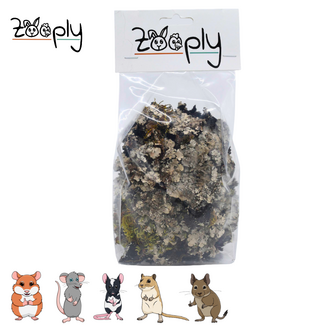
Zooply Stone Moss and Zooply Rodent Moss
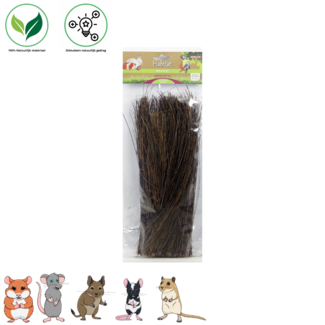
Zooply Stone Moss (75 grams) and Zooply Rodent Moss (250 grams) are natural dried flowers with a loose structure. You cut the stems to height and place them in the bedding, along a tunnel or next to a piece of cork. According to the product information, your animal is welcome to nibble on them. That way you create sheltered little paths, where degus feel more comfortable than on open ground.
Branches, climbing material and hiding places
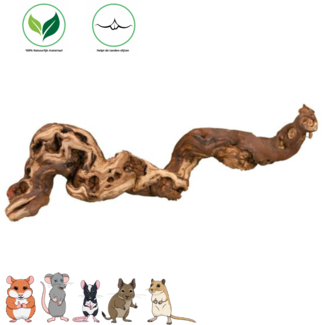
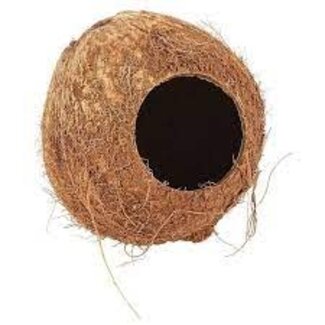
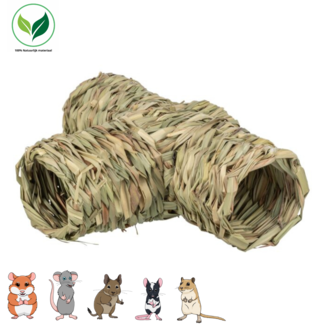
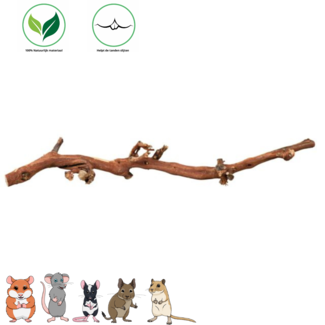
The Trixie 100% natural grapevine branch (30–40, 40–60 and 55–80 cm) is the backbone of many scapes: a climbing route, lookout post and chew object in one. You use the Esve bamboo ladder and rattan sticks as smaller climbing routes. As hiding places there are the Happy Pet coconut with hole (12 × 11 × 11 cm), the Esve coconut house, coconut 1/4 open and Buddha nut, and the Trixie grass tunnel with three entrances (25 × 9 × 18 cm). A coconut with a hole is a bit tight for an adult degu to sleep in, but fine as a hiding and foraging spot.
Moss, leaves and natural decoration
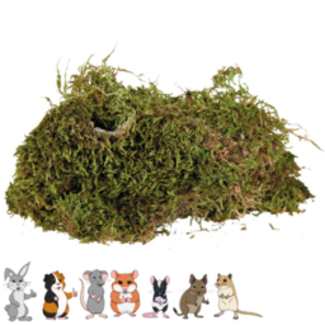
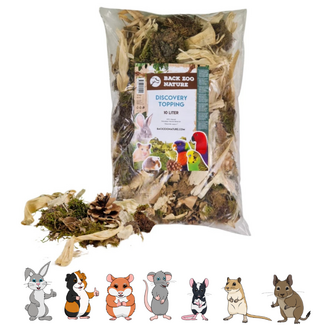
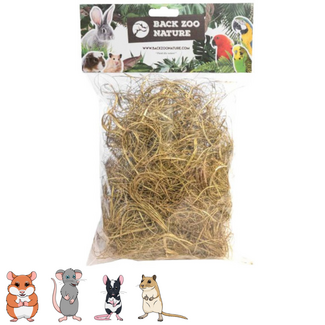
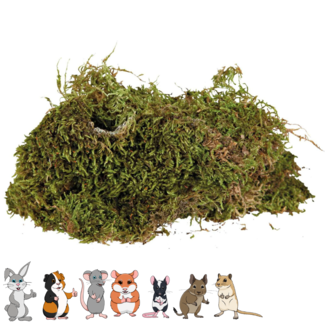
For the top layer and the details there are natural moss from Trixie (200 grams), branch moss, palm leaves, palm grass, tree leaves and the Discovery topping (10 litres, a mix of corn leaves, moss and pine cones) from Back Zoo Nature. Esve has pine cones in various sizes, Australian pine cones, corn husk, the Babla plant, palm bark and coconut pieces. Degus love taking pine cones apart.
Fibres, nets and rope
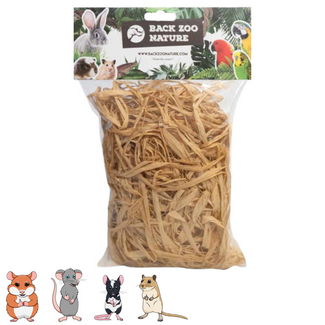
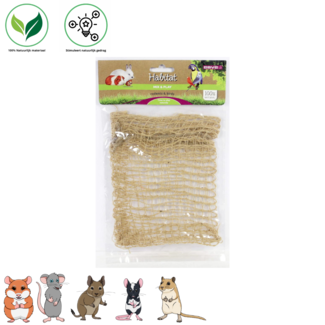
Esve also has palm fibres, jute fibres and silk cotton as natural nesting material, and a jute net and banana rope made of banana fibre as climbing material. Degus gnaw on fibres and rope; check nets and ropes regularly for loose loops.
How to build a degu scape
1. Start with the floor. Degus love to dig and in the wild they live in tunnel systems. A thick layer of low-dust bedding, such as Zooply Hemp Fibre or Wood Fibre, is therefore the foundation. Mix some hay through it, and tunnels will hold their shape better.
2. Place the large elements. Lean a grapevine branch at an angle against a platform, bury a cork tunnel or coconut halfway and put a house in a quiet spot. Make sure everything stands firmly; degus jump onto things at speed.
3. Create routes and zones. A resting zone with houses, a climbing zone with branches, a fixed spot for the sand bath and a fixed hay spot. Create several routes, so a dominant degu cannot block a single passage.
4. Finish the top layer. Scatter Zooply Forest Mix or moss over open areas, place stems of Zooply Stone Moss along a path and put down a few pine cones.
5. Turn it into a treasure hunt. Scatter a small handful of Zooply Scatter Herbs or Scatter Flowers through the top layer, or hide part of the daily portion of degu food. That keeps the enclosure interesting every day.
Degu scaping and nutrition: scattering sugar-free
Degus are prone to diabetes. They therefore get no fruit, dried fruit, carrot, honey, molasses or sweet treats, not even hidden in the bedding. So with forage mixes, choose the versions without fruit. Everything you scatter counts towards the menu for that day: scatter small amounts and keep unlimited hay and a sugar-free degu food as the foundation. Give products with nuts and sunflower seeds sparingly, because they contain a lot of fat.
Upkeep without unrest
You do not need to dismantle a scape completely every week. Remove wet patches, droppings and food leftovers daily and replace the pee zone more often than the rest. Do a bigger clean-out in sections, so there is always a familiar part of the enclosure with the known smell. Replace leaves, moss and dried flowers that are dirty or damp. Brush off branches, cork and coconut. Degus slowly gnaw up a lot of decoration; that is normal and exactly the idea.
Useful combinations
You build a complete degu scape with these categories:
- Bedding: Zooply Hemp Fibre, Wood Fibre or Cotton Fibre as a thick digging layer.
- Tunnels: cork and willow tunnels to bury and as a sheltered route.
- Houses: a roomy sleeping house for the group and extra hiding places.
- Sand & Sand baths: a fixed sand bath spot with Zooply Bathing Sand.
- Dried herbs: sugar-free Zooply herbs such as dandelion leaf to hide.
Frequently asked questions about degu scaping
What exactly is degu scaping?
Degu scaping is furnishing a degu enclosure naturally with untreated materials such as cork, branches, coconut, moss, leaves and dried flowers. The aim is an environment in which your degus can dig, climb, hide and forage, just as they do in nature. The enclosure looks more natural, but the most important thing is that your degus have more to do.
Which Zooply mixes are suitable for degus?
Choose the versions without fruit, such as the Zooply Forest Mix with various leaves, the Forest Mix with leaves and seeds, the Scatter Herbs with millet or with peas and the Scatter Flowers with lucerne and seeds. Mixes with nuts or sunflower seeds are fattier; give those now and then in small amounts. Scatter Herbs with fruit are not suitable for degus.
Can degus eat the moss and the decoration?
Degus nibble on almost everything in their enclosure. That is why you only use natural, untreated materials. According to the product information, Zooply Stone Moss and Zooply Rodent Moss are rodent-friendly, so your animal is welcome to nibble on them. Remove decoration that has become damp, musty or dirty.
How often should I scatter a forage mix?
A small handful is enough for one foraging session. With degus it is wise to keep it limited, because everything you scatter counts towards the menu. You can also scatter part of the normal portion of degu food through the top layer; that way you provide a challenge without anything extra.
Is degu scaping also possible in a cage with levels?
Yes. On the floor you create the digging layer with tunnels and hiding places, and on the levels you put moss, leaves or a coconut. A grapevine branch or bamboo ladder connects the levels. That gives the whole enclosure a natural setup, from bottom to top.
How do I avoid unrest when I change the scape?
Change one element at a time and leave fixed spots such as the sleeping house, the sand bath and the hay spot where they are. Degus like familiarity. After a few days they will have incorporated the new element into their routes.
Degu scaping at Knaagplaza
At Knaagplaza, the webshop of 't Knaagplein, you will find everything to turn your degus' enclosure into a natural landscape. Zooply is our own premium brand: we use the Forest Mix, Scatter Flowers, Scatter Herbs and our hay and food every day with our own animals in the shop and breeding facility.