






Rat scaping: a cage full of nature, foraging spots and routes
With rat scaping, you furnish the cage as a small landscape. Instead of a bare base tray with a few loose items, you create an environment with leaves, moss, branches, cork and hiding spots, in which rats can sniff, dig, climb and search for food. Rats are clever and curious, and a naturally furnished cage appeals to exactly those traits.
In this category you will find the foraging mixes and natural products from Zooply, our own premium brand: Sprinkle Herbs, Sprinkle Flowers, Forest Mixes, Millet Spray and moss. Zooply came about because the products that worked best for our own animals were not always available from other brands; we use these mixes every day for our own animals. You will also find cork tunnels, grapevine branches, natural decoration and glass digging bowls.
At a glance
- ✓ Start with a safe basis: a spacious cage, low-dust bedding, several sleeping spots and routes between the levels.
- ✓ Scatter a small handful of Zooply foraging mix through the bedding; it is enrichment, not main food.
- ✓ Go easy on mixes with nuts and sunflower seeds: rats quickly become overweight.
- ✓ Only use untreated, natural materials and check them for mould and sharp edges.
- ✓ Don't replace everything at once when cleaning; leave part of the familiar setup in place.
What will you find in the Rat scaping category?
Zooply Sprinkle Herbs
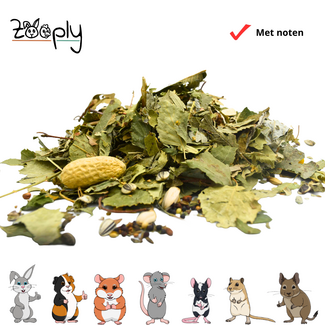
Zooply Sprinkle Herbs are 250-gram foraging mixes, intended for hiding. The base consists of leaves and flowers, in some of the mixes apple and birch leaves, supplemented with various seeds. You can choose from Sprinkle Herbs with seeds, with millet, with peas, with fruit and with nuts. According to the product information, they are suitable for hamsters, mice, rats and gerbils. Scatter a small handful over the bedding and mix it in lightly. The seeds fall between the material, so your rats really have to search.
Zooply Sprinkle Flowers
Zooply Sprinkle Flowers (200 grams) are colourful flower mixes, supplemented with seeds. There are varieties with alfalfa and sunflower seeds, with alfalfa and seeds, with peas and seeds, with sunflower seeds and seeds and with various seeds. The flowers add colour to the top layer of the cage, while the seeds and peas are the reward for searching.
Zooply Forest Mix
The Zooply Forest Mixes give the cage a natural woodland look. The Forest Mix with various leaves (100 grams) is pure leaves, for a calm top layer to create little paths and hiding spots with. There are also Forest Mixes with leaves and seeds (250 grams), with nuts (250 grams), with walnuts (100 grams) and with hazelnuts (100 grams). You can leave some of the nuts visible and hide some under the leaves.
Zooply Millet Spray, Stone Moss and Rodent Moss
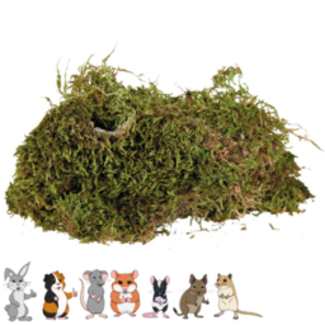
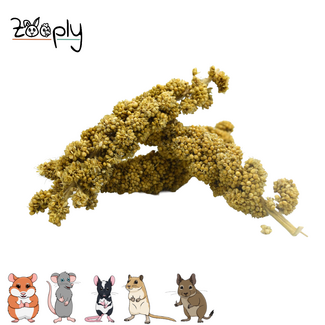
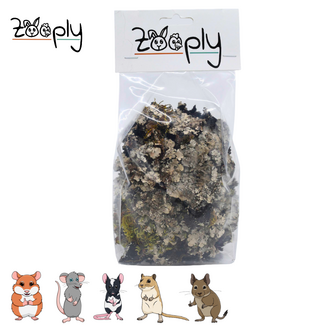
Zooply Millet Spray pieces (125 grams) are short stems with seeds attached. Your rat holds them and gnaws the seeds off itself. Zooply Stone Moss (75 grams) and Zooply Rodent Moss (250 grams) are dried moss that, according to the product information, is also suitable for rats. You place it between the bedding as decoration and as a layer in which you can hide food.
Cork, branches and tunnels
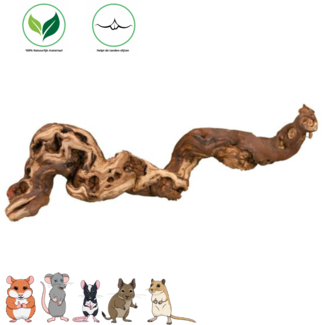
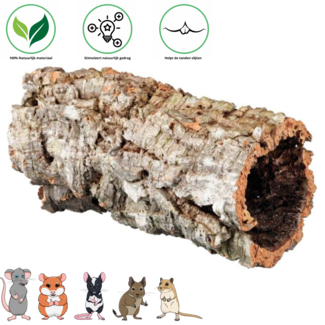
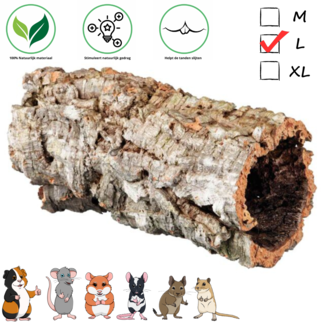
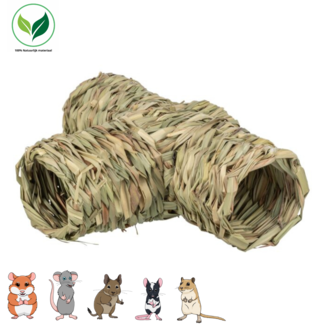
The cork tunnels from Trixie (up to ø 14 × 40 cm and up to ø 19 × 55 cm) are the backbone of many scapes: a hiding place and a chew object at the same time. You use the natural grapevine branches from Trixie (30–40, 40–60 and 55–80 cm) as a climbing route and lookout post. The grass tunnel from Trixie (25 × 9 × 18 cm) has three entrances and is made of grass, but is on the small side for adult rats.
Natural decoration and nesting material
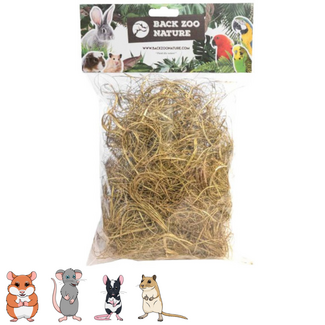
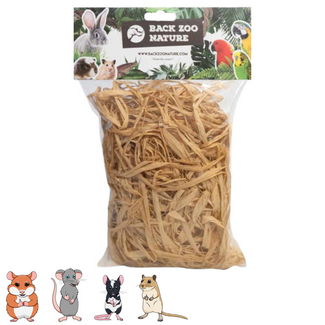
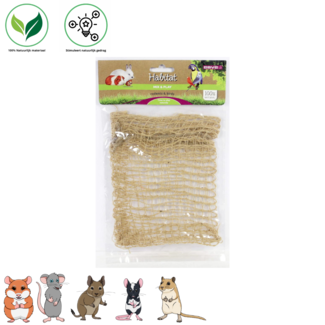
From Esve there are, among other things, pine cones, Australian pine cones, nut shells, coconut pieces, open coconuts, a coconut house, Buddha nuts, corn husk, rattan sticks, palm bark, a jute net and a banana fibre rope, and the Pet Bouquet tubes with grains, grasses and flowers. From Back Zoo Nature there is branch moss, palm leaves, palm grass and tree leaves, and from Trixie natural moss. Many of these products are aimed at hamsters in the product information; for rats, the larger pieces are especially handy.
Glass digging bowls
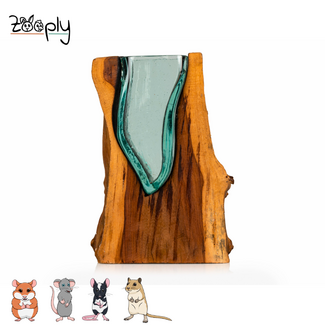
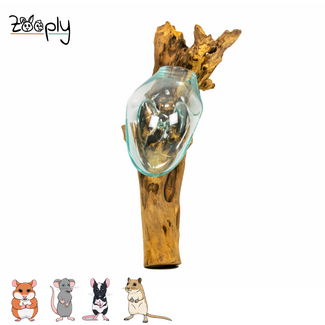
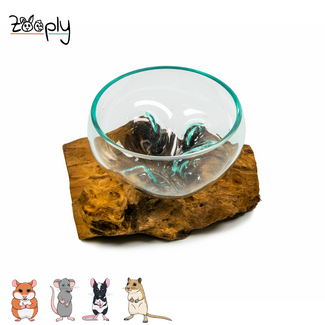
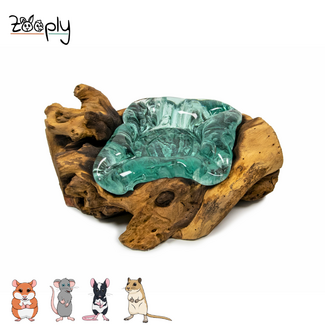
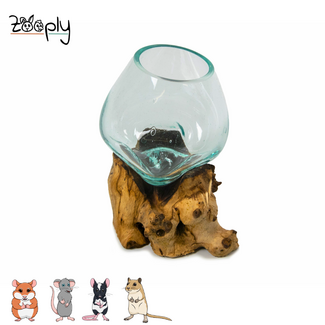
The glass bowls on a wooden Gamal root or trunk from Gigan Garden & Deco come in various sizes. For rats you can use a large bowl as a digging box, filled with bedding or a little moss in which you hide food.
How to build a rat scape
The basics first. Rat scaping starts with a spacious cage, low-dust bedding, several hammocks and hiding places, and safe routes between the levels. Without that basis, decoration is just ornament.
Create zones. Divide the cage into a sleeping area, an eating and drinking spot, a toilet spot and a foraging zone. The foraging zone is where you scatter the Zooply mixes, with moss, leaves and a cork tunnel. That way the toilet spot stays separate and the foraging area doesn't get spoiled.
Work in layers. Put a thick layer of bedding at the bottom, tufts of moss and leaves on top, and place a cork tunnel or branch in it. Finally, scatter a small handful of foraging mix and mix it in lightly. Rats love to dig; a thicker layer of bedding in the foraging zone gives them room to do so.
Use the height. Rats climb. Fix grapevine branches diagonally between two levels and lay a small scape with moss and a few hidden seeds on a platform.
Scaping for a group of rats
Rats live in groups, and you notice that when they search for food. If you scatter everything in one place, the dominant rat gets there first and there is little left for the rest. So create several small foraging spots: one in the base tray, one on a platform and a few seeds in a cork tunnel. That way every rat is kept busy for a while and the group stays calm. If you still see pushing, scatter more widely and thinly.
Foraging without your rats becoming overweight
Rats put on weight quickly, and that is unhealthy. The Zooply foraging mixes are intended as foraging fun, not as main food. Scatter a small handful each time and count it as part of what your rat gets in a day. Mixes with nuts and sunflower seeds are higher in fat; use those for variety and not every day. A good alternative is to hide part of the daily portion of rat food in the same way.
Don't leave perishable things lying around. Dried mixes can stay in place for a while, but remove fresh food, vegetables or egg from the scape the same day.
Safe and clean
Only use materials intended for rodents. Branches from the garden or the woods may have been sprayed or contain mould. Check cork, branches and coconut regularly for sharp edges and splinters, and throw away moss or leaves if they are wet, mouldy or musty.
Rats have sensitive airways. Keep the scape dry, use low-dust bedding and remove wet spots daily. During the bigger clean, don't clean everything in one go: leave part of the setup and a tuft of used bedding in place, so the cage keeps smelling familiar.
Useful combinations
- Dried flowers & grasses: more Zooply flowers and grasses for the top layer.
- Bedding: low-dust Zooply bedding as the basis of every scape.
- Tunnels: cork and willow tunnels as hiding places and routes.
- Gnawing materials: Zooply apple branches and dandelion roots to place in the scape.
- Food for rats: Zooply Rat Food, part of which you can also hide.
Frequently asked questions about rat scaping
Can I do rat scaping in a regular wire cage?
Yes. You don't need a terrarium. In the base tray of a wire cage, you create the foraging zone with bedding, moss, leaves and a cork tunnel. On the platforms you place smaller scapes, and you hang branches between the levels. The deeper the base tray, the more bedding you can fit in and the less ends up over the edge.
How much foraging mix can I scatter?
According to the product information, a small handful is enough for a fun foraging session. With rats, you count it as part of the daily menu, because they put on weight quickly. If you see your rats getting heavier, scatter less, more often choose the Forest Mix with only leaves, or hide part of the regular rat food instead of extra mix.
My rats dig everything up straight away. Is that a problem?
No, that is exactly the idea. Digging, searching and dragging things around is natural behaviour. A scape doesn't have to look pretty all week. Refresh the top layer now and then with new leaves or moss and scatter some mix again, and the searching starts all over.
Are nuts and sunflower seeds actually good for rats?
In small amounts they are tasty, protein-rich treats, but they are also fatty. So use mixes with nuts or seeds for variety and keep the amount small. A healthy basis of Zooply Rat Food with some vegetables now and then remains the most important thing.
How do I prevent mould in the scape?
Keep the foraging zone away from the water bottle and the toilet spot, remove wet spots daily and only use dry materials. If moss or leaves smell musty or you see white or green spots, throw them away immediately.
Is nesting material such as silk cotton safe for rats?
Preferably choose nesting material that falls apart into short pieces, such as paper, hay or special rodent nesting material made from natural fibres. Long, thin fibres can wrap around toes. So check your rats' feet regularly if you use fibrous material, and remove long strands.
Rat scaping with Zooply at Knaagplaza
At Knaagplaza, the webshop of 't Knaagplein, you will find everything to turn a rat cage into a natural foraging world. Zooply Sprinkle Herbs, Sprinkle Flowers, Forest Mixes and moss are our own premium brand, which we use every day for our own animals. Combine them with cork, branches and low-dust bedding, and your rats will have something new to discover every day.