









Bedding for mice: a thick, low-dust layer to dig in
Mice live with their noses just above the floor. They run across it, dig tunnels in it, hide food under it and build their nest on it. So for a mouse, bedding is much more than something to soak up urine: it is her living environment. A good floor layer is low-dust, absorbs moisture well and is firm enough to make tunnels in that do not collapse straight away.
In this category, bedding from Zooply, our own premium brand, leads the way: cotton fibre, cotton with cardboard or sawdust, cardboard shreds, coconut shreds, hemp fibre and wood fibre. Zooply came about because the products that worked best for our own animals were not always available from other brands. We use this bedding every day in our shop and breeding facility.
In short
- ✓ Choose low-dust bedding; mice sleep and breathe close to the floor.
- ✓ According to the Zooply product information, 10 to 15 cm is a comfortable layer depth for mice.
- ✓ Remove wet patches in between and do not keep replacing everything at once.
- ✓ During a big clean, leave a little clean, old material for the familiar smell.
- ✓ Avoid strong scents in the bedding; you get a fresh cage through good cleaning.
What will you find in the Bedding category?
Zooply Cotton Fibre and cotton blends
Zooply Cotton Fibre is a low-dust bedding made of 100% cotton fibres, available in 40 and 100 litres. The soft, airy structure is comfortable under little feet and, according to the product information, firm enough to dig tunnels in. Zooply Cotton & Sawdust (40 and 100 litres) mixes cotton with sawdust for extra absorption and a firm digging structure. Zooply Cotton & Cardboard (30 and 100 litres) combines cotton fibres with recycled cardboard; the product information specifically names hamsters and mice as animals that benefit from the diggable structure.
Zooply Cardboard Shreds and Cardboard Shreds Mix
Zooply Cardboard Shreds are brown cardboard shreds with a loose structure, available in 30 and 100 litres. The Zooply Cardboard Shreds Mix consists of cut brown cardboard with pieces of egg box. Thanks to the loose mix, droppings sink to the bottom and the top layer stays clean and dry for longer. According to the product information, the Cardboard Shreds Mix is compostable and can go in the food and garden waste bin.
Zooply Coconut Shreds
Zooply Coconut Shreds are made of coconut fibres, available in 25 and 100 litres. Coconut fibre has a natural look and a fresh scent of its own. It is a nice choice if you want to give the enclosure a natural appearance, for example as a top layer in a furnished enclosure.
Zooply Hemp Fibre and Wood Fibre
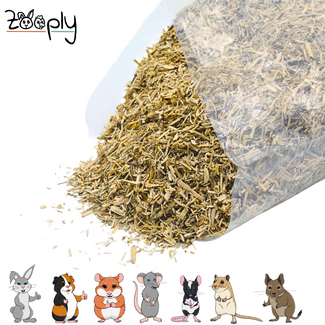
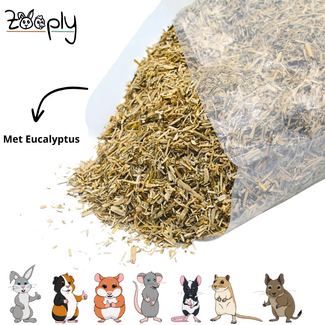
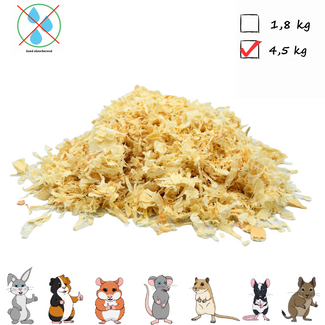
Zooply Hemp Fibre is a low-dust, highly absorbent hemp bedding, in 3.5 kg and 5 kg. For those with many animals, there is the 20 kg Zooply Baal Aubizoo hemp litter. Zooply Wood Fibre is a soft wood fibre bedding in 1.8 kg and 4.5 kg. There is also a Zooply Hemp Fibre with Eucalyptus version; for mice, with their sensitive airways, we recommend the unscented version.
Other brands
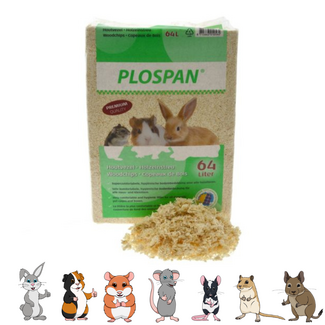
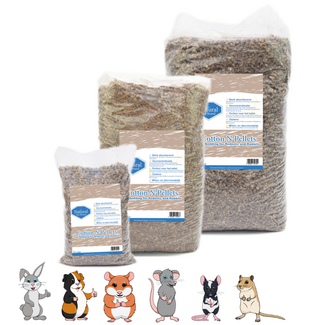
Back-2-Nature paper pellets (20 and 30 litres) are made from more than 99% recycled paper. Natural Pet Brand Cotton Pellets (20 and 40 litres) are pressed cotton fibres. Plospan wood fibre comes in 40, 64 and 160 litres, and Back Zoo Nature Bark Bedding (20 litres) is a bedding made of tree bark.
Forage mixes and natural top layers
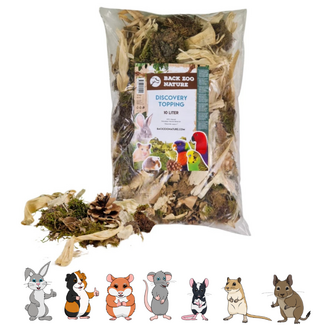
In this category you will also find products to scatter on top of or through the floor layer. The Zooply Scatter Herbs (with seeds, nuts, millet or peas), Zooply Scatter Flowers (with lucerne, sunflower seeds, peas or various seeds) and the Zooply Forest Mix in different versions with leaves, seeds and nuts are forage mixes for hamsters, mice, rats and gerbils. Scatter a small handful over the floor and stir it lightly through the top layer, so your mice have to search. Natural moss from Trixie, Tree leaves and the Discovery topping from Back Zoo Nature, with corn leaves, moss and pine cones, give the enclosure a natural top layer.
Why a thick layer is so important
Mice are burrowing animals. In nature they live in burrows and tunnels, where they are safe and make their nest. In an enclosure with a thin layer of bedding, that is not possible. A thick layer gives your mice the chance to dig tunnels, hide food and retreat. That makes them calmer and more active at the same time.
The product information of the Zooply bedding mentions 10 to 15 cm as a comfortable guideline for mice. For that, you do need an enclosure with a sufficiently deep base. If you want the tunnels to hold their shape well, mix some hay or cotton fibre through the layer; that adds extra firmness.
Dust and smell: take care of the airways
Mice sleep in their nest, close to the floor. They breathe in anything that gets kicked up. So choose low-dust bedding. If you still notice a cloud of dust when you pour it in, that product is less suitable for mice.
Smell plays a role too. Ammonia from urine irritates the airways, so a floor layer that absorbs well and is cleaned regularly is important. Perfume or a strong added scent does not solve this and can actually bother mice. You get a fresh enclosure through good absorption and a fixed cleaning routine.
Cleaning without stress
Mice mark their surroundings with urine. That is their way of knowing where they are and who belongs to the group. If you clean the whole enclosure completely in one go, that familiar smell disappears and mice start running around restlessly and marking extra. So work in steps.
Remove wet and dirty patches every day or every other day. Mice often have fixed pee corners; replace those more often. Do a bigger clean when the floor layer no longer smells fresh, and then leave a handful of clean, old material and mix it through the new layer. Leave the nest alone as much as possible and only remove wet parts or spoiled food from it.
When cleaning, also look at spots above the floor. Mice sometimes pee in a house, a tube or on a shelf. If those stay wet, the smell lingers, even if the floor itself is clean. Wipe them off and let them dry thoroughly before they go back into the enclosure.
Mixing and combining
You can easily combine bedding. A common setup is a bottom layer of a highly absorbent material, such as hemp fibre or cardboard shreds, with a soft, diggable layer of cotton or wood fibre on top. That keeps the bottom dry and gives your mice a top layer they can rebuild. Finally, scatter some Zooply Scatter Herbs or Forest Mix over it for the treasure hunt.
Useful combinations
Bedding forms the foundation of the enclosure. These categories complete it:
- Nesting material: soft material with which your mice build their own nest.
- Dried flowers & grasses: to scatter through the floor layer as natural enrichment.
- Houses: hiding places under which your mice make their nest.
- Cages: an enclosure with a deep base for a thick digging layer.
- Mouse food: scatter part of the daily portion through the floor layer as a foraging game.
Frequently asked questions about bedding for mice
Which bedding is best for mice?
There is no single best choice; it depends on your enclosure and your cleaning routine. For mice, a low-dust, diggable floor layer works best. According to the product information, Zooply Cotton & Cardboard and Zooply Cotton Fibre are firm enough for tunnels to hold. Hemp fibre and cardboard shreds absorb a lot of moisture. Many mouse owners combine two types.
How deep should the layer of bedding be?
The Zooply product information mentions 10 to 15 cm as a comfortable guideline for mice. The thicker the layer, the more your mice can dig and the longer the floor stays dry. Do make sure your enclosure is deep enough for it, so the bedding does not get kicked out.
How often should I replace the bedding?
Preferably remove wet and dirty patches daily. Replace the whole layer when it no longer smells fresh or is clearly soiled; how often that is depends on the number of mice and the size of the enclosure. Never replace everything at once: leave some clean, old material, so the familiar smell remains.
My mice are sneezing. Could it be the bedding?
It could. Dust and ammonia irritate the airways. Check whether your bedding is dusty and whether the enclosure is cleaned often enough, and ensure good ventilation without draughts. If your mice keep sneezing, sound wheezy or have red or wet eyes or nose, contact a vet with experience of rodents.
Can I use cat litter or sawdust from the DIY store?
We advise against it. Cat litter can clump or be dusty and is not meant for digging in. Sawdust from the DIY store can be dusty and may come from treated wood. Choose bedding made for small rodents, so you know the dust level and composition suit mice.
What is the difference between bedding and nesting material?
Bedding forms the layer your mice live on and that absorbs moisture. Nesting material is soft, loose material that mice gather themselves to build a nest. According to the product information, most Zooply bedding is not intended as nesting material. So always provide separate nesting material in addition to the floor layer.
Buying bedding for mice at Knaagplaza
At Knaagplaza, the webshop of 't Knaagplein, you will find bedding in which mice can truly be mice. Zooply is our own premium brand and we use this bedding every day with our own animals. Choose a low-dust, thick layer, clean in small steps and give your mice something to dig in, and their enclosure will stay fresh and calm.