









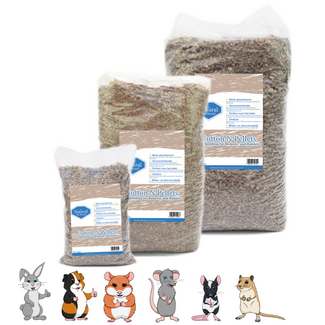
Bedding and nesting material for degus: the basis of a good enclosure
The floor of a degu enclosure is much more than a layer that soaks up urine. It is the place where your degus dig, forage, rest and build their nest together. In the wild, degus live in groups in underground burrow systems. An enclosure with a good, deep floor and soft nesting material lets them show that natural behaviour at home too.
In this category you will find everything for the floor and the nest. Leading the way are the bedding and nesting material from Zooply, our own premium brand. Zooply came about because the products that worked best for our own animals were not always available from other brands. We use it every day in our animals' enclosures in the shop and breeding facility.
In short
- ✓ Degus want to dig: according to the packaging of the Zooply bedding, at least 15 to 20 cm deep.
- ✓ Choose low-dust, absorbent bedding without perfume.
- ✓ Give soft, natural nesting material and hay to build a nest with; never synthetic fluff.
- ✓ Remove wet patches daily and replace the whole layer when it no longer smells fresh.
- ✓ A sand bath with fine bathing sand always belongs alongside it, for coat care.
What will you find in the Bedding category?
Bedding
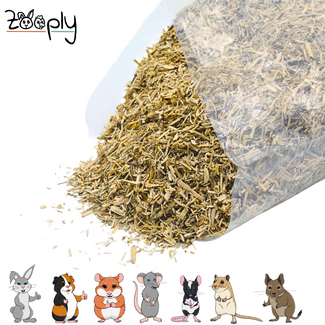
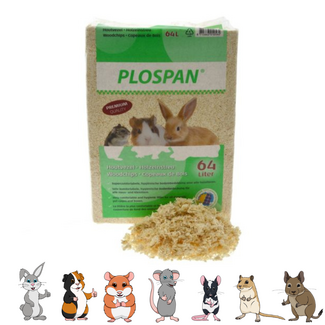
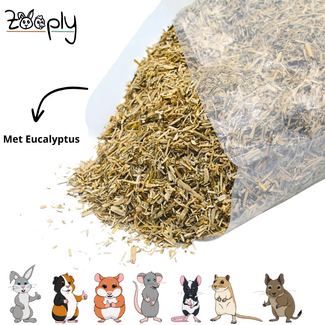
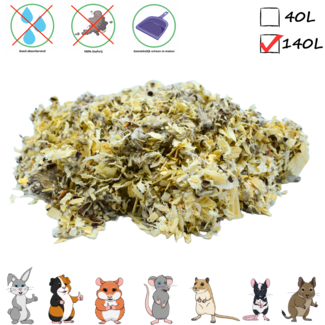
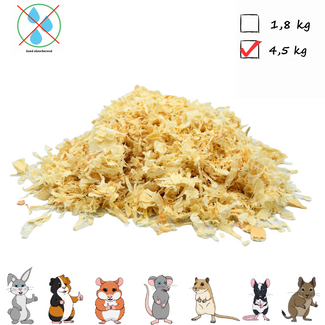
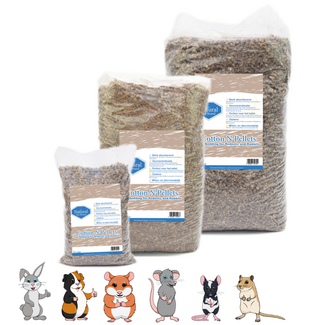
In the Bedding category you will find a wide choice for filling the floor of the enclosure. From Zooply there is Cotton Fibre, Cotton & Sawdust, Cotton & Cardboard, Cardboard Shreds, Coconut Shreds, Hemp Fibre and Wood Fibre, in various sizes. According to the product information, they are low-dust, absorbent and suitable for digging in. You will also find wood fibre from Plospan, paper pellets from Back-2-Nature, cotton pellets and Bark Bedding made of tree bark, and natural materials such as dried moss and tree leaves for a natural top layer.
Nesting material
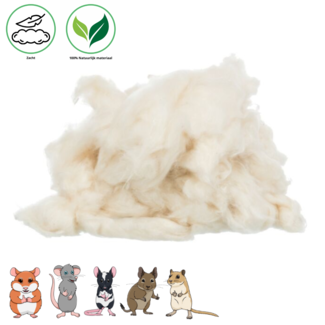
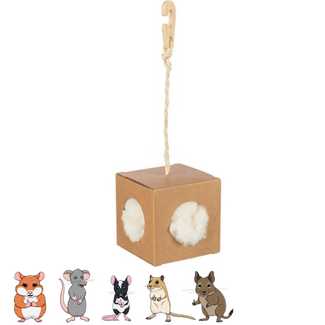
In the Nesting material category you will find Zooply Nesting Material in 3 and 10 litres: soft, warm and, according to the product information, safe to gnaw on. There is also kapok from Trixie, loose and in a little box from which your degus pluck it themselves. Together with hay, this gives your degus everything they need to build a warm nest.
Dividing the enclosure into zones
A degu enclosure works best if you mentally divide it into a few zones. That makes setting it up easier and cleaning more manageable.
The digging zone is the part with the deepest layer of bedding. This is where your degus dig tunnels and burrows. Mix hay or nesting material through it, so the tunnels do not collapse straight away. A piece of cork or a tunnel half buried in the floor gives support.
The resting zone consists of houses and hiding places with nesting material. Provide at least one hiding place per degu and ideally one extra. Degus often sleep together in one nest, but they do want to be able to move away.
The toilet spots appear by themselves. Degus usually pee in a few fixed places. Once you see where that is, you can put a layer of highly absorbent bedding there, such as hemp fibre, and refresh those spots daily.
The sand bath stands on a flat, raised or screened-off spot, so the bathing sand is not immediately churned through the bedding.
Which bedding suits your degus?
Each type has its own strengths. Cotton fibre is soft and holds tunnels well. Hemp fibre absorbs a lot of moisture and limits odour. Wood fibre is soft and natural. Cardboard shreds are light and keep the top layer dry. Coconut shreds give a natural look. Paper and cotton pellets absorb well, but are less suitable for digging in.
That is why many degu owners combine two types: for example hemp fibre as an absorbent bottom layer and cotton fibre with hay as a digging layer on top. For degus, preferably choose a variety without fragrance. They spend a lot of time with their nose in the bedding and benefit from the cleanest air possible.
A deep layer without using too much
A layer of 15 to 20 cm across the whole enclosure takes a lot of bedding. It does not have to be that way. You can create one deep digging zone and keep the rest of the floor lower. A divider or an edge made of a few untreated wooden boards or glass can help keep the deep layer in place. Do bear in mind that degus gnaw wood.
A tall enclosure with a deep base makes this a lot easier. With a cage that has a low base tray, bedding quickly falls out during digging. So when choosing an enclosure, also look at the height of the base.
Cleaning in a fixed routine
With a fixed routine the enclosure stays fresh without you having to throw everything away all the time. Remove wet patches and dirty nesting material every day and top up with fresh material. Also check the spots under levels and hammocks. Replace the whole layer when it no longer smells fresh or is visibly soiled; how often that is depends on the size of your group and of the enclosure.
During a big clean, do not throw everything away. Put back a small amount of the clean, dry nesting material and bedding. The familiar scent gives your degus something to hold on to and prevents unrest in the group. Clean the enclosure with warm water and a mild product and rinse well.
Setting up a new enclosure for new degus
If you are bringing new degus home, set up the enclosure before they arrive. Put down a generous layer of bedding, place the houses and tunnels and leave a portion of nesting material and hay ready, loose beside the hiding places. That way your degus can get started on building their nest straight away. It helps them settle in quickly.
Leave them in peace as much as possible for the first few days. Only clean wet patches and leave the nest alone as long as it is dry. Only once your degus have settled in do you switch to your regular cleaning routine. Also do not keep changing the layout in those first weeks; familiarity gives a new group peace.
Floor and nest throughout the year
Place the enclosure out of draughts, not in full sun and not next to the radiator. In colder months, degus often build a thicker nest and use more nesting material. Make sure there is always some extra material ready then. In warm periods, they actually make the nest thinner. Let your degus choose for themselves by always having some nesting material and hay available.
Safety of floor and nest
Do not use synthetic nesting wool or fluff. The long fibres can constrict a little leg and can be swallowed. Also avoid dusty sawdust or strongly scented wood shavings. Natural, low-dust materials are the safest choice. Degus gnaw a lot and will always swallow some bedding or nesting material now and then; that is another reason to choose materials without additives.
Useful combinations
A good floor works best together with:
- Hay: Zooply hay to eat and to mix through the digging layer and the nest.
- Sand & sand baths: fine, low-dust bathing sand for coat care.
- Houses: hiding places in which your degus build their nest.
- Degu scaping: cork, roots and branches for a natural digging landscape.
- Cages: a spacious enclosure with a high base for a deep layer.
Frequently asked questions about bedding and nesting material for degus
What is the difference between bedding and nesting material?
Bedding fills the floor of the enclosure. It soaks up urine, limits odour and gives your degus a layer to dig in. Nesting material is softer and airier, and your degus use it to line their sleeping spot. You need both: a good floor for the whole enclosure and nesting material plus hay for the nest.
How often should I clean out the enclosure?
Remove wet patches and dirty nesting material daily. Replace the whole layer when it no longer smells fresh or is visibly dirty. With a small group in a large enclosure, that can be less often than with a large group in a smaller enclosure. With a good, absorbent bedding and daily upkeep, you will need to replace everything less often.
My enclosure starts smelling quickly. What can I do?
See where your degus pee and put extra absorbent bedding there, such as hemp fibre. Refresh those spots daily. Also check spots under levels and in houses. An enclosure that starts smelling quickly is sometimes also too small for the number of degus. Do not use fragrances to mask odour; that is unpleasant for your degus' airways.
How many litres of bedding do I need?
Multiply the length, width and desired layer thickness of the base in centimetres and divide by 1000. Then you know roughly how many litres you need. A base of 80 by 50 cm with a 15 cm layer takes about 60 litres. If you work with one deep digging zone, you will need less.
Can I use bedding as a sand bath?
No. Degus groom their coat by rolling in fine, low-dust bathing sand. Ordinary bedding does not do that. So always put a separate sand bath with bathing sand in the enclosure. Do not use lime sand or dusty sand.
Bedding and nesting material for degus at Knaagplaza
With a deep, low-dust floor, soft nesting material and a sand bath, you give your degus an enclosure in which they can dig, nest and settle down. Zooply is our own premium brand and we use the bedding and nesting material ourselves every day for our animals. Choose what suits your enclosure and your group and combine it with plenty of hay.