Ferret food and snacks: nutrition for a small predator
A ferret belongs to the mustelid family and is a true carnivore. While rabbits and rodents run on hay, grains and vegetables, a ferret needs food with plenty of animal protein and fat. A ferret digests quickly and therefore often eats small portions. Its food has to be tailored to that.
In this category you will find food and snacks for your ferret, divided into two subcategories: Food with the daily kibble and Snacks with a reward for in between.
At a glance
- ✓ Ferrets are carnivores: give ferret food, never rabbit or rodent food.
- ✓ The kibble is the basis; make sure food is available throughout the day.
- ✓ Snacks are a small extra for rewarding, taming and training.
- ✓ No fruit, sugar, dairy or grains.
- ✓ Always fresh, clean drinking water.
What will you find in the Ferret Food & Snacks category?
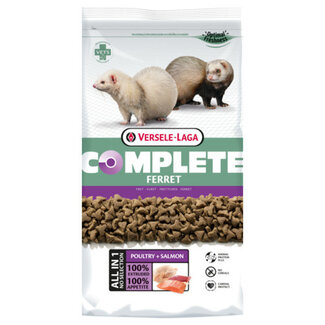
Versele-Laga Complete Ferret food
In the Food subcategory you will find Versele-Laga Complete Ferret food in a 2.5 kg pack. It is a complete kibble, intended as the daily basis. For the composition and feeding advice, check the packaging.
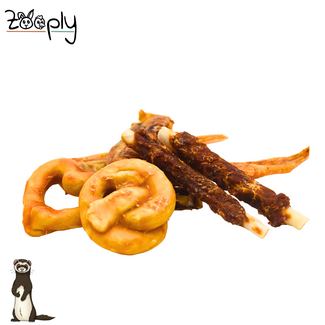
Zooply Ferret Snack Mix
In the Snacks subcategory you will find the Zooply Ferret Snack Mix of 500 grams, from our own brand Zooply. It is a mix of various dried snacks, intended as a reward or as enrichment. According to the product information, you give a small amount of it alongside a complete ferret food.
A daily menu for your ferret
The basis is simple: a complete ferret kibble in a sturdy food bowl, always fresh water and, as a reward, a few pieces of snack. Refresh the kibble daily and place food and water away from the toilet corner. Weigh your ferret now and then; that way you will see in good time whether the amount is right.
Ferrets also eat at night. So leave a portion in the bowl in the evening, even if your ferret is sleeping in the cage.
Using snacks wisely
Use snacks deliberately: to teach a young ferret that your hand means something nice, to reward it when it comes when called, or to make care such as claw trimming more pleasant. Now and then, hide a few pieces in a tunnel or snuffle mat during free-roaming time. Keep the amount small; a ferret that is full of snacks leaves its kibble.
Young and older ferrets
Young ferrets grow fast and eat a lot for their size. Make sure there is always enough kibble and do not change food in the first weeks after arrival: stick to the food your young ferret is used to and only switch later, gradually, if you want to. With older ferrets, pay particular attention to appetite, weight and teeth. If an older ferret eats less, leaves hard pieces or loses weight, have it checked by a vet with knowledge of ferrets.
Water: bowl or bottle?
Either is fine. Many ferrets like to drink from a heavy water bowl, because it is a natural posture; a bowl can, however, get dirty more quickly or be knocked over during play. A drinking bottle stays cleaner, but check daily that the ball valve works. You can also offer both. Refresh the water every day and clean the bowl or bottle thoroughly at least once a week. Ferrets cope poorly with heat; on warm days, enough fresh water is extra important.
What does not belong in a ferret's menu?
Ferrets cannot process fibre, sugars and carbohydrates well. Do not give fruit, raisins, vegetables, biscuits, chocolate, dairy, bread or snacks for rabbits and rodents. Seasoned or salted human food is not suitable either.
Handy combinations
- Ferret cages with room for a fixed feeding spot.
- Accessories such as tunnels to hide snacks in.
- Corner litter trays, so the feeding and toilet spots stay separate.
Frequently asked questions about ferret food and snacks
How often does a ferret eat?
Ferrets eat lots of small meals, spread over the day and night. They digest their food quickly. That is why most owners always leave a portion of kibble in the bowl and refresh it daily.
How many snacks can my ferret have per day?
According to the product information for the Zooply Ferret Snack Mix, a small amount, a few pieces a day, is enough. Start small and see how your ferret reacts. If your ferret is eating its kibble less well, give fewer snacks.
How do I switch to a different ferret food?
Gradually, spread over 1 to 2 weeks. First mix a small amount of the new food into the old and increase that share step by step. Ferrets are often used to one kind of food and need time.
My ferret is not eating. What should I do?
A ferret that does not eat can weaken quickly. If your ferret eats nothing for a day, is lethargic, is vomiting or has diarrhoea, contact a vet with knowledge of ferrets straight away.
How do I store food and snacks?
Dry, cool and dark, in a well-sealing container or jar. That way scent and quality are preserved and no moisture or pests can get in.
Ferret food and snacks at Knaagplaza
With a complete ferret kibble as the basis, fresh water and the Zooply Ferret Snack Mix as a reward, your ferret's nutrition is neatly taken care of. Keep snacks small and weigh your ferret now and then, and it will stay fit and at a healthy weight.