









Bedding: the foundation of every enclosure
The floor of an enclosure does more than you might think. It soaks up urine, keeps odour in check, feels comfortable underfoot and, for burrowing animals, is their entire playground. Rabbits and guinea pigs spend day and night with their noses just above the floor, and hamsters, gerbils and mice literally live in it. That is why your choice of bedding makes a big difference to their welfare and to your cleaning work.
In this category you will find the bedding from Zooply, our own premium brand. We use these types every day in the enclosures of our own animals in our shop and breeding facility. There are four materials: cotton fibre, cardboard, coconut and hemp. According to the product information all four are low in dust and suitable as a burrowing substrate. The difference lies in texture, absorbency and use.
At a glance
- ✓ Choose low-dust, highly absorbent bedding; according to the product information all Zooply types are low in dust.
- ✓ According to the packaging: about 5 cm for rabbits, guinea pigs and rats, 10–15 cm for mice and at least 15–20 cm for hamsters, gerbils and degus.
- ✓ Remove wet and dirty patches every day and replace the whole lot when it no longer smells fresh.
- ✓ For rats and other animals with sensitive airways, choose an unscented variant.
- ✓ Do not use cotton wool or synthetic nesting fluff; the threads can strangle little feet.
What will you find in the Bedding category?
Zooply Cotton Fibre
Zooply Cotton Fibre consists of 100% cotton fibres. It is soft and airy, feels comfortable underfoot and, according to the product information, is low in dust and highly absorbent. The fibres bind together in such a way that dug tunnels hold their shape, which makes cotton fibre a suitable burrowing layer for hamster scaping, gerbil scaping and rat scaping. You can choose between 40 litres or 100 litres.
Zooply Cotton & Cardboard
This mix combines cotton fibres with recycled cardboard. You get the softness of cotton with the sturdiness and airiness of cardboard. According to the product information, hamsters and mice in particular love it, because the mix is easy to dig in and tunnels stay intact. Available in 30 litres.
Zooply Cardboard Shreds and Cardboard Shreds Mix
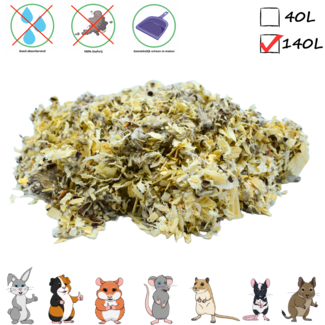
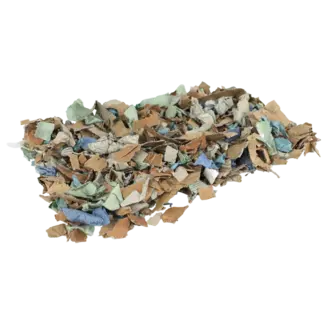
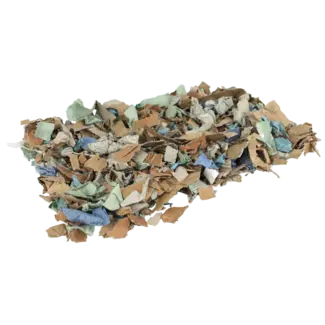
Zooply Cardboard Shreds are made from brown cardboard. The loose structure keeps the surface clean and dry for a long time. Alongside cut brown cardboard, the Cardboard Shreds Mix also contains pieces of egg box. Thanks to the loose mix, droppings sink to the bottom, so the top stays dry for longer. According to the product information, the mix is also suitable for long-haired animals and rats, because little gets caught in the coat. The label recommends a layer of about 5 to 6 cm to cover the floor completely. The mix is compostable and can go in the food and garden waste bin. Both cardboard types are available in 30 litres and 100 litres.
Zooply Coconut Shreds
Coconut shreds are made from coconut fibres. According to the product information, they are naturally highly absorbent and have a fresh, natural scent. They give the enclosure a natural look and suit an enclosure you furnish in a natural style. Available in 25 litres and 100 litres.
Zooply Hemp Fibre
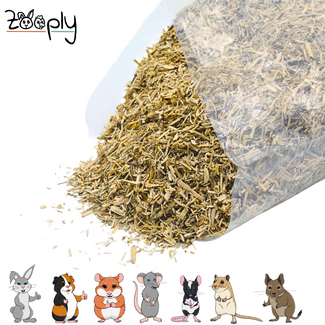
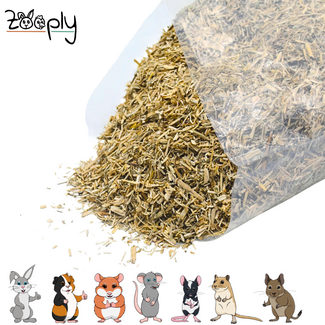
Hemp fibre is highly absorbent: according to the product information it can hold 5 to 10 times its own weight in moisture. It helps limit odours and has a sturdy structure your animal can dig in. Hemp fibre is a popular choice in rabbit and guinea pig enclosures and in litter trays. You can choose between 3.5 kg or 5 kg.
Zooply Hemp Fibre with Eucalyptus
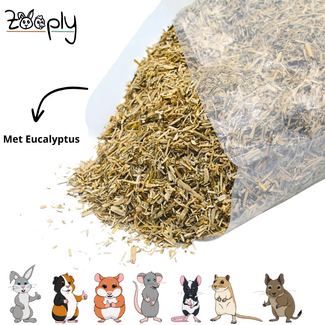
The same hemp fibre, but with a eucalyptus scent for a fresh-smelling enclosure. Available in 5 kg. Please note: rats have sensitive airways and benefit from unscented bedding. For rats, and for any animal that reacts sensitively by sneezing, choose the regular Zooply Hemp Fibre or one of the other types.
How deep should the layer be?
The Zooply packaging gives a guideline for each species:
- Rabbits, guinea pigs and chinchillas: about 5 cm as a base layer.
- Rats: about 5 cm as a base layer; a separate digging box can be deeper.
- Mice: about 10 to 15 cm.
- Hamsters, gerbils and degus: at least 15 to 20 cm, so tunnels hold their shape.
- Syrian hamsters: preferably 25 to 30 cm.
For burrowers, more is better. A hamster or gerbil that can dig real tunnels shows much more natural behaviour and is often calmer. If you like, mix some hay or straw into a burrowing layer, so the tunnels hold their shape even better.
Which bedding suits your animal?
Rabbits and guinea pigs
Here it is all about absorbency, dryness and comfort. Hemp fibre and cardboard shreds are highly absorbent and practical in larger enclosures and in the litter tray. Put a layer of straw or hay in the sleeping corner for extra warmth and comfort.
Hamsters, gerbils and degus
These animals dig. Cotton fibre and Cotton & Cardboard are the most suitable for this, because the tunnels hold their shape. Use a deep base or an enclosure with a high rim, so you can really fill it deeply.
Mice
Mice dig and climb. A layer of cotton fibre or Cotton & Cardboard of 10 to 15 cm gives them room to dig. Mice mark their enclosure with urine; so do not replace everything at once each time you clean, but leave part of the old bedding in place, so the familiar scent remains.
Rats
Rats have sensitive airways. Choose low-dust, unscented bedding and clean the enclosure regularly to prevent ammonia. According to the product information, the Cardboard Shreds Mix is suitable for rats and long-haired animals.
Cleaning
Remove wet and dirty patches every day. That reduces odour and keeps the floor dry. Replace the whole layer as soon as it no longer smells fresh or is clearly soiled. How often that is needed depends on the number of animals and the size of the enclosure. With hamsters it is better to refresh in parts: remove the dirty sections, but leave the nest and the food stash in place as much as possible. That way you avoid stress.
Handy combinations
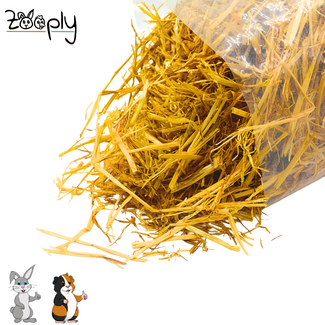
- Zooply hay and straw: mix into the burrowing layer for sturdy tunnels, and as a warm nest in the sleeping corner.
- Zooply bathing sand for a separate sand bath next to the burrowing layer.
- Zooply dried herbs to scatter through the bedding for foraging.
- Zooply rodent food to partly hide in the bedding.
Frequently asked questions about Zooply bedding
Which Zooply bedding is best for hamster scaping?
Cotton fibre and Cotton & Cardboard are the most suitable, because tunnels hold their shape in them. Fill at least 15 to 20 cm, and for a Syrian hamster preferably 25 to 30 cm. You can vary the top layer with coconut shreds for a natural look, and mix hay or straw into the burrowing layer for extra stability.
How many litres of bedding do I need?
That is easy to work out: length times width times layer depth in centimetres, divided by 1000, gives the number of litres. An enclosure of 100 by 50 cm with a burrowing layer of 20 cm therefore needs about 100 litres. For a rabbit enclosure of 150 by 60 cm with a layer of 5 cm you need about 45 litres. Bear in mind that loose materials settle a little after a few days; it is better to allow a bit extra and top up later.
For burrowers with a large enclosure, the 100 litre pack is therefore often the most practical. The smaller bags are handy for a smaller enclosure, for topping up or for first finding out which material your animal likes best.
Can I mix different types?
Yes. For example, you can make a burrowing layer of cotton fibre and use cardboard shreds or hemp in one corner as a toilet zone. Or you can create different zones in one enclosure. That way you combine the advantages of several materials. Preferably introduce a new material gradually, by first mixing it into the familiar bedding.
Is Zooply bedding suitable as nesting material?
The product information does not mention Zooply bedding as nesting material. So give your animal separate, safe nesting material, such as hay, paper or special rodent nesting material made from natural fibres. Never use cotton wool or synthetic nesting fluff: the thin threads can wrap around little feet and cut off the circulation.
Why does the enclosure still smell, despite good bedding?
Usually wet patches are left too long or the layer is too thin. Remove wet patches every day and top up. A litter tray with hemp or cardboard shreds in the usual wee spot also helps. Odour can also mean that the enclosure is too small for the number of animals or has too little ventilation. Adding a scent does not solve the problem.
Is bedding with eucalyptus safe?
For most rabbits and guinea pigs a light scent is not a problem, but rats and other animals with sensitive airways are better off with an unscented variant. If you see your animal sneezing or snuffling after you have refreshed the bedding, switch to regular hemp fibre or another Zooply type. If the symptoms persist, go to a vet with knowledge of rodents.
Can used bedding go in the food and garden waste bin?
For the Cardboard Shreds Mix, the packaging states that it is compostable and can go in the food and garden waste bin. All Zooply beddings are natural, biodegradable materials. Do follow the rules of your own local council when disposing of them.
Zooply bedding at Knaagplaza
With Zooply bedding you give your animal a dry, fresh floor it can dig in. We use these types ourselves every day in the enclosures of our own rabbits, guinea pigs and rodents. Choose the material that suits your animal, fill generously and combine with hay, bathing sand and the right food for a complete enclosure.