






Nesting material for mice: building a warm nest themselves
For mice, nest building is one of the most important things of the day. They gather soft material, pull it apart, drag it to a sheltered spot and weave it into a round nest with an entrance. In it they sleep, warm up and retreat when they get a fright. A mouse is small and loses heat quickly; a good nest helps her stay at the right temperature. On top of that, the building itself is a form of activity that is part of their nature.
In this category you will find nesting material from Zooply, our own premium brand, and kapok from Trixie. Zooply came about because the products that worked best for our own animals were not always available from other brands. We use Zooply Nesting Material every day for the mice and other small rodents in our shop and breeding facility.
At a glance
- ✓ Give nesting material in addition to the bedding; it is something different from the floor layer.
- ✓ Put it down loose in or near the hideout and let your mice build themselves.
- ✓ Better to give a little more often than a big pile in one go.
- ✓ Never use cotton wool or synthetic nesting fluff; threads can constrict little feet.
- ✓ Only remove wet or dirty parts and leave the rest of the nest in place.
What will you find in the Nesting materials category?
Zooply Nesting Material
Zooply Nesting Material is soft, warm material with which your mice can build a nest themselves. According to the product information, it is soft enough not to constrict or tangle, airy enough to drag around easily and safe to gnaw on. The product information states that one or two handfuls are enough for a nest for most small rodents. For a small group of mice, start with a handful and see how quickly they work it in. It comes in a 3-litre pack, handy for one enclosure, and a 10-litre pack for those with several enclosures or who refresh more often.
Kapok from Trixie
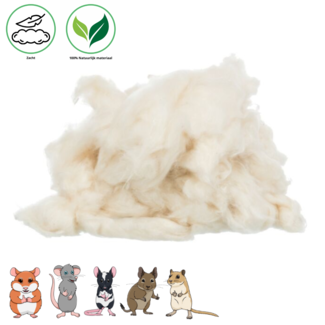
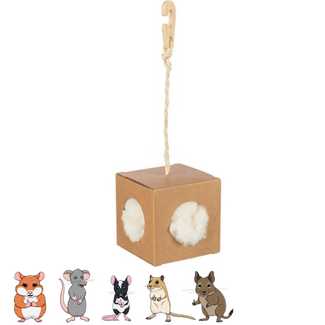
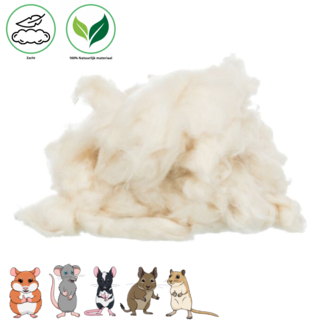
Kapok is a natural fibre from the fruit of the kapok tree, with a soft, cotton-like texture. Trixie supplies it as loose nesting material in cream, in packs of 40 grams and 100 grams. There is also Kapok in a box of 9 × 9 × 9 cm, intended for hamsters, gerbils and mice. Mice empty the box themselves and take the material to their nest; that immediately gives them some extra activity. Kapok is fine and airy. Give it in small tufts and pull them apart a little first, so no long, strong strands form.
What is safe nesting material for mice?
Mice have thin little legs. Long, strong threads can wrap around them and cut off the blood supply. That is why you never use cotton wool, synthetic nesting fluff or plastic stuffing. Bits of fabric with loose threads don't belong in the enclosure either.
Safe nesting material is made of natural fibres or paper and tears easily when a mouse pulls on it. Besides special nesting material for rodents, mice also love to use hay, hemp and unscented paper. Scents don't belong in it: mice sleep in their nest and breathe there all day.
How to give nesting material
Put a portion of nesting material down loose in the enclosure, preferably in or next to the hideout where your mice already sleep. You don't need to make the nest yourself. Mice have a clear idea of what their nest should look like and will rebuild it anyway. It is precisely the gathering, shredding and weaving that they enjoy.
Better to give small portions and top up when most of it has been worked in. A big pile gets spread throughout the enclosure, gets dirty faster and is harder to keep clean. With a small group of mice, you can put the nesting material down in two or three places. Then every mouse can join in and no single one claims it all.
If you see your mice always dragging the nesting material to one corner, that is their chosen nest site. Make sure that spot is dry, not under the water bottle and not in full sun or in a draught.
Nesting material and the group
Female mice that live together often sleep together in one big nest. They build it together and lie close to each other to stay warm. Even so, it is good to have more than one hiding place, with some nesting material in each hideout. That way a mouse that wants some peace can retreat. Males are usually kept on their own; they build their own nest and benefit all the more from things to do, because they have no group members.
Cleaning without disturbing the nest
The nest is your mice's safest place and smells of the group. If you remove it completely at every clean, mice get stressed and start searching and scent-marking restlessly. So only remove what is wet, dirty or musty. Mice also store food in the nest. Dry seeds can stay; remove perishable food, such as bits of vegetable.
If you do replace a large part of the nesting material, put a little clean, old material back with the new. That way the familiar smell remains and your mice rebuild the nest more quickly.
If your mice have young in the nest, leave it completely alone. Disturbance can make a mother restless. Only carefully remove the wet parts around the nest and put some extra nesting material nearby, so she can top it up herself.
Nesting material through the year
Mice adapt their nest to the temperature. In a cooler room or in winter, they build thicker, more closed nests. Give a bit more nesting material during that period. In summer, they often use less and sometimes simply lie in the bedding. In that case, remove excess material if the enclosure is getting full. Always place the enclosure somewhere without draughts and not in full sun, so the nest doesn't have to make up for a spot that is too cold or too warm.
Useful combinations
A good nest needs a good basis. These categories go with it:
- Bedding: a thick, low-dust layer of Zooply bedding under the nest.
- Hideouts: a sheltered spot in which your mice build their nest.
- Dried flowers & grasses: mice love working flowers and grasses into their nest.
- Dried herbs: a tuft of Zooply chamomile or marigold by the nest adds extra scent.
- Tunnels: extra sheltered routes to and from the nest.
Frequently asked questions about nesting material for mice
Do mice really need nesting material as well as bedding?
Yes. Bedding absorbs moisture and forms the layer on which mice live and dig. For a warm, closed nest, they need softer, looser material that they can shred. Most bedding is not intended for that. With separate nesting material, you give your mice the chance to build a real nest, and you will see that reflected in their behaviour: they sleep more calmly and are more active when they are awake.
How much nesting material should I give?
Start with a handful and see what your mice do with it. If everything has been worked in within a day and the nest looks small, give some extra. If there is still a lot of loose material lying around the enclosure after a few days, you have given too much. The right amount depends on the number of mice, the temperature in the room and the size of the hideout.
Is kapok safe for mice?
Kapok is a natural fibre and is sold as nesting material for small rodents, including mice. Give it in small tufts and pull them apart first, so no long strands form. Check during the first few days that nothing is wrapped around the little feet. If you want to avoid that risk altogether, choose Zooply Nesting Material or paper.
My mice pee in their nest. What can I do?
First check whether the nest site is dry enough and not under the water bottle. Sometimes mice pee in the nest because there are few other hiding places. In that case, give an extra hideout or tunnel. Replace wet parts straight away, so the nest doesn't start to smell and your mice don't sleep in a damp spot.
Can I give kitchen paper or toilet paper as nesting material?
Unscented, unprinted paper without additives can be used as a supplement. Mice love to tear it into pieces. Don't use paper with scent, lotion or colour, and no tissues with a balm layer. Nesting material made especially for rodents, such as Zooply Nesting Material, is the most practical because it is airy and easy to work in.
Why aren't my mice building a nest?
Sometimes the room is so warm that they don't need a thick nest. The nesting material may also be in a place where they don't feel safe. In that case, put it in or right next to a hideout. If they don't build at all, are lethargic or eat less, have them checked by a vet with knowledge of rodents.
Buying nesting material for mice at Knaagplaza
At Knaagplaza, the webshop of 't Knaagplein, you will find safe nesting material with which your mice build their own nest. Zooply is our own premium brand and we use Zooply Nesting Material every day for our own animals. Combine it with a thick layer of Zooply bedding and a few good hideouts, and your mice will have a warm, safe place to sleep.