







Bedding for rabbits: the foundation of a dry, fresh enclosure
How fresh a rabbit enclosure stays depends largely on what is on the floor. A rabbit pees several times a day, loves to stretch out flat on the floor and digs every now and then. The floor has to cope with all of that. A good setup therefore almost always has two parts: a comfortable, absorbent floor for the living area and a fixed toilet spot with a tray and highly absorbent litter.
In this category you will find both. Under Bedding you will find bedding for the enclosure, much of it from Zooply, our own premium brand: hemp fibre, wood fibre, cardboard shreds, coconut shreds and straw. Under Litter Pellets & Corner Litter Trays you will find corner litter trays, spacious litter boxes, paper and cotton pellets and a scoop. This is the combination we use ourselves every day in the rabbit enclosures of our shop and breeding facility.
In short
- ✓ Work with two zones: a dry living floor and a fixed toilet spot.
- ✓ Choose low-dust bedding; rabbits have sensitive airways.
- ✓ A litter tray with hemp or pellets saves a lot of bedding and cleaning work.
- ✓ Never use clumping cat litter or synthetic nesting wool.
- ✓ Spot-clean daily and replace the whole layer once it no longer smells fresh.
What will you find in the Bedding category?
Bedding for the enclosure
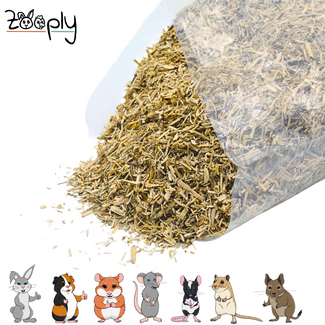
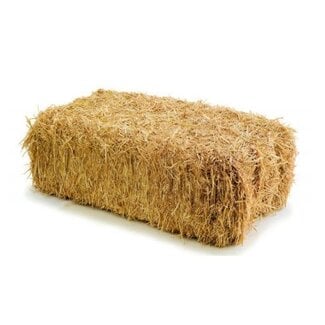
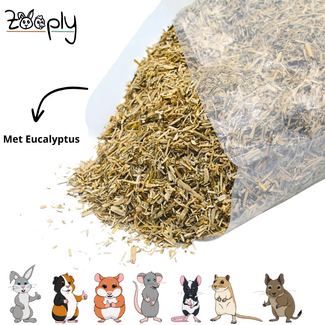
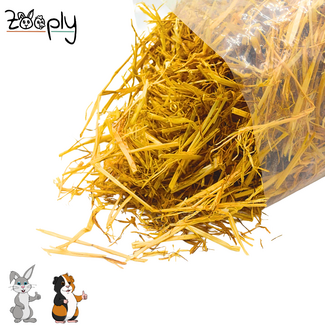
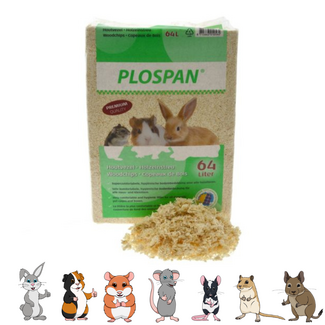
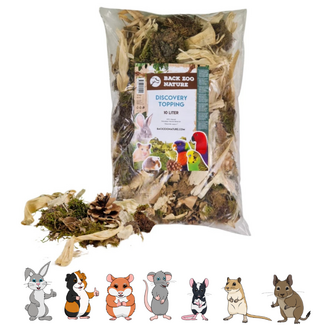
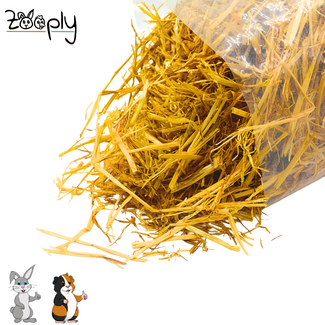
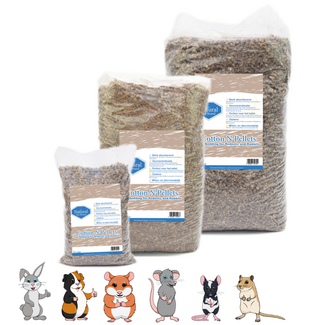
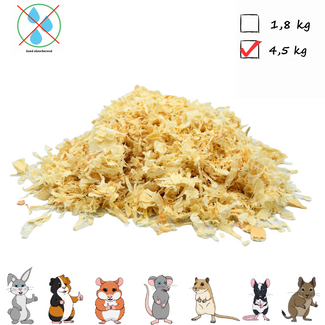
In the subcategory Bedding you will find materials for the resting and living area. Zooply Hemp Fibre and Zooply Wood Fibre form a low-dust, absorbent base layer. Zooply Cardboard Shreds and Zooply Coconut Shreds give a loose, dry top layer. Zooply Straw is the warm top layer for the sleeping area, especially in an outdoor hutch. You will also find wood fibre from Plospan, paper pellets from Back-2-Nature and cotton pellets. If you use a lot, there are large bales and bags of 20 kg and 100 litres.
Litter pellets and corner litter trays
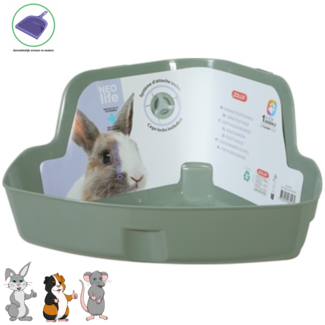
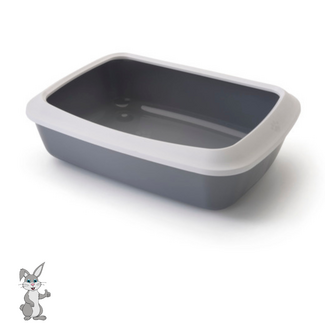
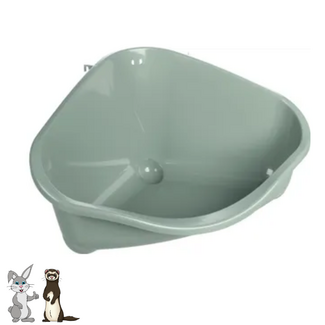
In the subcategory Litter Pellets & Corner Litter Trays you will find everything for a fixed toilet spot: triangular corner trays that you attach to the bars with hooks, a spacious rectangular litter box with a low entrance, paper pellets and cotton pellets as filling, and a scoop to keep the tray clean every day. A toilet spot makes sure most of the moisture ends up in one place, so the rest of the floor stays dry for a long time.
Two zones: the smart way to set up the floor
Rabbits are naturally clean animals that choose one or two fixed spots to pee. If you make use of that, the enclosure becomes much easier to maintain.
- Toilet zone: a corner tray or litter box in the corner your rabbit chooses itself, filled with a highly absorbent litter such as Zooply Hemp Fibre or paper pellets, with a hay rack above it.
- Living zone: the rest of the enclosure with a base layer of about 5 cm of low-dust bedding, which according to the Zooply packaging for rabbits is sufficient.
- Sleeping area: an extra layer of Zooply Straw in a house or sheltered corner, especially in the cold months.
Place the food and water bowls as far from the toilet zone as possible. That way the living zone stays dry and the food stays clean.
Which bedding suits your situation?
Indoor rabbits
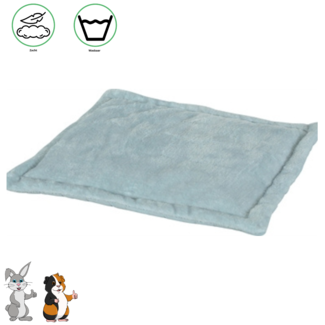
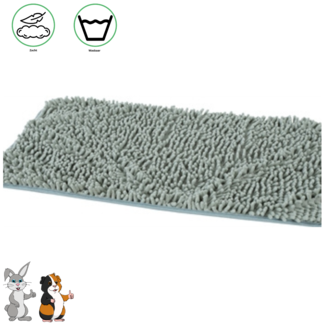
Indoors you notice dust and smells more quickly. Choose a low-dust base such as Zooply Wood Fibre, Zooply Hemp Fibre or Zooply Cardboard Shreds, and provide a good litter tray. If your rabbit also roams free in the room, put a second litter tray in that space. On a slippery floor, mats or rugs help give grip, but they do not replace a litter tray.
Outdoor rabbits
Outdoors it is all about dryness and warmth. In the sleeping compartment, use an absorbent bottom layer with a generous layer of straw on top. Check the hutch more often for damp patches, because damp and cold together are much more unpleasant for a rabbit than cold alone. In summer, use less straw and clean more often, so that wet bedding does not start to smell.
Rabbits that dig a lot
A rabbit that loves digging easily throws bedding and litter out of the enclosure. Give such a rabbit its own digging spot, for example a box with a thicker layer of hemp or flakes, and choose a litter tray with a high back wall. That way it can satisfy its urge to dig without emptying the toilet spot.
Setting up a new enclosure: step by step
If you are starting with a new enclosure or a new rabbit, this order helps:
- First lay the base layer over the whole floor.
- Put the litter tray in a corner, with a hay rack above it.
- For the first few days, watch where your rabbit pees. If it chooses a different corner, move the tray there.
- Put a layer of straw or a soft surface in the sleeping area.
- Remove wet patches outside the tray every day and put a few droppings in the tray, so your rabbit learns where the spot is.
After a few weeks most rabbits know exactly where to go. Neutered rabbits often become litter trained more quickly.
Cleaning routine
A fixed routine stops the enclosure from starting to smell. Scoop out the litter tray every day and remove wet patches from the living zone. Replace the contents of the litter tray completely at least once a week. Replace the living floor as soon as it no longer smells fresh or is visibly dirty; with a well-used litter tray this can be considerably less often. Clean the tray and the floor of the hutch with warm water and rinse well. It is best to avoid strongly scented cleaning products: rabbits have a sensitive nose and avoid places that smell of chlorine or perfume.
Safety and health
Rabbits taste everything, including their bedding and litter. So only use materials made for small pets. Clumping cat litter can form clumps in the intestines if your rabbit eats it, and synthetic nesting wool can get wrapped around little feet and cut off circulation. Watch out for dust too: if your rabbit sneezes often or has watery eyes, choose a low-dust, unscented bedding. If your rabbit suddenly pees much more often, seems to be in pain when peeing or is eating less, contact a vet with rabbit experience straight away.
Switching to a different bedding
If you want to switch bedding or litter, do not do it all at once. Rabbits recognise their toilet spot mainly by its smell. A tray with completely new litter smells unfamiliar, and some rabbits will then pee next to it for a few days. In the first week, mix some of the old litter into the new and put a few droppings in the tray. That way the spot stays familiar. For the living floor, too, you can first fill one part of the enclosure with the new material. Watch for sneezing or watery eyes during this period; these can be a sign that the new material does not agree with your rabbit as well.
Useful combinations
Bedding works together with the rest of the enclosure:
- Hay racks: a rack above the litter tray keeps the hay dry and helps with litter training.
- Hay: fresh Zooply hay above the toilet spot makes that spot attractive.
- Houses: a dry sleeping place with a thin layer of straw.
- Indoor hutches and Outdoor hutches: an enclosure with enough space for a separate toilet zone and living zone.
Frequently asked questions about bedding for rabbits
Do I need both bedding and litter pellets?
For most rabbits, yes. The bedding provides a comfortable, dry living zone, while the litter tray with filling catches most of the moisture in one place. You can use the same material for both, for example Zooply Hemp Fibre, but many people choose a more absorbent litter in the tray than on the rest of the floor.
Which bedding do you use yourselves?
With our own rabbits we mainly use Zooply Hemp Fibre and Zooply Wood Fibre as a base and in the litter trays, and Zooply Straw as a warm top layer in the outdoor hutches. Which combination works best for you depends on your enclosure, the number of rabbits and whether they live indoors or outdoors.
Why does the hutch smell so quickly, even though I clean it often?
Usually your rabbit is peeing outside a fixed spot, or the bedding on the pee spot does not absorb enough. Put a litter tray where your rabbit pees most and fill it with hemp or pellets. Also check the ventilation: a hutch in a closed, warm room starts to smell more quickly. If the urine suddenly smells very different or much stronger, have your rabbit checked.
Can I use newspaper or hay as bedding?
Hay belongs in the rack as food and absorbs little moisture. It can be used as a top layer in the sleeping area, but not as the only floor covering. Newspaper absorbs only moderately and quickly gets wet. A bedding that is made to absorb moisture, such as hemp, wood fibre or paper pellets, keeps the enclosure dry for much longer.
How much bedding do I need for a month?
That depends on the size of the enclosure, the number of rabbits and whether they are litter trained. A litter-trained pair with a good litter tray uses much less than rabbits that pee everywhere. After the first month, look at how much you have used and then choose a pack size that suits you; store the rest dry and sealed.
Is straw enough as a warm layer in winter?
Straw is a good warm top layer, but it only works well on a dry base in a draught-free, waterproof sleeping compartment. So lay the straw on an absorbent bottom layer and replace it as soon as it becomes damp. In winter, also give extra hay, so your rabbit can keep eating during the night.
Buying bedding at Knaagplaza
At Knaagplaza, the webshop of 't Knaagplein, you will find everything for a dry, fresh floor: Zooply bedding that we use every day with our own rabbits, supplemented with litter trays and litter. Choose a base for the living zone, a fixed toilet spot and straw for the sleeping area, and your rabbit's enclosure will stay clean and comfortable.