

Carrier for rats: safely and calmly to the vet
As a rat owner you really always need a carrier, even if you hardly ever go out with your rats. Rats are prone to respiratory problems and can deteriorate quickly when they become ill. At a moment like that you want to be able to go straight to the vet, without first having to look for a box. A good carrier is also indispensable when moving house, collecting a new rat or during a big clean-out of the cage.
In this category you will find transport boxes and carriers from Trixie in four sizes. Put a layer of low-dust Zooply bedding and a handful of Zooply Nesting Material inside, and the box will smell familiar and your rat will lie soft and dry.
In short
- ✓ Make sure a carrier is always ready, so that you can leave straight away if a rat falls ill.
- ✓ Never transport rats loose in a box, a bag or on your arm; they startle easily and are gone in a flash.
- ✓ Put bedding, nesting material and a little food in the box and only use it for short journeys.
- ✓ Never leave rats in a warm car or in full sun; rats cope badly with heat.
- ✓ Preferably transport rats that live together together; that gives them peace of mind.
What will you find in the Transport boxes category?
Small transport boxes from Trixie
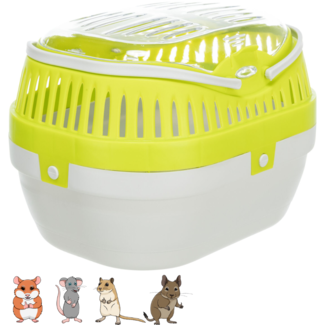
The 23 × 16 × 17 cm transport box is compact and light. For one rat it is suitable for a short journey, for example to the vet around the corner or to keep your rat safely apart while you clean the cage. The 30 × 21 × 23 cm transport box gives more space and is a pleasant size for one or two rats. Both boxes come in assorted colours and their product information mentions rats, among other animals.
Midi Capri carrier
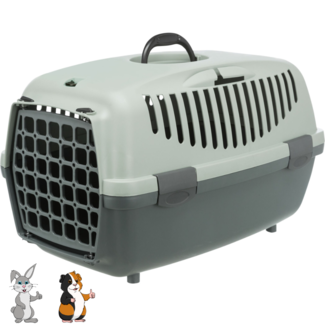
The Midi Capri carrier from Trixie measures 40 × 22 × 30 cm and has a lid. According to the product information it is intended for guinea pigs, dwarf rabbits and other rodents, including rats. For a group of two or three rats, or for longer journeys, it is a roomy and practical choice.
Large carrier
The grey carrier from Trixie (32 × 31 × 48 cm) is made for rabbits and guinea pigs. For rats it is handy if you need to transport a larger group in one go, for example when moving house. For a single rat it is really too roomy: in a large box a rat slides back and forth at every bend.
Which carrier size suits rats?
A rat must be able to sit normally in the box, stand upright and turn around. Too small is stuffy, too large causes unrest because your rat slides through the box with every movement of the car or bike. For one rat the smallest box is enough for short journeys; for two rats, choose the middle box or the Midi Capri. If you are travelling with a group, take a larger carrier or divide the group over two boxes, so everyone keeps enough space and fresh air.
What should you look for in a carrier for rats?
Secure closure. Rats are clever and strong. They push against a little door with their nose and test every opening. Before leaving, check that the door and the lid are properly locked.
Good ventilation. Rats have sensitive airways and cope badly with warmth. There must be enough air circulation. Never put the box away completely closed off in a bag or car boot.
Chew-resistant. Rats gnaw on plastic, including ventilation openings. For a trip to the vet that is not a problem, but never leave rats in a plastic box for long without supervision.
Easy to clean. Many rats wee on the way because of the tension. A smooth plastic floor is quick to wash.
Setting up the carrier
Put a layer of bedding on the floor, so that urine is absorbed and your rat has grip. Add a handful of nesting material or a bit of used bedding from the cage. The familiar smell gives peace of mind. A small house or a folded cloth to crawl under helps shy rats.
Put some dry food and a piece of cucumber or bell pepper in the box. That provides moisture and distraction on the way. A water bottle often leaks in a moving box; for short journeys a piece of vegetable is enough. If you are on the road for longer, stop now and then and offer water.
Do not put loose, heavy objects in the box. They can slide when you brake and hit your rat.
On the way
Secure the carrier firmly in the car, for example in the footwell behind the seat or with the seat belt around it. A box on the seat can fall when you brake. If you like, half cover the box with a cloth; a darker environment gives calm, but make sure the air openings stay clear.
Keep an eye on the temperature. Rats overheat quickly. Turn on the air conditioning or ventilation on warm days and never leave your rats behind in a parked car, not even for a moment. In winter, make sure the box is not in a draught and add some extra nesting material.
Speak calmly and limit the number of times you open the box. In the vet's waiting room, preferably put the box next to you on the bench, away from dogs and cats.
Transporting a sick or recovering rat
A sick rat gets cold more quickly and is extra sensitive to stress. So put a bit more nesting material in the box, so it can burrow in, and keep the box out of draughts. For a rat with breathing problems, good ventilation is extra important: do not cover the box completely and only use low-dust bedding. After an operation, for example castration, your vet may advise using a soft, clean surface such as a cloth for a while instead of loose bedding. Always follow your vet's advice.
Getting your rat into the box
Do not chase your rat around the cage. Put the open carrier in the cage with a few pellets inside; many rats walk into it of their own accord out of curiosity. You can also let your rat walk into a tunnel, close off both ends and tip the tunnel over the carrier. Leave the box in the cage now and then, even when you are not going anywhere. Then it becomes an ordinary, familiar place for your rats and not a sign of stress.
Useful combinations
- Bedding: a layer of low-dust Zooply bedding for a dry floor on the way.
- Nesting materials: Zooply Nesting Material for a soft, familiar spot.
- Food for rats: a handful of Zooply Rat Food to keep busy on the way.
- Snacks: a Zooply treat as a reward for walking into the box.
- Tunnels: handy for calmly transferring your rat into the carrier.
Frequently asked questions about carriers for rats
When should I take my rat to the vet?
Go straight away if your rat breathes with a squeaking or clicking sound, sneezes a lot, has red crusts around its eyes or nose, eats less, loses weight, is lethargic or behaves differently from normal. Rats often hide illness for a long time, so if you notice something, it is usually already serious. Contact a vet with knowledge of rodents and keep the carrier ready.
Can I transport two rats together?
Yes, if they normally live together and the box is big enough. Together they are often calmer. If one of the rats is ill or recovering from an operation, or there is tension in the group, transport them separately. If possible, do take a companion along in a second box, so the sick rat does not have to be alone.
How long can a rat stay in a carrier?
As short as possible. A carrier is meant for transport, not as a home. For a trip to the vet or a house move it is fine. If your rat is in the box for longer than a few hours, offer water regularly and keep a close eye on the temperature.
My rat wees in the carrier. Is that normal?
Yes, that often happens because of tension. With a layer of bedding your rat stays dry. If you like, take some extra bedding with you for the return journey and clean the box thoroughly with warm water at home.
Which carrier should I take to collect a new rat?
For one or two young rats, the 30 × 21 × 23 cm transport box is a pleasant size. Young rats are small and agile; check that the openings in the door and ventilation are not so large that they can squeeze through. Put bedding and some nesting material in the box and ask whether you may take a handful of familiar material from their old enclosure.
Can I also use the carrier while cleaning the cage?
Yes, for a short time. While you clean, put your rats in the carrier with some bedding and a treat, in a quiet spot. For longer periods a play area or a second cage is better, because rats want to move around.
Buying transport boxes for rats at Knaagplaza
At Knaagplaza, the webshop of 't Knaagplein, you will find transport boxes and carriers to transport your rats safely and calmly. Set up the box with Zooply, our own premium brand: low-dust bedding and nesting material that we use every day for our own animals. That way your rat is in familiar surroundings even on the road.