










Gerbil tunnels: safe routes through the enclosure
Gerbils are tunnel builders. Underground they dig their own tunnel system, and above ground they also prefer to move along sheltered routes along the edge. A tunnel in the enclosure matches that exactly. It provides a place to duck into when something moves, a route between hideout and sand bath, and a passage in which two gerbils can avoid each other.
In this category you will find tunnels made of cork, willow and bark wood, edible hay tunnels, bridges that you use as a tunnel, corner pieces, an underground tunnel and soft or plastic play tunnels. A tunnel works best in an enclosure with a thick digging layer. For our own animals we use Zooply for this, our own premium brand for bedding and hay, among other things.
At a glance
- ✓ Choose a tunnel that an adult gerbil can easily walk through, even with a tuft of nesting material in its mouth.
- ✓ Natural materials such as cork, willow and bark wood may be gnawed; that is all part of it.
- ✓ Place tunnels along the edge and connect them to hiding places, the sand bath or the feeding spot.
- ✓ More routes means less jostling: give a pair or small group several passages.
- ✓ Check soft and plastic tunnels regularly for gnawing damage and loose threads.
What will you find in the Tunnels category for gerbils?
Cork tunnels
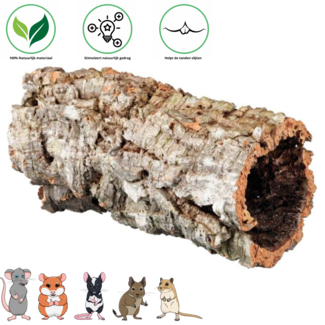
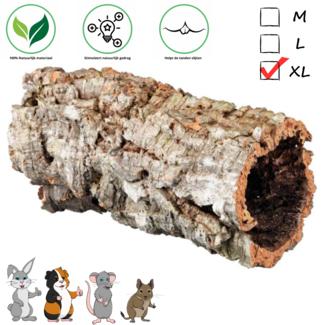
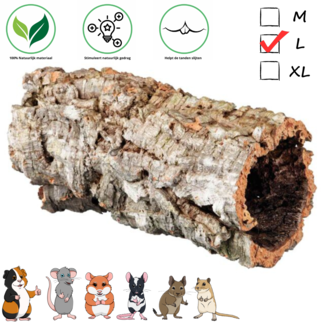
The 100% natural cork tunnels from Trixie come in up to ø 14 × 40 cm, up to ø 19 × 55 cm and up to ø 30 × 75 cm. Cork is light, sturdy and may be gnawed. Because it is a natural product, each tunnel differs in shape and diameter. For gerbils, the small and medium sizes are the handiest. You can half bury a cork tunnel in the bedding; it then becomes an entrance to the underground tunnels. The largest size takes up a lot of floor space in a gerbil enclosure.
Willow tunnels and bark wood tunnels
From Trixie there are willow tunnels of ø 10 × 25 cm, ø 15 × 33 cm and ø 20 × 38 cm, made of willow wood. Willow is a popular gnawing material, so expect a tunnel like this to wear down over time. The bark wood tunnels of ø 7 × 20 cm and ø 7 × 30 cm are made of alder wood with bark. They are fairly narrow. Check with your own gerbils whether they walk through them in a relaxed way; if it is tight, choose a roomier tunnel. The small tunnel with holes made of bark wood (15 × 5 cm) is more of a chew toy than a real passage.
Bridges, corner pieces and underground tunnels
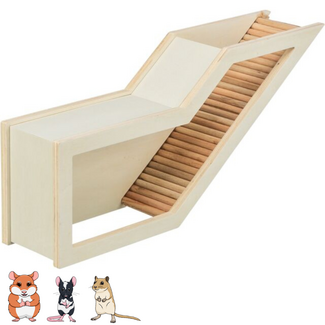
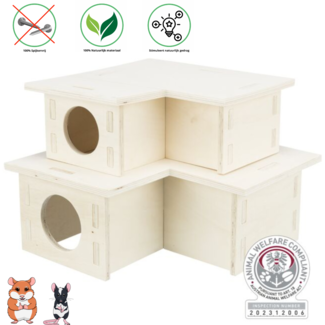
You can use the flexible bridges from Trixie (22 × 10 cm and 28 × 17 cm) flat as a walkway or set them up curved, so that a tunnel forms. The willow bridge of 24 × 13 × 25 cm works the same way. The willow corner pieces (20 × 10 × 13 cm and 30 × 20 × 20 cm) fit into a corner and create a sheltered zone there. You partly bury the underground tunnel from Trixie (36 × 17 cm) and the multi-chamber house with three rooms, so your gerbils have a ready-made start to a tunnel system. The bark wood toy maze is a labyrinth house with several passages.
Edible tunnels
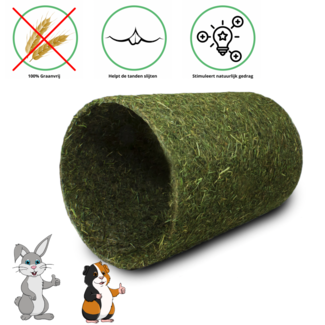
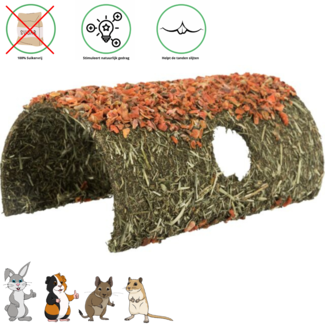
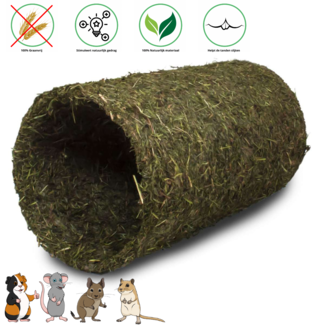
There are also tunnels to eat. The JR Farm hay tunnels made of mountain meadow hay (380 grams and 750 grams), the willow tunnel with hay and carrot and the hideaway with carrot from Trixie are mainly made for rabbits and guinea pigs. Gerbils love to gnaw them apart and use the hay as nesting material. See a tunnel like this as enrichment and a treat, not as a permanent hiding place, and bear in mind that the large models take up a lot of space.
Plastic and soft play tunnels
The extendable play tunnel from Trixie (ø 10 cm, from 19 to 75 cm long) is made of plastic and easy to clean. Gerbils do gnaw plastic to pieces, though. So use it mainly outside the enclosure, in a run under supervision, and remove it as soon as bits start coming off. The same applies to the soft tunnels, such as the Relax tunnels from Trixie and the Clavio play tunnel from Flamingo: gerbils love to tear fabric apart for their nest. Loose threads can wrap around little feet. So check soft tunnels often.
How do you choose the right tunnel?
Diameter
A tunnel must be roomy enough for a gerbil to pass through without squeezing, even when it is dragging hay or paper along. In a tunnel that is too narrow, an animal can feel trapped, especially if a group member comes from the other side. If in doubt, choose the roomier size.
Material
For gerbils, natural material works best. Cork, willow and bark wood may be gnawed, and that is how it should be: gerbils' teeth keep growing throughout their life. Plastic and fabric are less suitable as permanent furnishings, because gerbils gnaw them to pieces. Check every tunnel regularly for sharp edges or splinters.
Length and position
A long tunnel gives a sense of safety, but also takes up floor space. In a gerbil enclosure you want to keep as much digging space as possible. A tunnel that you partly bury or place against the edge is therefore often handier than a long tunnel in the middle of the enclosure.
Using tunnels cleverly
Gerbils prefer to walk along the edge of their enclosure. So place tunnels along the wall and let them end at a hideout, the sand bath or the feeding spot. That creates a sheltered route that your gerbils use every day. Laying a tunnel half in the bedding is a good start for their own tunnel system: your gerbils will dig further from the tunnel.
Now and then, hide a few seeds or a pinch of dried herbs in or near a tunnel. Your gerbils will then start searching and stay busy for longer. Keep it small, so it doesn't lead to squabbles. Don't put tunnels on the usual pee spot; that way they stay dry and fresh for longer.
Tunnels in an enclosure with several gerbils
Gerbils live in pairs or small same-sex groups. Even in a close-knit group, an animal sometimes wants to be alone for a while or avoid another. An enclosure with only one narrow passage can then become a bottleneck: one gerbil sits in the opening and the other can't get past. So provide at least two routes, for example a cork tunnel along one wall and a curved bridge along the other. Tunnels with two open ends are better than dead-end tubes. If you notice frequent chasing, first check whether there are enough hiding places, feeding spots and digging space.
Cleaning and replacing
When cleaning the enclosure, remove bedding and food leftovers from the tunnels. You can brush out cork and wood dry or rinse them with warm water; then let them dry completely. Don't use strong-smelling cleaning products. Plastic tunnels can be washed a bit more often. Replace a tunnel that keeps smelling musty, splinters or has been gnawed so far that it no longer lies firmly.
Useful combinations
- Bedding: a thick digging layer in which tunnels partly disappear, with Zooply as our own brand.
- Hideouts: a hiding place at the end of the tunnel.
- Gerbil scaping: cork, branches and natural furnishings to connect zones with tunnels.
- Dried herbs: to hide in and near tunnels as a foraging game.
- Nesting materials: which gerbils drag through their tunnels to the nest.
Frequently asked questions about tunnels for gerbils
Do gerbils need a tunnel if they dig themselves?
A tunnel is no substitute for a thick digging layer, but it is a good addition. Above ground, gerbils also need sheltered routes, especially in a larger enclosure. A half-buried tunnel also helps to start a sturdy tunnel system, because the entrance doesn't collapse.
Which tunnel is best suited to gerbils?
A cork tunnel or a willow tunnel of about ø 10 to 15 cm is a good choice for most gerbils. They are roomy enough, may be gnawed and look natural. A curved flexible bridge is a handy alternative if you want to create a tunnel along the edge.
My gerbils are gnawing the tunnel to pieces. Is that a problem?
With cork, willow and bark wood that is normal and even useful: gnawing keeps your gerbils busy and they turn it into nesting material. With plastic or fabric it is a reason to remove the tunnel, because gerbils can swallow bits or get their feet caught in loose threads. Also provide plenty of gnawing wood and cardboard.
How many tunnels do I need for two gerbils?
One tunnel already helps, but two or more routes give more calm. Combine tunnels with hideouts, so there are always several hiding places. That way one animal can lie peacefully while the other walks along a different route.
My gerbils sleep in the tunnel. Is that normal?
It happens. Gerbils sometimes choose a sheltered spot above ground to rest. Do make sure there is also enough bedding and nesting material, so they can build a nest underground. If they always sleep above ground, the digging layer is often too thin.
How do I bury a tunnel without it collapsing?
Place the tunnel on the floor of the enclosure or on a firm layer of pressed-down bedding, and then scatter the rest around and over it. Leave both ends free. Mix hay or straw into the bedding; those fibres hold the tunnels together. Cork and wood are sturdy enough to bear the weight of the bedding.
Buying gerbil tunnels at Knaagplaza
At Knaagplaza, the webshop of 't Knaagplein, you will find tunnels made of natural materials that suit digging, social animals. Combine them with a thick layer of Zooply bedding and Zooply hay, our own premium brand that we use every day for our own animals, and your gerbils will have safe routes both above and below ground.