
Hay and straw: the foundation of every rabbit and guinea pig enclosure
Hay is the most important thing a rabbit or guinea pig eats. It should be available without limit and makes up by far the largest part of the menu. The long fibres keep the gut moving and the endless chewing wears down the teeth, which keep growing throughout life. Degus also eat unlimited hay, and gerbils, hamsters and mice love using it to nibble on and to build a nest with. Straw is something different: it is not food, but a warm, dry layer to lie in.
In this category you will find the hay and straw from Zooply, our own premium brand. Zooply was created because the products that worked best for our own animals were not always available from other brands. We feed this hay every day to the rabbits, guinea pigs and degus in our shop and breeding facility.
At a glance
- ✓ Hay without limit, fresh and topped up every day; the main food for rabbits, guinea pigs and degus.
- ✓ Alternate between meadow hay, herbal hay and alpine hay and your animal will keep eating well.
- ✓ Offer hay in a hay rack so it stays clean and dry.
- ✓ Straw is for warmth and comfort, not a replacement for hay.
- ✓ Store hay and straw dry and airy, never in sealed plastic.
What will you find in the Hay & Straw category?
Zooply Meadow Hay
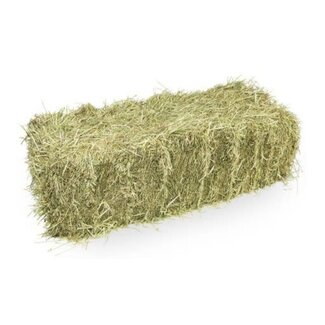
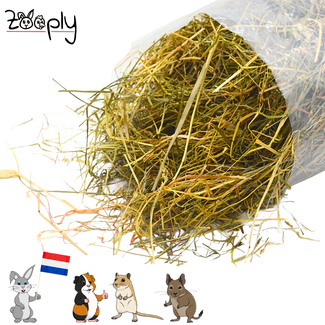
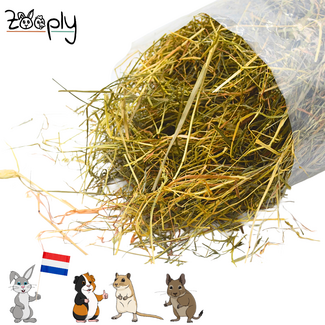
Zooply Meadow Hay is Dutch meadow hay which, according to the product information, is suitable for rabbits, guinea pigs, gerbils and degus. It is a fresh, green basic hay you can give every day. You can choose between 1 kg, 5 kg or a 20 kg bale. The bale is handy if you have several animals or want to keep a good stock at home.
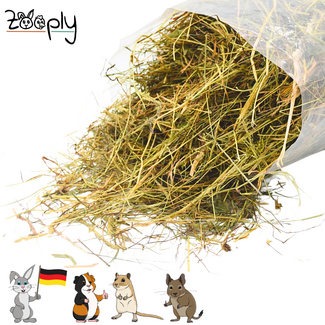
Zooply German Herbal Hay
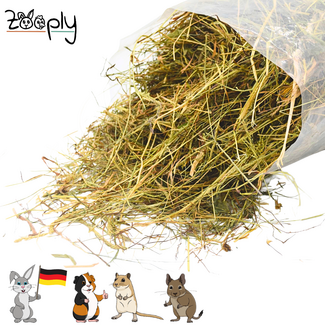
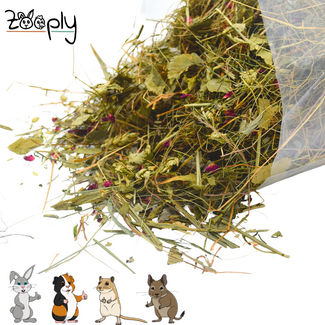
German Herbal Hay is hay in which herbs have grown along with the grass or have been added. It smells stronger and more aromatic than meadow hay, which makes it appealing to animals that are a bit fussy. Available in 1 kg and 5 kg.
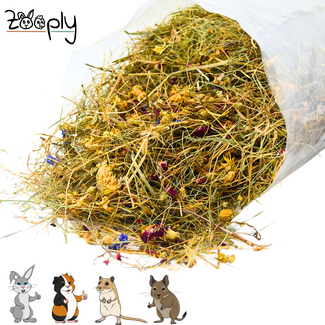
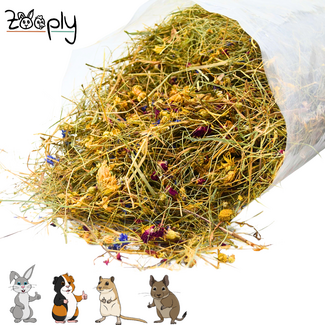
Zooply Herbal Hay with Flowers
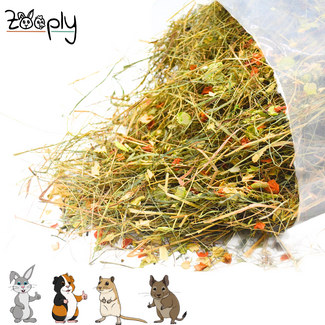
This herbal hay also contains a variety of flowers. The colours and scents make it extra interesting to forage through. Available in 5 kg.
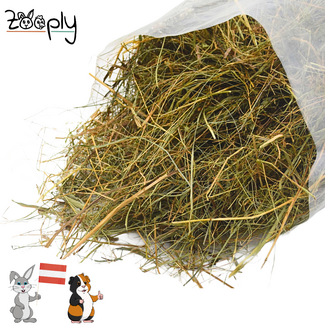
Zooply Austrian Alpine Hay
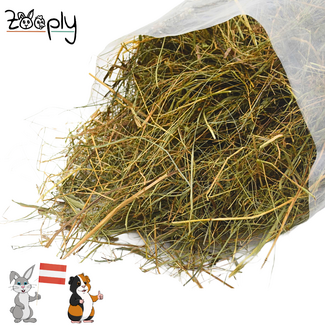
The Austrian Alpine Hay comes from abroad and, according to its properties, contains various grasses, has a strong scent, is low in stalks and has no added herbs. It is nutritious and fine in texture. Available in 1 kg and 5 kg.
Zooply herbal hay in the subcategory
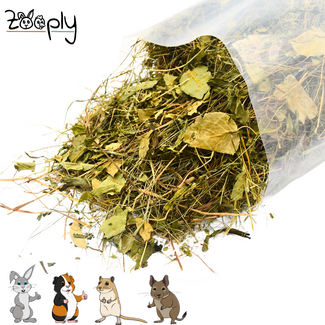
In the Herbal hay subcategory you will find four kinds of alpine hay with extras, each in 1 kg: Oat Meadow with green oats and herbs, Field Meadow with dried vegetables, Woodland Meadow with leaves and Flower Meadow with flowers. These are intended as variety alongside your regular hay.
Zooply Straw
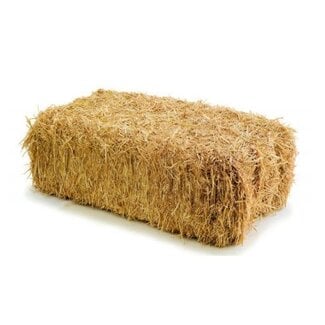
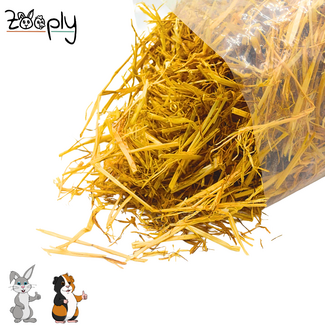
Zooply Straw is natural straw for a warm, dry layer in the hutch or run. According to the product information, a layer of 5 to 10 cm is more than enough for rabbits and guinea pigs, ideally on top of an absorbent bedding that soaks up moisture. Straw is especially welcome in winter in an outdoor enclosure. You can choose between 5 kg or a 20 kg bale.
All Zooply hay is packed loose in the bag and is not compressed. That makes it easy to take out of the packaging and keeps the natural structure of the stalks intact.
Which hay do you choose?
Start with a good basic hay such as Zooply Meadow Hay or Austrian Alpine Hay. Alongside that, regularly alternate with German Herbal Hay, herbal hay with flowers or one of the four herbal hay varieties. Each type has a different scent and texture, and that keeps your animal curious. A rabbit or guinea pig that enjoys its hay eats more of it, and that is exactly the idea.
If your animal has a preference, that type can be the basis. If your animal keeps eating little hay, try a more aromatic type or mix in a handful of herbal hay.
Hay for each species
Rabbits
For rabbits, hay is the main food. In addition they get a measured portion of pellets and some fresh greens every day. Rabbits like to pull hay from a rack hung a little higher up; for outdoor rabbits, add extra straw to the sleeping compartment in winter.
Guinea pigs
For guinea pigs too, hay is the basis. Guinea pigs prefer to eat low down near the ground, so a low rack or a hay ball works well. Do not forget their daily vitamin C: it is not in hay, but in guinea pig food with vitamin C and fresh vegetables.
Degus
Degus eat unlimited hay alongside their sugar-free degu food. For them, choose plain hay or herbal hay without vegetables or fruit.
Hamsters, gerbils and mice
Small rodents eat some of the hay, but mainly use it to build a nest and mix it into the burrowing layer. A handful of fresh hay in the enclosure is also enrichment for them.
How do you give hay?
Offer hay in a hay rack. That way it stays clean and dry and does not end up in urine or droppings. Animals also eat more hay from a rack and you waste less. Hang the rack so your animal can reach it easily and cannot get trapped in it. Top it up every day with fresh hay and remove old, trampled hay.
A rabbit or guinea pig should never be without hay. If you find an empty rack in the morning, give more from then on. The pellets and muesli only come after that.
Using straw
Straw is hollow and insulates well. Put it in the sleeping corner or the sleeping compartment, especially for outdoor animals in the cold months. Straw itself absorbs little moisture; so put it on top of an absorbent bedding. Remove wet patches every day and replace the whole layer when it no longer smells fresh. For burrowing rodents, straw is less suitable as a burrowing layer, but mixed into one it helps tunnels keep their shape.
Which pack size suits you?
The 1 kg bags are handy for trying a new type or for adding variety alongside your regular hay. With the 5 kg bags you can go a good while with one or two rabbits or guinea pigs. The 20 kg bales are intended for those with several animals, or for anyone who wants to keep a fixed stock and has dry, airy storage space. Do not buy more than you will use up within a reasonable time: fresh hay smells best and is eaten best.
Storing hay and straw
Store hay and straw dry, cool and airy, out of the sun. Do not use a sealed plastic box or bag in which it can heat up or go mouldy. A bale is best kept in a dry place, slightly off the ground, so no moisture can seep in from below. Good hay is green and smells fresh; if it smells musty, feels damp or you see mould, throw it away.
Handy combinations
- Zooply rabbit and guinea pig food: the pressed pellets that go alongside the hay.
- Zooply dried herbs to mix through the hay.
- Zooply bedding as an absorbent layer under the straw.
- Zooply herbal hay for even more variety.
Frequently asked questions about hay and straw
How much hay does a rabbit or guinea pig need per day?
Unlimited. There is no maximum: make sure the rack is never empty and top it up with fresh hay every day. Hay is the largest part of the menu; pellets and snacks are the supplement.
What is the difference between meadow hay and alpine hay?
Meadow hay comes from Dutch meadows and is a fresh, versatile basic hay. According to its properties, Zooply Austrian Alpine Hay contains various grasses, is low in stalks and has a strong scent. Both are suitable as daily hay. Feel free to alternate them.
Can I give straw instead of hay?
No. Straw is the stalk of cereal crops after the grain has been removed and has little nutritional value. It is intended as a warm floor layer. Rabbits and guinea pigs sometimes nibble on it, but their food is hay.
Is this hay also suitable for degus and gerbils?
Yes. According to the product information, Zooply Meadow Hay, German Herbal Hay and Herbal Hay with Flowers are suitable for rabbits, guinea pigs, gerbils and degus. Degus eat unlimited hay; gerbils mainly use it to nibble on and mix into their burrowing layer. Do not give degus hay with dried vegetables or fruit, such as the Field Meadow from the herbal hay subcategory.
My rabbit eats little hay. What can I do?
First check that you are not giving too many pellets, too much muesli or too many snacks; an animal that is full eats less hay. Then try a different type, such as German Herbal Hay or one of the herbal hay varieties. If your rabbit suddenly eats much less or nothing at all, have its teeth checked by a vet with knowledge of rabbits.
How long can I keep a bale of hay?
Stored dry and airy, hay keeps well for a long time. Do check it regularly for smell and moisture. The faster you use up a bale, the fresher the hay stays. If you have one or two animals, a 5 kg bag is often more practical.
Zooply hay and straw at Knaagplaza
With Zooply hay and straw you give your rabbits, guinea pigs and degus the foundation they need most, every day. We feed this hay ourselves every day in our shop and breeding facility. Choose a regular basic hay, alternate with herbal hay and make sure the rack is never empty.