




Bedding for rats: the foundation of a fresh and comfortable enclosure
What lies on the floor of a rat enclosure largely determines how fresh it smells, how clean your rats stay and how much work cleaning is for you. But a good enclosure is more than a layer of bedding. Rats also need a fixed wee corner, a soft nest to sleep in and natural materials to search through and build with. In this category you will find those four elements together: bedding, litter pellets and corner toilets, nesting material, and dried flowers and grasses.
A large part of the range is from Zooply, our own premium brand. From low-dust cotton fibre and cardboard shreds to nesting material, moss and dried grasses: we use it every day in the enclosures of our own shop and breeding facility.
In short
- ✓ Rats have sensitive airways: choose low-dust bedding without added scent.
- ✓ A base layer of about 5 cm is enough for rats, according to the Zooply packaging.
- ✓ A corner toilet in the favourite wee corner saves a lot of cleaning.
- ✓ Provide safe nesting material, not cotton wool or synthetic nesting fluff.
- ✓ Grasses, moss and dried flowers make the enclosure more natural and challenging.
What will you find in the Bedding category?
Bedding
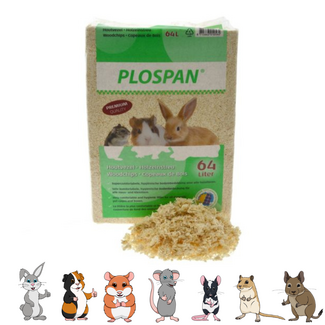
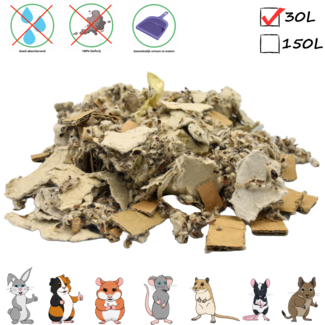
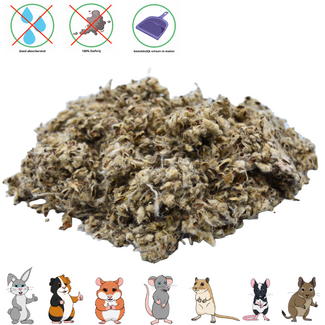
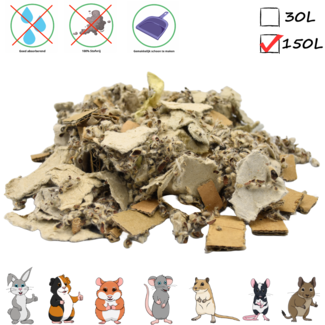
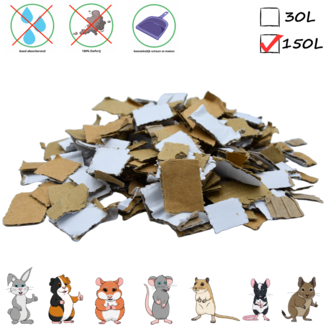
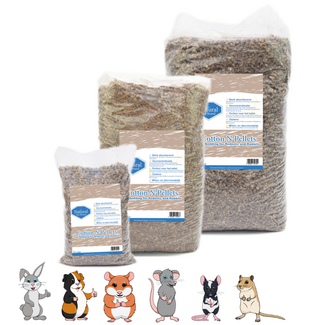
In Bedding you can choose from low-dust Zooply varieties: Zooply Cotton Fibre, Cotton & Cardboard, Cotton & Sawdust, Cardboard Shreds, Cardboard Shreds Mix, Coconut Shreds, Hemp Fibre and Wood Fibre, in various sizes up to large 100-litre bags and a 20 kg bale of hemp bedding. You will also find paper pellets, cotton pellets, tree bark and wood fibre from other brands, plus Zooply foraging mixes to scatter through the bedding.
Toilet pellets & Corner toilets
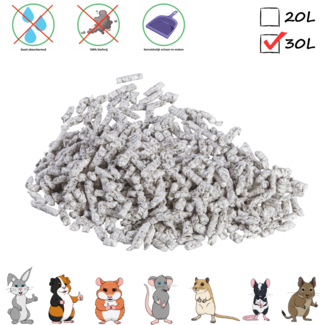
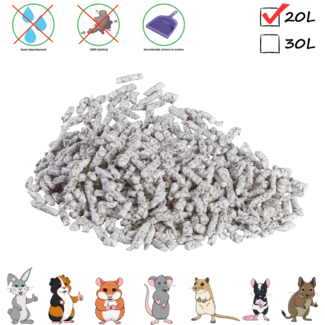
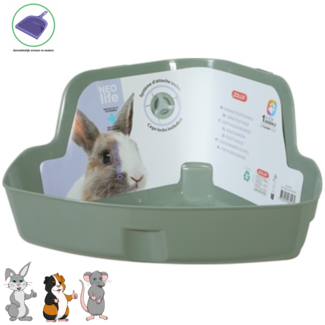
In Toilet pellets & Corner toilets you will find corner toilets with fixing hooks for rats and ferrets, including the Zolux Neolife corner toilet, a litter scoop, and filling made of paper pellets and cotton pellets.
Nesting material
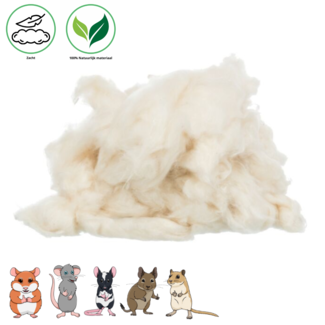
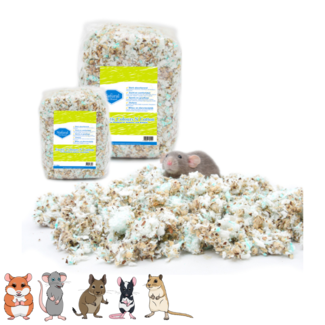
In Nesting material you will find soft Zooply Nesting Material in 3 and 10 litres, alongside natural kapok from Trixie.
Dried flowers and grasses
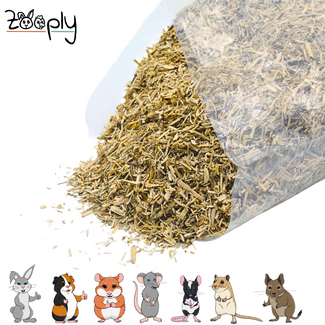
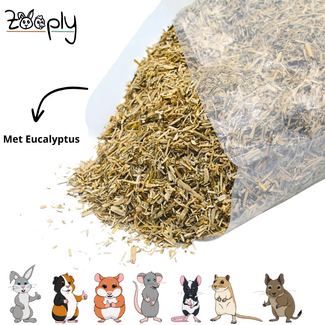
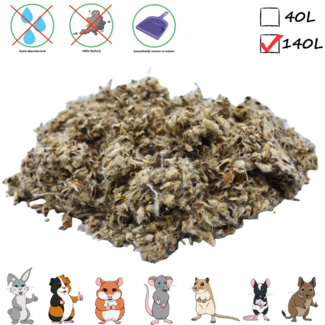
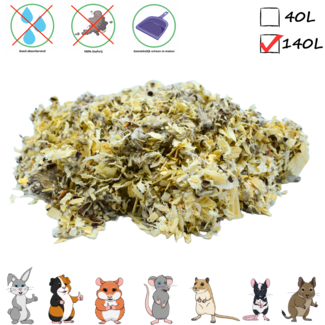
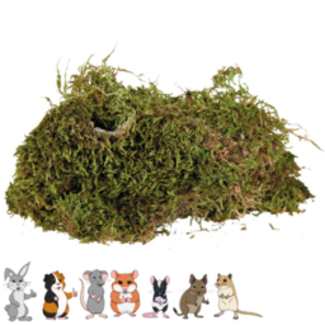
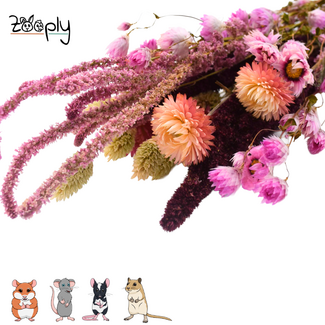
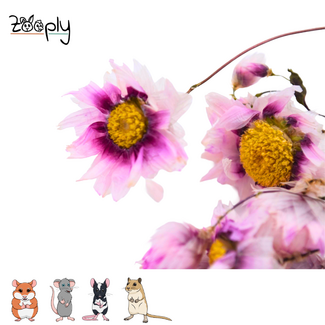
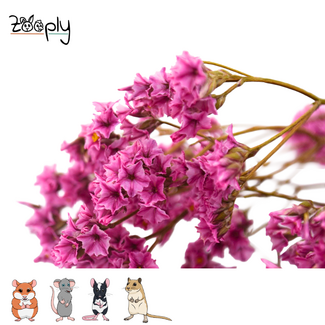
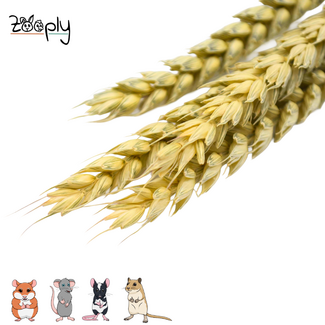
In Dried flowers and grasses you will find a large Zooply range: oats, wheat, millet grass and other grasses, stone moss and rodent moss, cotton bolls on the branch, dried flowers in many colours and ready-made bouquets to furnish the enclosure naturally.
The enclosure in zones
It helps to see the rat enclosure as a small house with different rooms. There is a living and play area, a bedroom and a toilet. Rats already create that layout by themselves: they sleep in a fixed spot, usually high up and sheltered, and prefer to wee in one or two fixed corners. If you support that layout with the right materials, everything stays clean for longer.
On the floor of the play area there is a low-dust, absorbent layer, for example Zooply Cotton Fibre or Cardboard Shreds. In the wee corner, a corner toilet with pellets is hung. In the house or hammock there is nesting material. And here and there are some grasses or a bit of moss, so there is something to discover. That way each room gets the material that suits it best.
Why low dust and no scent are so important
Rats' airways are sensitive. Dust from bedding and ammonia from urine can irritate them. So always choose low-dust or dust-free bedding. An added scent, such as perfume or a strong plant scent, only masks the smell of urine and can put extra strain on the airways. You get a fresh enclosure through highly absorbent materials, a toilet spot and regular cleaning, not through scents.
Also pay attention to where the enclosure stands. A well-ventilated, draught-free room without full sun helps keep the air fresh. Don't put a rat cage in a small, damp room.
How thick and how often?
The packaging of the Zooply bedding states a base layer of about 5 cm for rats. In the wee corners it can be a bit thicker. If you want to set up a digging box with moss, grasses and a few pellets of food, that layer can easily be deeper.
Remove wet patches every day and scoop out the litter tray. Top up with a little fresh bedding. Change the whole enclosure as soon as it no longer smells fresh or is clearly soiled; with a small group of rats, that is often about once a week. When cleaning, also look in the nest and on the levels, because rats don't only wee on the floor. Wash the hammocks and mats regularly too, because urine often lingers in them for a long time, even when the floor is clean.
Choosing for your enclosure
Which bedding works best also depends on the type of enclosure. In a cage with a plastic base and a barred top, keep the layer below the rim of the base, so your rats don't push everything over the edge and out. If your cage has a low base, a slightly thinner layer with a corner toilet in the wee corner helps limit the mess outside the cage.
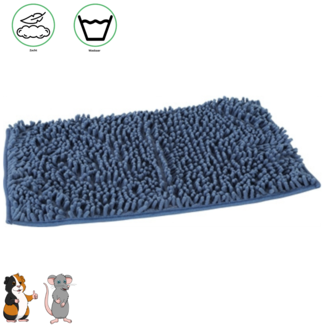
In a large enclosure with plenty of floor space, you can actually vary: a soft layer of Zooply Cotton Fibre in the play area, a digging corner with coconut shreds and moss, and a wee corner with pellets. On the levels, many rat owners put a washable mat or a thin layer of bedding, so rats don't walk on a slippery or wet surface there either.
Stock and storage
Bedding goes quickly with a group of rats. For those who have several rats, the large 100-litre bags or the bale of hemp bedding are handy, so you don't have to keep reordering. Store bedding and nesting material dry, in a closed bag or container and away from moisture and vermin. That way it stays clean and low in dust until you use it.
A nest to crawl into
Rats like to sleep close together in a nest they have built themselves. Give them safe material for it, such as Zooply Nesting Material, kapok, unscented paper or hay. Don't use cotton wool or synthetic nesting fluff: long fibres can get wrapped around little legs and toes. Put the nesting material down loosely and let your rats build themselves. Replace wet or dirty parts as soon as you see them.
Enrichment on the floor
The floor isn't just for walking on, but also for searching. Scatter some Zooply foraging herbs or a few pellets of food through the bedding. Push stalks of oats or wheat upright into the layer, put some stone moss in a corner or place a Zooply bouquet next to the house. Rats will then search, drag and rebuild, and that is good for such intelligent animals. Do keep natural materials dry and out of the wee corner, and remove wet pieces straight away.
Useful combinations
Bedding and nesting material work best in combination with a well-furnished enclosure:
- Cages: a roomy cage with levels and space for one or two corner toilets.
- Hammocks & Hanging bridges: sleeping spots up high, supplemented with nesting material.
- Houses: sheltered spots to build a nest in.
- Rat scaping: cork and other natural materials to furnish the floor further.
Frequently asked questions about bedding for rats
Which bedding is best for rats?
Choose a low-dust, highly absorbent type without added scent. Zooply Cotton Fibre and Cotton & Cardboard are soft and hold their shape well, Zooply Cardboard Shreds and Cardboard Shreds Mix keep the top layer dry for a long time, and Zooply Hemp Fibre absorbs a lot of moisture. Many rat owners combine an absorbent bottom layer with a soft top layer.
How do I stop the rat enclosure from smelling?
Work with a litter tray in the favourite wee corner, remove wet patches daily and change the whole layer in good time. Also check hammocks and the nest, because urine often lingers there. Make sure the room is well ventilated and don't use scented bedding.
What is the difference between bedding and nesting material?
Bedding lies on the floor and absorbs moisture. Nesting material is soft and airy and is meant for the sleeping spot. Rats sometimes also use bedding in their nest, but nesting material gives a warmer and softer bed.
Can rats be litter trained?
Rats can learn well to use a fixed toilet spot, especially for their droppings. They also mark with small drops of urine, so they usually don't become completely litter trained. With a well-placed corner toilet, however, most of it ends up in one place.
Are dried flowers and grasses safe in the rat enclosure?
Only use products intended for rodents. Grasses and grains such as oats, wheat and millet grass are made to be nibbled on. Dried flowers are mainly decoration and enrichment. Keep everything dry and remove wet or mouldy pieces straight away.
Can I also use nesting material as bedding?
Preferably not. Nesting material is soft and airy and intended for the sleeping spot; it absorbs moisture less well than bedding and quickly gets soiled on the floor. For the floor, use an absorbent type such as Zooply Hemp Fibre or Cardboard Shreds, and put Zooply Nesting Material only in the house or hammock.
My rat is sneezing. Should I choose a different bedding?
Dust, scent or ammonia can cause sneezing. Choose low-dust bedding without scent and clean more often. If your rat keeps sneezing, if you hear squeaking or rattling breathing, or see red crusts around the nose and eyes, contact a vet with rat expertise.
Bedding for rats at Knaagplaza
At Knaagplaza, the webshop of 't Knaagplein, you will find everything for a dry, fresh and natural rat floor. Zooply is the brand we developed ourselves and that lies in all our own enclosures. Combine low-dust Zooply bedding with a corner toilet, soft Zooply Nesting Material and a few bunches of Zooply grasses, and your rats will live clean, comfortable and full of challenge.