




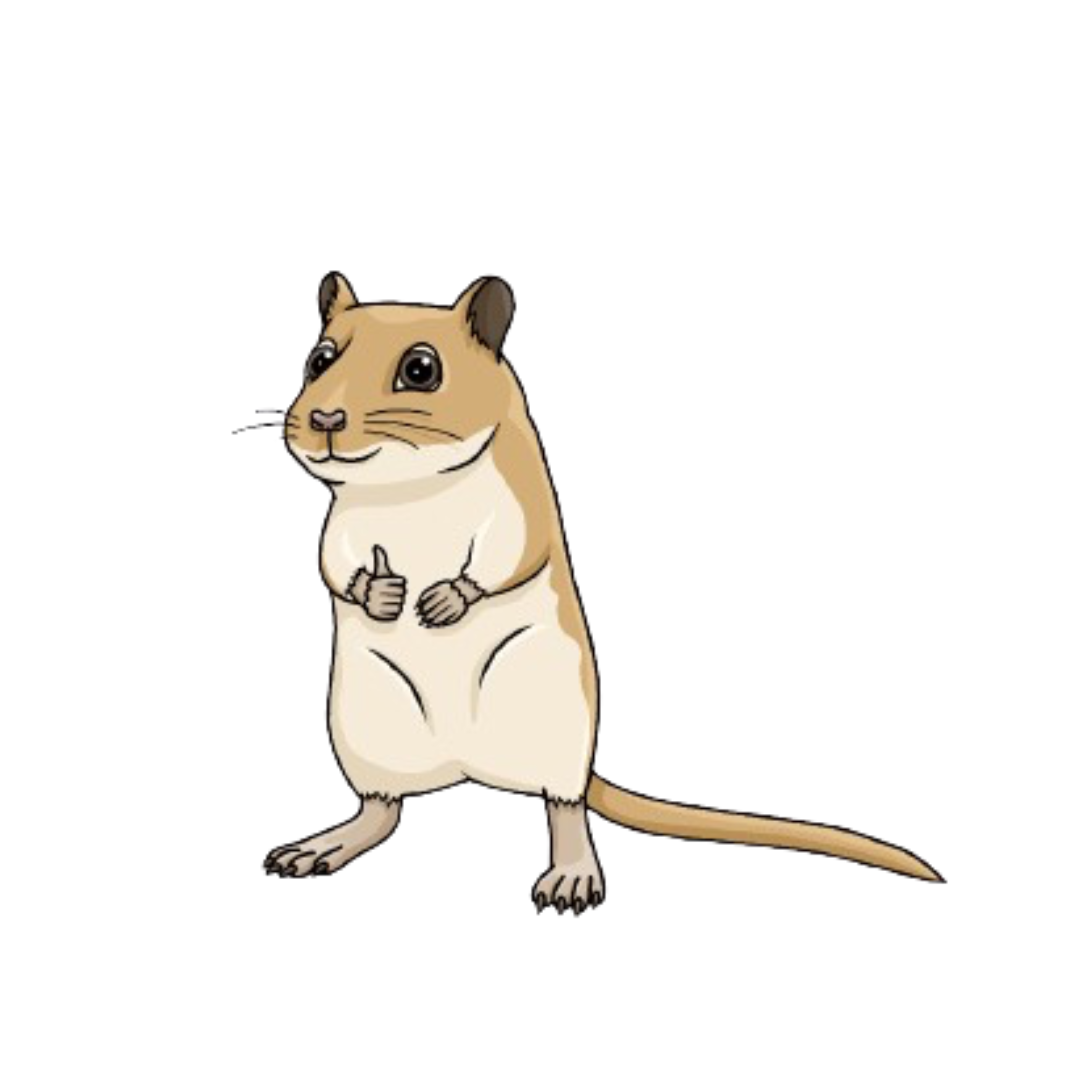
Gerbils: everything for digging, gnawing and living together
Gerbils, also known as Mongolian gerbils or Mongolian jirds, are curious, active rodents that naturally live in dry steppes. They dig tunnel systems, live in small family groups and are active in short bursts both during the day and at night. That makes them lovely animals to watch. But it also means they need different things from a hamster or a guinea pig: above all room to dig, the company of their own kind and food that they can search for and sort.
On this page you will find everything for gerbils together, from food and bedding to enclosures, accessories and care. Wherever possible, we choose Zooply, our own premium brand. Zooply came about because the products that worked best for our own animals were not always available from other brands. We use it every day for the animals in our shop in Bodegraven and in our breeding facility.
In short
- ✓ Keep gerbils in pairs or small same-sex groups that have been together from a young age.
- ✓ Provide an enclosure with a deep base and a digging layer of at least around 20 cm.
- ✓ Give a complete seed and pellet mix as the basis, with small extras and always fresh water.
- ✓ Provide a sand bath with fine, low-dust bathing sand and a running wheel with a solid surface of at least approx. 20 cm.
- ✓ Never pick up a gerbil by its tail.
What will you find in the Gerbils category?
Gerbil Food & Snacks
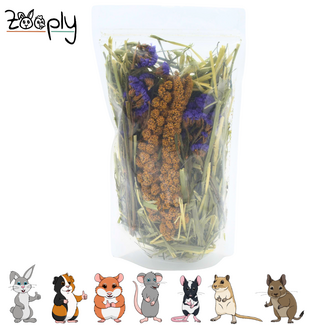
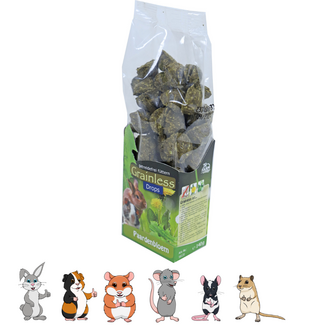
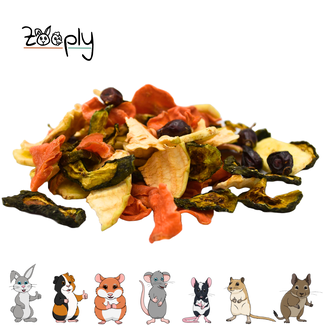
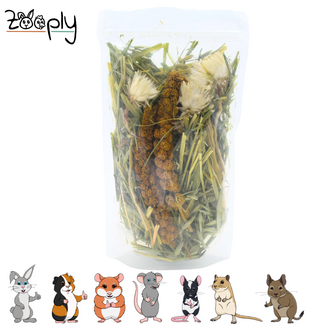
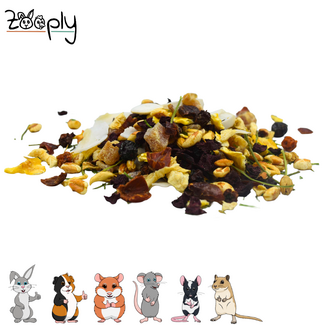
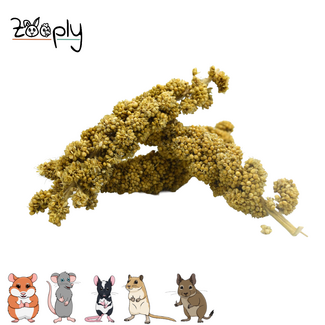
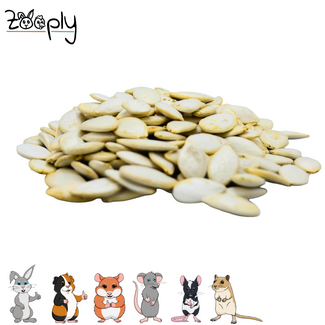
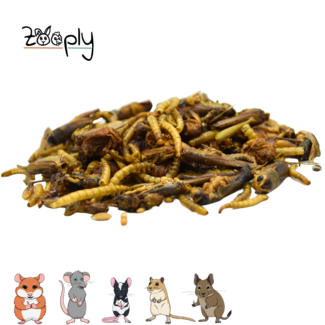
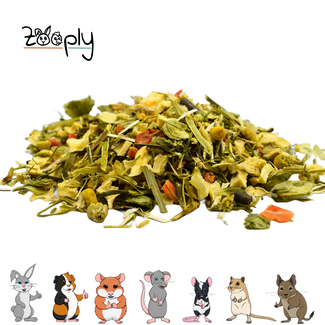
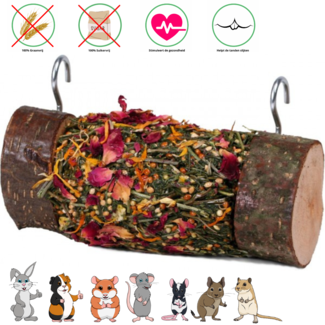
In Gerbil Food & Snacks you will find Zooply Gerbil Food as a complete basis, Zooply rodent food, dried insects, millet sprays, a large line of Zooply herbs, gnawing wood and hay. Everything to make the menu varied and to let your gerbils forage and gnaw.
Bedding
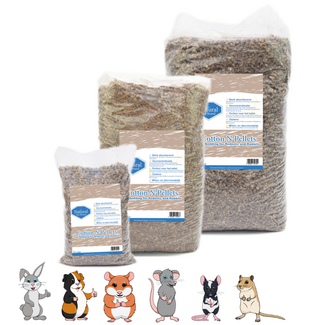
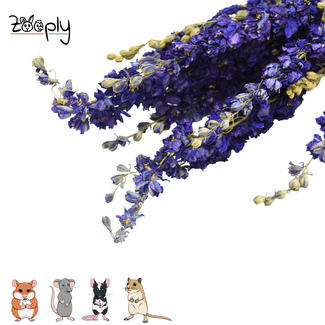
In Bedding you will find Zooply digging substrates made of cotton, cardboard, coconut, hemp and wood fibre, safe nesting material and a large collection of dried flowers, grasses and moss for a natural top layer.
Cages
In Cages you will find rodent enclosures from Ferplast, Trixie and Zolux, among others, including enclosures with a glass base. In Runs you will find runs for supervised time outside the enclosure.
Accessories
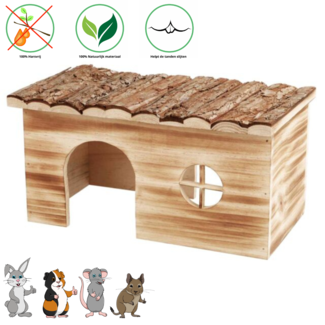
The Accessories category contains houses, tunnels, running wheels, hammocks and hanging bridges, toys and an extensive Gerbil scaping section with cork, roots, branches and Zooply scatter mixes to furnish the enclosure naturally.
Care products
In Care products you will find feeding bowls, water bottles, transport boxes and sand and sand baths, including Zooply bathing sand.
Keeping gerbils: together, never alone
Gerbils are social animals. In the wild they live in family groups, and a gerbil that lives alone misses that contact. So keep them in pairs or small same-sex groups. It works best when the animals have been together from a young age. Adult gerbils that don't know each other often don't simply accept one another; introducing them takes a lot of patience and doesn't always succeed. Two sisters or two brothers from the same litter are a good start.
The enclosure: depth before height
Gerbils do climb a little, but digging is their main activity. A good enclosure therefore above all has lots of floor space and a deep base, so that a digging layer of at least around 20 cm fits in it. A gerbilarium or an enclosure with a glass base works well. Mix hay through the bedding so the tunnels stay standing, and half bury a few houses or pieces of cork as a starting point for tunnels and nest.
Place the enclosure in a quiet, draught-free spot, not in full sun and not next to the radiator or a loud TV. Gerbils are also regularly active during the day, so you can often see them well if they are in the living room.
Diet: seeds, grains and a little protein
The basis of the menu is a complete seed and pellet mix, such as Zooply Gerbil Food. A mix is normal and natural for gerbils: sorting, husking and hiding seeds is part of their behaviour. Only top up the bowl when it has been properly emptied, otherwise only the favourite bits will be left. Now and then a dried insect, such as a Zooply Cricket or Mealworm, fits in well with their natural menu. Dried herbs and flowers provide variety. Gerbils drink little, but fresh water must always be available.
Enrichment: digging, gnawing, running and foraging
A gerbil that is bored keeps digging in the same spot or gnawing at the walls. With the right enrichment you prevent that. Provide gnawing material, such as Zooply Apple Branches and cardboard. Scatter part of the food or a Zooply scatter mix through the bedding. Provide tunnels and hiding places. And add a running wheel with a solid running surface, without rungs or holes, and a diameter of at least approx. 20 cm (preferably bigger), so the back stays straight while running.
Coat care: the sand bath
Gerbils keep their coat clean by rolling in fine sand. A sand bath with fine, low-dust bathing sand therefore belongs in every gerbil enclosure. Don't use dusty sand or chalk sand. Many gerbils also choose the sand bath as a fixed wee spot, which makes cleaning easier. Refresh the sand regularly.
Setting up a gerbil enclosure: the checklist
If you are just starting out, this order helps. First choose an enclosure with a deep base and enough floor space. Fill the base with a digging layer of Zooply bedding and hay to at least around 20 cm. Half bury a few houses or pieces of cork and add nesting material. Place a sand bath with bathing sand, a running wheel on a firm surface, a heavy feeding bowl and a water bottle. Put gnawing wood in a few spots and finish the top layer with some dried grasses and a pinch of scatter mix. That way you have everything for digging, gnawing, running, grooming and foraging.
Gerbils and transport
Gerbils prefer to travel for as short a time as possible. Use a well-ventilated, lockable transport box with a layer of bedding, some hay and a few pellets of food. Don't put the box in full sun and never leave it in a warm car. At home, put your gerbils straight into their furnished enclosure and give them peace and quiet.
Handling gerbils
Gerbils quickly become tame if you approach them calmly. Lay your hand flat in the enclosure, with a snack in your palm, and let your gerbil come by itself. Lift a gerbil by scooping it up with two hands, or let it walk into a little tube. Never pick up a gerbil by its tail: the skin of the tail can come off or the tail can break off, and it doesn't grow back.
Cleaning without stress
Gerbils orient themselves by scent and keep their enclosure reasonably clean themselves. Remove the wee spot every few days and refresh the water daily. Leave the tunnels and the nest alone as much as possible. Only do a big clean when it is really necessary, and then in sections, putting back part of the old, clean material.
Keeping an eye on health
Take a quick look at your gerbils every day. Are they eating and drinking normally, are they active, is the coat smooth and are the eyes bright? Weigh them now and then on a kitchen scale. If they aren't eating, are losing weight, are sluggish, have diarrhoea or breathing problems, contact a vet with knowledge of rodents immediately. For a visit to the vet, use a well-ventilated, lockable transport box with some bedding and hay, out of the sun.
Handy routes in the shop
Just starting out with gerbils? With these categories you have the basics covered:
- Gerbil food: Zooply Gerbil Food as the daily basis.
- Bedding: Zooply digging substrates for a deep, firm layer.
- Running wheels: wheels in various diameters; choose one with a solid running surface.
- Sand & Sand baths: bathing sand and a sand bath for the coat.
- Houses: hiding places that you can half bury.
Frequently asked questions about gerbils
Can I keep one gerbil on its own?
We advise against it. Gerbils are social animals that live in family groups. A gerbil on its own misses contact with its own kind, such as sleeping together and grooming each other. Keep them in pairs or small same-sex groups, preferably animals that have been together from a young age.
How big should a gerbil enclosure be?
The bigger, the better. More important than the height are the floor space and the depth of the base. A digging layer of at least around 20 cm must fit in it, with room for a sand bath, a running wheel, hiding places and a feeding spot as well. An enclosure from the shop is often the minimum basis.
Are gerbils active at night?
Gerbils alternate short active periods with rest, spread over day and night. They are often active around dusk. As a result, you will regularly see them running and digging during the day too, unlike hamsters, which are mainly active at night.
What is the difference between a gerbil and a hamster?
Hamsters are solitary and are kept alone; gerbils are social and are kept together. Gerbils have a long, furry tail and are more often active during the day. Both love to dig and need a thick digging layer. The food differs too: for gerbils, choose a mix that is suitable for gerbils, such as Zooply Gerbil Food.
Do gerbils need a running wheel?
A running wheel is a good way to burn off energy, especially in an enclosure of limited size. Choose a wheel with a solid running surface and a diameter of at least approx. 20 cm, preferably bigger. A wheel that is too small forces the back into a curved position.
Everything for gerbils at Knaagplaza
At Knaagplaza, the webshop of 't Knaagplein, you will find everything for gerbils in one place. Zooply is our own premium brand, which we use every day for our own animals in the shop and breeding facility. With a deep digging layer, good food, companionship and plenty of enrichment, you give your gerbils a life close to their nature.