

Hammocks and hanging bridges for degus: living on several levels
Degus love climbing just as much as digging. In a good enclosure they use the full height: they run across platforms, climb along branches and look for a spot up top to keep watch or rest. Hanging bridges, ladders, ropes and nets make that height accessible. Hammocks and hanging platforms provide a place to lie there.
In this category you will find hanging bridges and ladders made of bark and wood, a hanging platform, knotted climbing ropes and nets, and fabric hammocks, also combined with a wooden shelter. With degus, you pay attention to two things with all these products: sturdiness and gnawing damage. Degus are strong, jump with momentum and gnaw at everything they come across. In this overview you can read how to deal with that cleverly.
In short
- ✓ Connect levels with bridges and ladders, so your degus don't have to jump from a great height.
- ✓ Hang everything securely; a bridge or platform that swings causes startle reactions and can come loose.
- ✓ Check fabric hammocks and ropes often for fraying and loose threads, because degus gnaw on them.
- ✓ Provide several resting places up high, so a group doesn't have to compete for one hammock.
- ✓ Wash fabric hammocks regularly and keep a spare, so a clean one is always hanging up.
What will you find in the Hammocks & Hanging bridges for degus category?
Hanging bridges made of bark and wood
A hanging bridge connects two levels with a walkway of wooden slats. The flexible hanging bridge made of bark (61 × 8 cm) is long enough to bridge a considerable distance. The hanging bridge with chain made of bark (27 × 17 × 7 cm) is shorter and hangs from little chains. The wooden hanging bridge with rope ladder (35 × 15 × 15 cm) and the hanging bridge with rope ladder & toy (29 × 25 × 9 cm) combine a bridge with a rope ladder, so climbing and balancing go together. Wood and bark are safe materials to gnaw on.
Ladders and a hanging platform
Place the bark ladder (55 × 7 cm) at an angle between the floor and a platform or between two levels. The bark platform to hang in your cage (33 × 33 cm) provides an extra level: a place to sit, look out or lie down. A platform of this size offers room for several degus at the same time.
Climbing ropes and nets
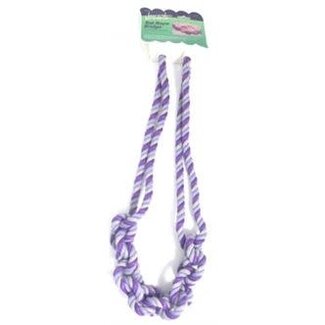
The Happy Pet sturdy knotted ropes come in 60, 100 and 180 cm. You hang them vertically, diagonally or as an arch between two points. You stretch the Happy Pet knotted net (35 × 35 cm) horizontally as a place to climb and lie, or vertically as a climbing wall. There is also a knotted cargo net (35 × 20 cm) and a 100 cm rope bridge. According to the product information, these products are made for rats and ferrets. They give degus a different way of climbing, but rope frays when it is gnawed a lot. So check them often.
Hammocks and shelters with a hammock
The Trixie hammock of 30 × 30 cm and the two-tier hammock (22 × 15 × 30 cm) are washable and are attached to the mesh with carabiner hooks. The Sunny shelter with hammock (28 × 24 × 28 cm and 37 × 29 × 27 cm) is a wooden shelter with a soft hammock underneath: a sheltered resting place on the floor or on a platform. Fabric is something to keep a close eye on with degus. Many degus love lying in it, but some start gnawing on it. Remove a hammock as soon as holes or loose threads appear.
Routes up high: how to set them up
Degus are good climbers, but a jump from a great height onto a hard floor is not without risk. With bridges, ladders and platforms you turn the enclosure into a kind of staircase. Every step is small and safe. Make sure there is always a route between the floor and the highest spot that your degu can take without a big jump.
Don't hang bridges too steeply. A gentle slope is calmer to walk on and gives more grip. Rather make two short connections with a platform in between than one long, steep bridge. With a group, several routes are important: if there is only one way up, a dominant degu can block it.
Spread out the resting places too. A platform at the top, a hammock halfway and a shelter on the floor give every degu a choice. That creates less jostling, and you will often find your degus spread across the whole enclosure.
Hanging things securely
Degus land on a platform or bridge with momentum. So hang everything from sturdy points in the mesh or on the wall, and check after hanging that it doesn't swing too much. A bridge that wobbles makes degus insecure. A platform that hangs crooked is used less. At every clean-out, quickly check whether hooks, chains and carabiner hooks are still securely attached. Degus also gnaw on wooden attachment points.
Gnawing on fabric and rope
Degus gnaw wood and plastic to pieces, and fabric and rope too. With wood that isn't a problem: a gnawed bridge is a sign of an active degu, and you replace it when it becomes unstable. With fabric and rope it is different. Loose threads can wrap around a foot or toe, and a degu can swallow fibres. So check hammocks, ropes and nets every few days. If you see fraying, holes or loose loops, remove them.
If you notice that your degus gnaw on fabric and rope a lot, give extra gnawing material such as gnawing wood, apple branches and unlimited hay. If that doesn't work, mainly choose wooden bridges, ladders and platforms for your group, and only use fabric if you can check it properly.
Cleaning and washing
Fabric hammocks get dirty quickly, because degus often lie in them and bring hay and bedding with them. Shake them out a few times a week and wash them regularly. It helps to have two sets: one in the enclosure, one in the wash. Rinse well and don't use fabric softener or strongly scented detergent. Brush off wooden bridges and platforms and wipe them with a slightly damp cloth if necessary. Let them dry thoroughly before hanging them back up.
Don't hang hammocks and bridges directly above the water bottle or the place where your degus prefer to wee. That way they stay clean for longer and don't start smelling musty as quickly.
Handy combinations
Hammocks and bridges work best as part of a well-furnished enclosure:
- Cages: a tall enclosure with levels, so there is room for routes up high.
- Houses: enclosed hiding and sleeping places alongside the open resting places up high.
- Tunnels: a cork tunnel as a sheltered climbing route to a platform.
- Gnawing wood: Zooply Apple Branches and Dandelion Roots, so fabric and rope get gnawed less.
- Degu scaping: branches, cork and moss for natural furnishing around the climbing routes.
Frequently asked questions about hammocks and hanging bridges for degus
Are hammocks safe for degus?
Many degus love lying in a hammock, but they also gnaw on fabric. A hammock is safe as long as it is intact. Check it every few days for holes, fraying and loose threads, and remove it as soon as they appear. Loose threads can wrap around little feet. A wooden platform or shelter is a resting place that needs less checking.
How many resting places up high do I need?
At least as many as you have degus, and preferably one extra. They don't all have to be hammocks: a hanging platform, a shelter on a level and a hammock together already give plenty of choice. In a group, that prevents one animal from occupying the best spot all day.
How steep can a hanging bridge hang?
As flat as the enclosure allows. A gentle slope is calmer and safer to walk than a steep one. If you need to bridge a big difference in height, make two short sections with a platform in between. That way every step stays small and young or older degus can manage the route well too.
My degus don't use the hammock. What now?
Try a different spot, for example a little higher, in a quiet corner or closer to a platform where they already like to sit. For the first few days, put a few sugar-free herbs in it to make them curious. Some degus prefer to lie on wood or in a house. As long as there are enough resting places, that is fine.
Are ropes and nets for rats also suitable for degus?
They give degus a fun, different way of climbing. However, degus gnaw on rope, which can make it fray. Hang ropes and nets securely, check them often and replace them when loose fibres or loops appear. For a group that gnaws rope a lot, it is better to choose wooden bridges and ladders.
How often should I wash a hammock?
That depends on how often it is used. For most degu groups, washing weekly is a good rhythm, with shaking out in between. If a hammock starts smelling musty sooner or has got wet, wash it straight away. With a second hammock as a spare, your degus always have a clean spot.
Buying hammocks and hanging bridges at Knaagplaza
At Knaagplaza, the webshop of 't Knaagplein, you will find bridges, ladders, platforms and hammocks to furnish your degus' enclosure up high. Combine them with Zooply hay, Zooply Degu Food and gnawing material from Zooply. Zooply is our own premium brand and we use it every day for our own animals in the shop and breeding facility.