










Dried flowers and grasses for gerbils: a natural landscape to dig in
A gerbilarium with nothing but a bare layer of bedding is functional, but offers little challenge. Gerbils come from dry steppes with scattered grasses, herbs and flowering plants. With dried flowers and grasses, you bring some of that landscape indoors. You push them into the bedding, scatter them over the top layer or work them in around houses and cork. Your gerbils sniff at them, nibble on seed heads, drag stems to their nest and dig around them. That turns the enclosure into a place to discover.
All dried flowers, grasses, mosses and bouquets in this category are from Zooply, our own premium brand. According to the product information, they are intended for hamsters, gerbils, mice and rats. We use them ourselves to furnish the enclosures in our shop and at our breeding facility naturally.
In short
- ✓ Dried flowers and grasses are enrichment and decoration; gerbil food remains the foundation of the menu.
- ✓ Push stems into the digging layer or scatter flowers over the top layer, spread across the enclosure.
- ✓ Use small amounts and prefer to top up a little more often.
- ✓ Keep everything dry: remove damp or musty pieces.
- ✓ Combine with hay, cork and hideaways for a complete natural enclosure.
What will you find in the Dried flowers & grasses category?
Dried grasses and grains
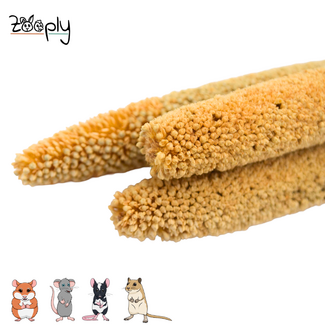
Zooply Oats, Wheat and Millet Grass (each 100 grams), Canary Grass (100 grams), Foxtail Grass (70 grams) and Flax Plant (110 grams) are dried stems, often with ears or seed heads still attached. For gerbils, which naturally eat seeds and grains, these are the most interesting products in this category. They gnaw the seeds off and drag the stems away. Push a few stems upright into the bedding, so it looks like a little field and your gerbils have to climb or pull a bit to get them.
Bulrushes, Babala and cotton bolls
Zooply Bulrushes (10 pieces) and Babala (5 pieces) are sturdy, decorative stems that add height to the enclosure. Zooply Cotton Bolls on the branch (80 grams) have soft white bolls on a twig. According to the product information, they are also suitable as nesting material; gerbils often pluck the soft fibres off for their nest.
Loose dried flowers
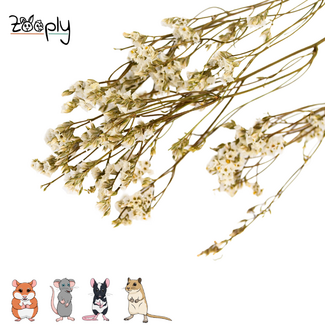
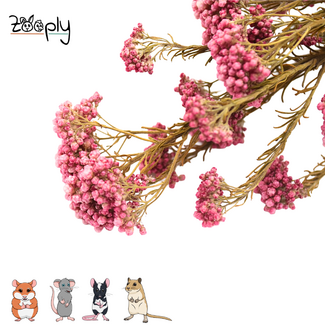
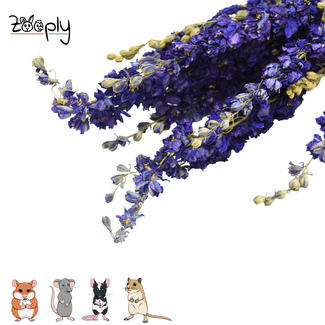
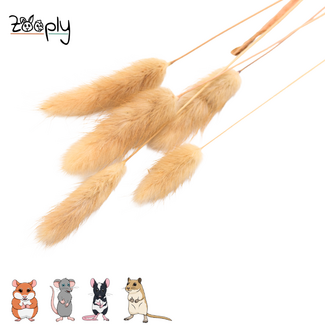
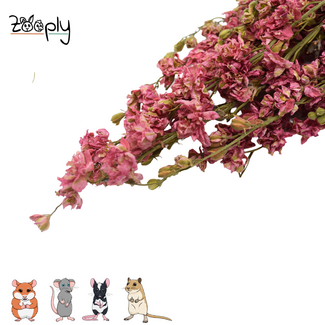
For colour there are loose dried flowers of 70 grams, such as Zooply Amaranth in red, orange and green, Strawflowers in yellow, white, pink and red among others, Statice, Sea Lavender and Limonium in various colours, Daisies in pink and white, Bunny Tails, Lavender and Yarrow. They immediately give the enclosure a cheerful look. Use them mainly in small tufts, spread across the enclosure.
Moss
Zooply Stone Moss (75 grams) and Rodent Moss (250 grams) are dried mosses with a loose structure. They are suitable for working in between the bedding or as a green finishing touch around a house or piece of cork. Rodent Moss comes in a larger pack, handy if you want to cover a larger part of the top layer.
Bouquets
The Zooply Summer Bouquet, Spring Bouquet and Meadow Grass Bouquet (each 100 grams) are ready-made combinations of dried flowers and grasses. They are handy if you want to add colour and variety in one go. You can put them down loose, divide them into small tufts or work them in between the bedding. According to the product information, the Meadow Grass Bouquet is sugar-free and also suitable for mixing through hay or using as an enrichment game.
How do you use dried flowers and grasses with gerbils?
Gerbils dig and build constantly. Everything you put down will be moved, undermined or dragged to the nest within a few days. That is not a problem, but it does mean you furnish a gerbilarium differently from a hamster enclosure. Work with small amounts and accept that your gerbils will redesign the landscape themselves. It is precisely that dragging and building that is the enrichment.
Push sturdy stems, such as bulrushes, oats, wheat or millet grass, deep enough into the digging layer so they stay upright for a while. Scatter loose flowers over the top layer or in a corner where your gerbils often search. Put a tuft of moss around a buried house or piece of cork. That creates different zones for sniffing and digging.
How much and how often?
Start with a few stems and a small tuft of flowers. See what your gerbils do with them. If everything disappears into the nest straight away, top up a little now and then. If a lot is left lying around, give less. Dried flowers and grasses are not food: your gerbils can nibble on them, but the foundation remains a good gerbil mix. Seed heads of oats, wheat and millet do count a little as an extra.
Furnishing a gerbilarium naturally
A naturally furnished gerbilarium starts with a deep digging layer of at least about 20 cm, with hay mixed through it. Then you add structure: a few buried houses or pieces of cork as hideaways, a branch or root to climb on, a sand bath with fine, low-dust bathing sand and a spot with gnawing wood. The dried flowers and grasses form the finishing touch. They connect the different elements and make the whole more natural.
Only use safe, untreated natural materials. Artificial flowers, coloured decoration or material from nature that you don't know has been sprayed or not do not belong in a gerbil enclosure. Gerbils gnaw on everything.
Alternating for lasting curiosity
Gerbils quickly get used to their surroundings. A new tuft of flowers or a different type of grass makes them start investigating again. You don't need to rebuild the whole enclosure for that. For example, change one element every week: one time a few stems of millet grass, the next time some moss around a house or a handful of strawflowers in a corner. That keeps it exciting, while the familiar smell of the nest and tunnels is preserved. A bouquet is handy for offering different textures in one go, while single varieties are handy for choosing specifically.
Flowers and grasses in a small group of gerbils
Gerbils live in pairs or small same-sex groups. New materials are always popular in a group, and the first gerbil to find something often takes it away straight away. So spread flowers and grasses over several spots in the enclosure. Push stems into the digging layer in different places and put small tufts by different entrances. Then everyone has something to do and you prevent unrest.
Keeping them dry and storing them
Gerbils like it dry, and so do dried flowers and grasses. Don't place them under the water bottle or on the regular wee spot. If a tuft gets wet or starts to smell musty, remove it. Store the rest of the pack dry and dark, so the colour and scent last longer.
Useful combinations
Dried flowers and grasses complete the enclosure. These categories form the foundation:
- Bedding: a deep Zooply digging layer to work stems and flowers into.
- Gerbil scaping: cork, roots and branches for the structure of a natural enclosure.
- Hay: Zooply hay through the digging layer, so tunnels stay intact.
- Dried herbs: Zooply herbs to scatter over the top layer as a foraging game.
- Sand & Sand baths: a sand bath belongs in every gerbil enclosure.
Frequently asked questions about dried flowers and grasses for gerbils
Can gerbils eat the dried flowers and grasses?
It is mainly the seed heads of oats, wheat, millet and canary grass that get eaten, and there is nothing wrong with that: gerbils are natural seed eaters. Loose flowers and moss are more often dragged away than eaten. Use them in small tufts as decoration and enrichment. The gerbil food takes care of the nutrition.
Why does everything disappear straight into the nest?
Gerbils collect everything that is useful for their nest and tunnels. Soft flowers, moss and cotton bolls are ideal for that. That is normal behaviour. If you want something to stay visible for longer, choose sturdy stems such as bulrushes or babala, and push them deep into the digging layer.
What is the difference with dried herbs?
Dried herbs are intended for eating and sniffing, as a natural supplement to the menu. Dried flowers and grasses are primarily intended for furnishing and enriching the enclosure. Your gerbils may nibble on them, but it is mainly about digging, dragging and building.
How often should I replace the flowers and grasses?
There is no need to follow a fixed schedule. Top up when there is little left to see, and remove anything that is dirty, wet or musty. During the weekly check of the wee spot, take a quick look at whether the decoration is still dry and clean.
Do dried flowers and grasses give off dust?
Dried plant parts can release some fine particles, especially if they have been in the pack for a long time. Give a tuft a quick shake over the bin before you put it in the enclosure. If you notice a gerbil sneezing or having trouble breathing, contact a vet with rodent expertise.
Can I also use dried flowers with a hamster or mouse?
Yes. According to the product information, the Zooply dried flowers are suitable for hamsters, gerbils, mice and rats. How they are used does differ per animal; gerbils, for example, dig and drag more than most other small rodents.
Dried flowers and grasses at Knaagplaza
At Knaagplaza, the webshop of 't Knaagplein, you will find a wide choice of dried flowers, grasses, moss and bouquets from Zooply, our own premium brand. We use them every day to furnish our own enclosures. Combine them with a deep digging layer and some cork and hay, and your gerbils will get a natural landscape to dig and build in.