







Feeding bowls for guinea pigs: calm eating without the mess
Guinea pigs eat a lot and often. In addition to unlimited hay, they get a measured portion of guinea pig pellets and a generous amount of fresh vegetables every day. You want to offer those pellets and vegetables clean and dry, in a fixed spot where your guinea pigs can eat in peace. A good feeding bowl makes that easy. The food stays out of the bedding, you can see at a glance what has been eaten, and a heavy bowl stays put, even when an enthusiastic guinea pig stands on it with its front paws.
In this category you will find feeding bowls made of ceramic, stoneware and wood, from small 100 ml bowls to a roomy 600 ml oval bowl and a wooden picnic table as a shared feeding spot. We fill our own feeding bowls in the shop and breeding facility every day with Zooply Guinea Pig Food, our own premium brand, supplemented with fresh vegetables. So we see straight away which bowl is practical in everyday use.
In short
- ✓ Choose a heavy bowl made of ceramic or stoneware, so your guinea pigs can't push it over.
- ✓ In a group, put down at least one bowl per guinea pig, or one long bowl where they can eat side by side.
- ✓ Use a separate bowl for fresh vegetables and remove leftovers the same day.
- ✓ The feeding bowl is for pellets and vegetables; hay is offered without limit in a hay rack.
- ✓ Rinse the bowl daily and replace it if it has cracks or sharp edges.
What will you find in the Feeding bowls category?
Ceramic feeding bowls from Flamingo
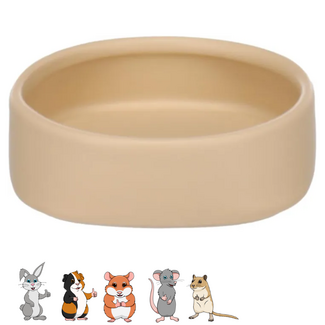
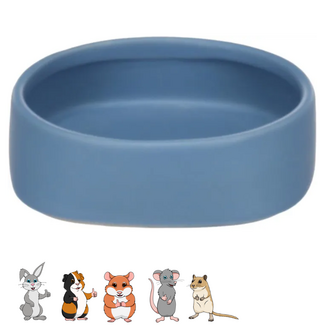
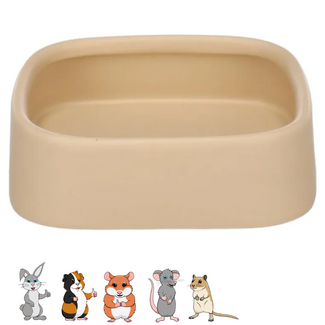
The feeding bowls from Flamingo are simple, heavy ceramic bowls in blue, green and beige. You can choose from a round bowl of 100 ml, a round bowl of 200 ml and a square bowl of 200 ml. The 100 ml suits one guinea pig or works as an extra vegetable dish. The 200 ml bowls are roomy enough for the pellet portion of a pair. Because the bowls come in three colours, you can also use colours to keep the pellet bowl and the vegetable bowl apart.
Feeding bowls shaped like vegetables and fruit
If you want something cheerful in the enclosure, there are ceramic bowls shaped like a lettuce leaf and a carrot from Happy Pet, and a carrot and an apple feeding bowl from Trixie (both 12 × 11 cm). They are made of sturdy ceramic and therefore stay in place well. With the small carrot bowl from Happy Pet (13.5 × 6.5 × 3 cm), note that it is narrow and shallow: fine for a snack or a handful of vegetables, but for the daily pellets of two guinea pigs you are better off choosing a roomier bowl.
Round and oval bowls
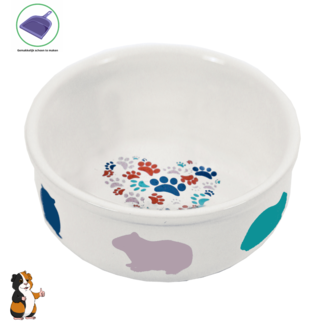
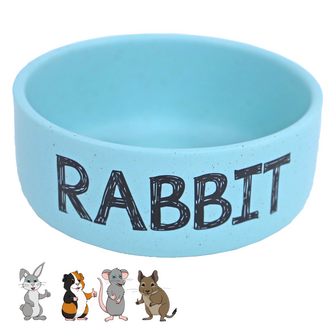
The oval ceramic feeding bowl from Trixie has a capacity of 600 ml. That is the largest bowl in this category and handy for a small group of guinea pigs, or as a vegetable bowl that several animals can reach at the same time. You will also find round bowls from De Boon: the stone guinea pig feeding bowl (ø 11 cm, white with pastel print) and a blue ceramic bowl with the text 'Rabbit' (ø 12 cm). These are also heavy enough not to slide around easily.
Ceramic bowls with a rainforest look
Trixie makes ceramic feeding bowls with a natural rainforest look in two sizes. The larger model (13 × 3.5 × 11 cm) is the most practical for guinea pigs; the smaller model is more suitable for a snack or herbs. These bowls fit well in a naturally furnished enclosure.
Wooden feeding spots
The Trixie Feeding Board is a rectangular feeding bowl made of bark wood measuring 27 × 5 × 13 cm. Thanks to its elongated shape, two or three guinea pigs can eat side by side. The wooden picnic table (40 × 45 × 26 cm) is more a feeding spot than a bowl: you put vegetables and hay on it or under it, and guinea pigs also use the space under the top as a sheltered spot. Wood is attractive and natural, but absorbs moisture and odours. So preferably use wooden feeding spots for dry food and vegetables that get eaten quickly, and keep them dry.
How many feeding bowls do you need?
Guinea pigs are group animals and should live at least in pairs. Within every group there is a pecking order, and it becomes very visible at feeding time. A dominant guinea pig will stand with its whole body in the bowl or chase the others away. The calmest guinea pig then only eats once the tastiest bits are already gone.
So make sure there are enough feeding spots. A good rule is one bowl per guinea pig, spread across the enclosure, or one long bowl where everyone can stand side by side. With a pair, it often works well to divide the pellets between two small bowls and give the vegetables in a larger bowl. If you notice that one guinea pig keeps being chased away, put an extra bowl in a different spot, preferably near a hideout.
Pellets and vegetables: preferably separate
Guinea pigs cannot produce vitamin C themselves. They get it every day from their food: from guinea pig pellets with vitamin C and from fresh vegetables, such as bell pepper. So both the pellets and the vegetables are needed every day, and that is why it pays to offer them properly.
Use a dry bowl for the pellets and give the vegetables in a separate bowl or on a clean spot. Wet vegetables make the pellets soft, and soft pellets are eaten less willingly. Remove vegetable leftovers the same day, especially in summer. A second bowl in a different colour keeps things clear: one for pellets, one for vegetables.
How many pellets go in the bowl?
A feeding bowl doesn't need to be big, because pellets aren't the main food for guinea pigs. According to the label of Zooply Guinea Pig Food, you give roughly 25 to 30 grams per kilo of body weight per day. So a guinea pig weighing one kilo gets about a handful. Don't keep topping up the bowl when it's empty. A guinea pig that can eat pellets all day eats less hay, and hay is needed for digestion and to wear down the continuously growing teeth and molars.
If you see that the bowl is empty straight away every day and the hay is left untouched, the portion of pellets is often too big. If pellets are left over, check whether your guinea pig is eating plenty of hay and producing normal droppings. If a guinea pig eats less than normal, becomes sluggish or loses weight, contact a vet with guinea pig experience.
Where do you put the feeding bowl?
Place the feeding bowl on a dry, level spot, not in the corner where your guinea pigs wee the most. Guinea pigs often choose fixed corners for weeing and pooing; you will recognise them by yourself after a few days. Also don't put the bowl directly under the water bottle, because drips make the pellets wet. A spot near the hay rack works well: guinea pigs like to alternate between eating pellets, vegetables and hay.
Guinea pigs are skittish prey animals. They eat more calmly when there is a hiding place nearby. If the bowl is in the middle of an open space, some guinea pigs eat hastily or leave the food. A house or tunnel close by gives them the feeling that they are safe.
Cleaning and checking
Rinse or wipe out the pellet bowl daily, and clean it thoroughly with warm water a few times a week. Wash the vegetable bowl every day. Ceramic and stoneware are smooth and easy to clean; rinse well after cleaning so no smell of cleaning product remains. Guinea pigs are less keen to eat from a bowl that smells strange.
Check ceramic bowls now and then for cracks, chipped pieces and sharp edges. Replace a damaged bowl. Check wooden feeding spots for gnawing damage and moisture: wood that becomes soft, dark or musty is better replaced.
Handy combinations
A feeding bowl is one part of a good feeding plan. These categories go with it:
- Guinea pig food: Zooply Guinea Pig Food with vitamin C for the daily portion in the bowl.
- Hay: the basis of the menu, unlimited and fresh every day.
- Hay racks: keep the hay clean next to the feeding bowl, so your guinea pigs alternate between hay and pellets.
- Dried herbs: Zooply herbs to give now and then in a small bowl or mixed through the hay.
- Water bottles: fresh water belongs next to every feeding spot.
Frequently asked questions about feeding bowls for guinea pigs
Why does my guinea pig sit in the feeding bowl?
A guinea pig that sits or stands in the bowl often wants to be sure of its food or is looking for the tastiest bits. In a group it is also a way of claiming the bowl. Choose a bowl that isn't much bigger than necessary, or a long, narrow bowl where they have to eat side by side. Also put a second bowl in a different spot, so there is less competition.
Is a plastic feeding bowl suitable for guinea pigs?
Plastic is light and easily gets pushed over or gnawed. Gnawed plastic gets rough edges where dirt collects. That is why we choose ceramic, stoneware or wood. A ceramic bowl stays put, is smooth and easy to keep clean, and lasts for years with normal use.
How big should a feeding bowl for two guinea pigs be?
For the pellets of two guinea pigs, a 200 ml bowl is more than enough. Even better is to use two small bowls, so each guinea pig has its own spot. For vegetables, choose a bigger or longer bowl, such as the 600 ml oval bowl or the wooden Feeding Board, which both guinea pigs can reach at the same time.
Can I put vegetables and pellets in the same bowl?
You can, but we advise against it. Vegetables are wet and make the pellets soft. Soft pellets are eaten less willingly and spoil faster. On top of that, many guinea pigs pick out the vegetables first and leave the pellets. With two separate bowls you can keep a better eye on what your guinea pigs really eat.
My guinea pigs throw the food out of the bowl. What can I do?
A light or shallow bowl is easily pushed empty. Choose a heavier bowl with a higher rim, such as the round ceramic bowls. Also give a suitable portion: an overfull bowl invites digging and spilling. And check whether there is enough to do in the enclosure; guinea pigs with little variety are quicker to start playing with their food.
Buying feeding bowls for guinea pigs at Knaagplaza
At Knaagplaza, the webshop of 't Knaagplein, you choose feeding bowls that work in everyday use: heavy, smooth and easy to keep clean. Fill them with Zooply Guinea Pig Food, our own premium brand that we use every day for our own guinea pigs, and place them next to a hay rack with fresh hay. That way every guinea pig in the group has a calm, clean place to eat.