








Hamster accessories: hiding, running, digging and exploring
A hamster enclosure only becomes a good home with the right furnishings. A hamster wants to be able to sleep safely during the day, and at night to run, dig tunnels and gather its food. Accessories make that possible. A house provides peace, a tunnel a safe route, a running wheel exercise and natural furnishings a challenge. A well-furnished enclosure is not crowded, but logical: hiding places along the edges, open digging space and fixed spots for sleeping, eating and the sand bath.
In this category you will find all the accessories to furnish the enclosure of your Syrian hamster or dwarf hamster. For hamster scaping we have our own line from Zooply, our own brand: forest mixes with leaves, scatter herbs, scatter flowers and moss, which we use ourselves for our own animals.
In short
- ✓ Provide at least one hiding place per hamster, preferably one extra, connected by tunnels.
- ✓ A running wheel with a solid running surface belongs in every enclosure: at least about 20 cm for dwarf hamsters, 28 to 30 cm for Syrian hamsters.
- ✓ Choose the size of houses, tunnels and toys to suit the species: smaller for dwarf hamsters, larger for Syrian hamsters.
- ✓ Hang everything low and place it above a thick layer of bedding; hamsters are poor at judging height.
- ✓ Never change the whole enclosure at once; it is better to swap one or two things.
What will you find in the Accessories category?
Houses
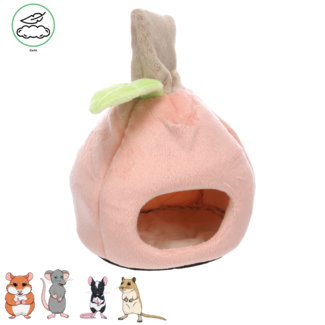
In Houses you will find hiding places made of bark wood, wood, coconut and ceramic. From simple semi-circular bark wood houses without a base to corner houses, a multi-chamber house that you bury and soft sleeping houses. There are separate sizes for dwarf hamsters and Syrian hamsters. A house without a base has the advantage that your hamster can carry on digging directly underneath it.
Tunnels
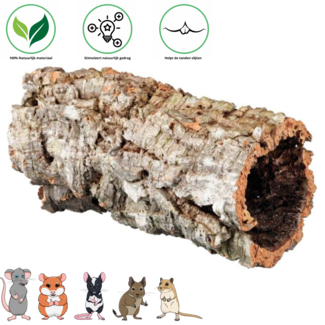
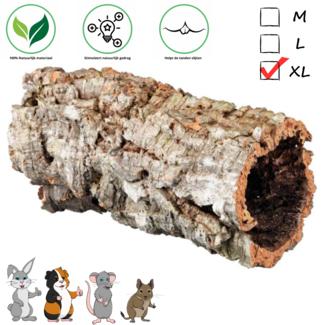
In Tunnels you will find tunnels made of willow, cork, bark wood, plastic and soft fabric, an underground tunnel and willow corner pieces. Tunnels connect the house with the feeding spot and the sand bath, so your hamster does not have to cross open ground. Half buried, they feel like real burrows.
Running wheels
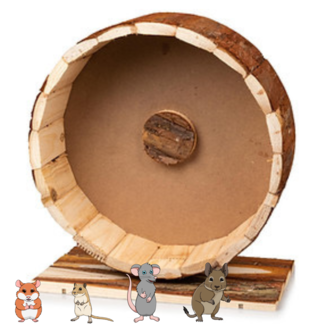
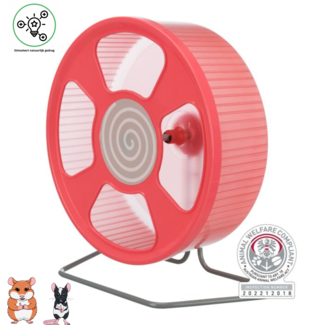
In Running wheels you will find running wheels made of plastic and bark wood in diameters from 20 to 33 cm. The smaller sizes are for dwarf hamsters, the larger ones for Syrian hamsters. A wheel of the right size lets your hamster run with a straight back.
Hammocks & Hanging bridges
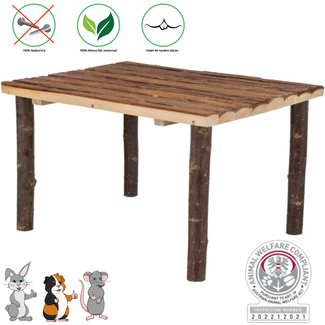
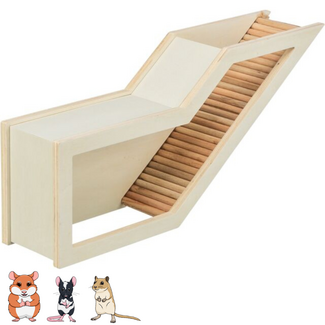
In Hammocks & Hanging bridges you will find hanging bridges, platforms, a ladder and soft hanging baskets. For hamsters these are extras: many hamsters like to climb a little, but the floor remains their most important living area. Hang everything low.
Toys
In Toys you will find chew toys made of willow, straw and bamboo, food puzzles such as a treat ball and a flip board, chew hangers and climbing elements made of bark and vine wood. Hamster toys work best when there is something to search for.
Hamster scaping
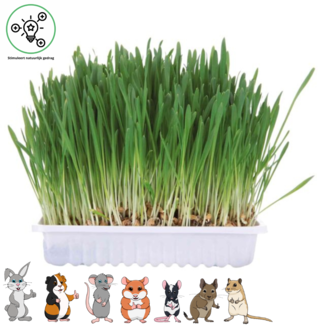
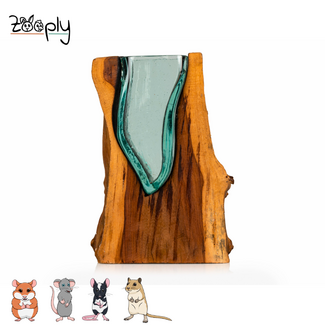
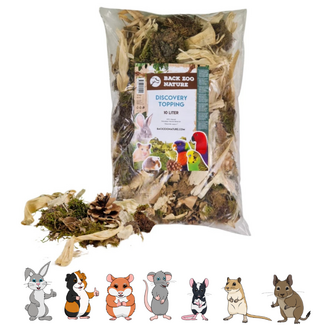
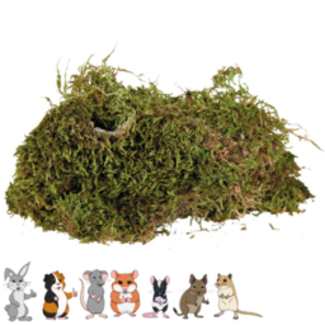
In Hamster scaping you will find everything to furnish the enclosure as a little piece of nature. Zooply products come first here: the Zooply Forest Mixes with leaves (also with seeds, nuts, walnuts or hazelnuts), the Zooply Scatter Herbs and Scatter Flowers for foraging, Zooply Stone Moss, Zooply Rodent Moss and Zooply Millet Spray pieces. You will also find natural decoration from Esve and Back Zoo Nature, cork and vine branches from Trixie and glass tanks on a wooden base.
Furnishing a hamster enclosure logically
Start with the basics
The basis of every hamster enclosure is a thick layer of bedding of at least about 20 cm, mixed with some hay so that the tunnels hold their shape. Only then come the accessories. First place what your hamster really needs: a house or multi-chamber house as a nest, a running wheel of the right size on a stable surface, a sand bath, a food bowl and water. Then add tunnels, toys and natural materials.
Work with zones
Divide the enclosure into a few fixed spots: a quiet nesting area, a sand bath at a distance from the nest, a feeding spot, the running wheel and open digging space. Connect those spots with tunnels or let your hamster connect them itself with its burrows. Fixed zones make the enclosure predictable for your hamster and easy for you to keep clean.
Along the edges
Hamsters prefer to walk along a wall or underneath something rather than across an open area. So place houses and tunnels along the edges and in the corners. Leave open space in the middle for digging. That way your hamster feels safe and there is still enough room to move.
Dwarf hamster or Syrian hamster: mind the size
Accessories must suit the size of your hamster. A Syrian hamster needs larger houses, roomier tunnels and a bigger running wheel than a dwarf hamster. Openings that are too small can cause trapping, and a running wheel that is too small leads to an arched back. For dwarf hamsters, large accessories are less of a problem, but a hiding place that is too big and open feels less sheltered. For every product, check the dimensions and the species mentioned.
With dwarf hamsters, also watch out for sugar. Campbell's and Russian dwarf hamsters are sensitive to sugar. Accessories and enrichment containing fruit, such as the Zooply Scatter Herbs with fruit or edible houses with carrot, are better given to Syrian hamsters.
Safe materials
Hamsters gnaw on almost everything in their enclosure. That is normal: their teeth keep growing throughout their life. So choose accessories made of untreated, natural materials such as bark wood, willow, cork, coconut, straw and bamboo. Those are meant to be chewed. With plastic, fabric and rope it is better to keep an eye on things: if your hamster chews off bits or long threads, remove the item. Loose threads can wrap around a leg. Replace accessories that develop sharp edges or are so damaged that they no longer stand firmly.
Variety without stress
Variety keeps a hamster curious. Put a tunnel in a different place for a change, add a new piece of cork or scatter a different Zooply foraging mix through the top layer. Just do not change everything at once. Hamsters are strongly focused on smell and routine, and a completely refurnished enclosure causes stress. Always leave the nest, the food store and the toilet spot alone.
Accessories for a young or older hamster
A young hamster is curious but still clumsy. Keep climbing elements low for it and make sure hiding places are easy to reach. An older hamster becomes stiffer and often does not see as well. Then remove high elements, put the running wheel in a low, stable spot and make sure hiding places and food are close together. A house with a low entrance and a soft nest make life more comfortable for an older hamster. If you notice that your hamster no longer uses the running wheel or has trouble walking, have it checked by a vet with knowledge of rodents.
Useful combinations
- Bedding: Zooply bedding as a thick digging layer underneath all the accessories.
- Nesting materials: Zooply nesting material for inside the house or multi-chamber house.
- Cages: a roomy enclosure in which all the accessories fit without losing the digging space.
- Care & Grooming: food bowls, water bottles and sand baths.
- Chew wood: Zooply apple branches and dandelion roots to gnaw on.
Frequently asked questions about hamster accessories
What accessories does a hamster need at a minimum?
At least one house or hiding place, a running wheel with a solid running surface in the right size, a sand bath with bathing sand, a food bowl and a water bottle, all in a thick layer of bedding. A second hiding place and a few tunnels make the enclosure much safer. Toys, hanging bridges and scaping materials are a nice addition.
Is a running wheel really necessary?
Yes. In the wild hamsters cover large distances and they need that exercise in an enclosure too. Choose a wheel with a solid running surface and the right diameter: at least about 20 cm for dwarf hamsters and at least about 28 to 30 cm for Syrian hamsters. If you see an arched back while it runs, the wheel is too small.
My hamster does not use its house. What now?
Many hamsters prefer to dig their own nest under the bedding. That is normal and a sign that the layer is deep enough. The house can then serve as an entrance, storeroom or extra hiding place. If your hamster does not use any hiding place at all and spends a lot of time out in the open, add more hiding places and tunnels.
How often should I clean accessories?
Only when necessary. Remove perishable food from houses and tunnels and clean wet spots. Rinse plastic and ceramic with warm water; shake out natural materials and replace them if they are wet or musty. Leave the nest and the dry food store in place, so the enclosure keeps smelling familiar.
Are hammocks suitable for hamsters?
As an extra, yes, as long as you hang them low above a thick layer of bedding. Some hamsters love to sleep in a soft hanging basket, others never use it. Check soft products regularly for loose threads and remove them if your hamster chews bits out of them. The floor remains your hamster's most important living area.
What is hamster scaping?
Hamster scaping means furnishing the enclosure as a natural landscape, with a thick digging layer, cork, branches, moss, leaves and scattered food to search for. That way your hamster can dig, hide and forage as it would in the wild. The Zooply forest mixes, scatter herbs and Zooply moss make it easy to get started.
Hamster accessories at Knaagplaza
At Knaagplaza, the webshop of 't Knaagplein, you will find houses, tunnels, running wheels, hanging bridges, toys and scaping materials for Syrian hamsters and dwarf hamsters. Combine them with Zooply bedding and the Zooply scaping line, our own premium brand that we use every day for our own animals in the shop and the breeding facility. That way you furnish an enclosure in which your hamster feels safe and has something to do every night.