





Bedding for hamsters: your hamster's underground world
For a hamster, life largely takes place underground. In the wild it digs a system of tunnels with a bedroom, a storeroom and a fixed spot to wee. During the day it sleeps deep in its nest, and in the evening it comes up to look for food. At home your hamster needs three things for this: a thick layer of bedding to dig in, soft nesting material for its bedroom and natural materials to dress up the world above ground. You will find all three in this category.
Almost everything comes from Zooply, our own premium brand. We use Zooply bedding, nesting material and dried flowers every day for the hamsters in our shop and breeding facility. For each product group we deliberately choose the options we stand behind ourselves. You will also find bedding from brands including Plospan, Natural Pet Brand, Back Zoo Nature and Trixie.
In short
- ✓ Provide at least about 20 centimetres of bedding; for Syrian hamsters the Zooply packaging recommends 25 to 30 centimetres.
- ✓ Choose low-dust, absorbent bedding in which tunnels hold their shape.
- ✓ Provide nesting material made of natural fibres, never synthetic cotton wool.
- ✓ Only remove wet patches and leave the nest and food store alone as much as possible.
- ✓ Flowers, grasses and moss make the enclosure more natural and give your hamster something to forage for.
What will you find in the Bedding category?
Bedding
In Bedding you will find the digging layer. From Zooply there are Cotton Fibre, Cotton & Cardboard, Cotton & Sawdust, Coconut Shreds, Hemp Fibre and Wood Fibre, in various sizes up to the large 20 kg bale of hemp litter. According to the product information they are low in dust, absorbent and suitable for digging in. The Zooply Scatter Herbs, Scatter Flowers and Forest Mix are also here: mixes with leaves, flowers and seeds to scatter through the top layer. You will also find wood fibre from Plospan, cotton pellets from Natural Pet Brand and natural top layers from Back Zoo Nature.
Nesting materials
In Nesting materials you will find Zooply Nesting Material in 3 and 10 litres: soft and warm and, according to the product information, soft enough not to constrict or entangle. You will also find kapok from Trixie, loose and in a little box that your hamster empties itself.
Dried flowers and grasses
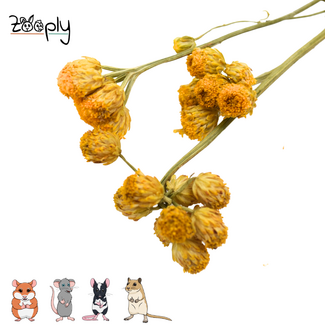
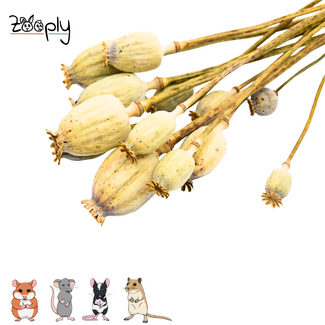
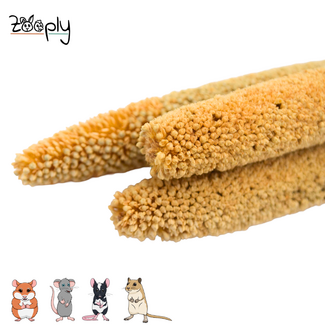
In Dried flowers and grasses you will find the dried flowers from Zooply: grains and grasses such as oats, wheat and millet grass, moss, strawflowers, amaranth, sea lavender, daisies and ready-made bouquets. You push them into the bedding to create sheltered routes and give your hamster something to search for.
Why the bedding is so important
A hamster without deep bedding cannot carry out its most important behaviour. You see that reflected in restlessness: lots of pacing back and forth, digging in the corners or chewing on the bars. With a thick layer in which it can make tunnels, that often changes quickly. Your hamster disappears underground during the day, sleeps more calmly and comes up relaxed in the evening. That is why the bedding is the part of the enclosure that makes the biggest difference.
Such a thick layer does require an enclosure with a deep base and enough floor space. An enclosure from the shop is often the minimum basis; the bigger, the better.
How to build up the bedding
Start with the digging layer. Fill the enclosure with a thick layer of Zooply bedding and press it down lightly. Mix some hay or straw through the bottom layer, so that the tunnels do not collapse. Make one area extra deep as a digging zone. By the running wheel and the food bowl the layer can be lower, so that they stand stable.
Then put a handful of Zooply Nesting Material at the entrance of a house or tunnel. Your hamster will build its nest itself. Finally, finish off the top layer with some moss, leaves and a few tufts of dried flowers and grasses. Scatter part of the food or a Zooply scatter mix through that top layer. Then your hamster has something to discover from the very first evening.
Which bedding suits your hamster?
Cotton with cardboard and hemp fibre hold tunnels well and absorb a lot of moisture. Wood fibre is soft and light. Coconut shreds give a dark, natural floor. Many hamster owners combine them: a firm digging layer of cotton and cardboard or hemp, and an extra absorbent material in the wee corner. For a hamster, preferably choose bedding without added scent, because hamsters have sensitive airways and rely heavily on smell.
A Syrian hamster digs larger tunnels and prefers a really thick layer. A dwarf hamster makes finer tunnels and loves finer materials, moss and small flowers. For both, every hamster lives alone and has its own enclosure.
Cleaning with respect for the nest
Hamsters usually wee in a fixed spot. Remove the wet material there every day or every other day and top up. Only replace all of the bedding when it no longer smells fresh, and then in sections. Always put some old, clean material and part of the nesting material back into the enclosure. That way the smell stays familiar.
Leave the nest and the food store alone as much as possible. Only remove what is wet, mouldy or perishable. Do this in the evening, when your hamster is awake and out of the nest. Also remove dried flowers and grasses that have become damp or dirty.
How much bedding do you need?
A thick layer needs more material than you might expect. Calculate it like this: the length times the width of the enclosure in centimetres, times the depth of the layer, divided by 1000. That gives the number of litres. An enclosure of 120 by 60 centimetres with a 25-centimetre layer therefore needs about 180 litres. Pressed-down material takes up less space, so allow a little extra. For the initial set-up, the large 100-litre bags are therefore often a lot more practical than lots of separate small bags.
The sand bath as part of the floor
Alongside the digging layer there should be a sand bath with fine, low-dust bathing sand. Hamsters roll in it to groom their coat and love to dig in it. Many hamsters also use the sand bath as a toilet. Put it in a stable spot, slightly raised or dug in, so that the bedding does not keep falling into it.
The first days in a new enclosure
A hamster in a new, freshly furnished enclosure needs time. During the first nights it will mainly dig, drag things around and create its own layout. Let it do so in peace and do not change anything about the bedding during that period. Do not clean straight away, except for a wet patch. After a week or two you will see where it sleeps, where its food store is and where it wees. You then tailor your cleaning routine to that layout.
Bedding throughout the year
In winter, or in a cool room, hamsters often build a thicker nest. Give some extra nesting material then and keep the enclosure free from draughts. In summer a thick layer actually helps them stay cool: deep underground the temperature stays more even. Never put the enclosure in full sun or next to the radiator.
Useful combinations
The bedding is the foundation. Complete the enclosure with:
- Cages: an enclosure with a deep base and plenty of floor space.
- Houses: hiding places as the entrance to the nest.
- Hamster scaping: cork, roots and branches to work into the bedding.
- Sand & Sand baths: a sand bath with fine, low-dust bathing sand for coat care.
- Hamster food: Zooply hamster food to scatter through the bedding.
Frequently asked questions about bedding for hamsters
How deep should the bedding be?
At least about 20 centimetres, and more is better. The packaging of Zooply bedding recommends 25 to 30 centimetres for Syrian hamsters. In any case, make one part of the enclosure extra deep, so your hamster can dig real tunnels and a nesting chamber.
What is the difference between bedding and nesting material?
Bedding is the thick layer in which your hamster digs and which absorbs moisture. Nesting material is soft, light material with which your hamster builds a warm nest in its bedroom. You need both: the bedding for the tunnels, the nesting material for the bed.
Are dried flowers necessary?
Not strictly, but they make a big difference. Stalks and flowers provide cover, make the enclosure more varied and give your hamster something to search for and nibble on. Especially in a large enclosure with an open area, a hamster feels safer with some decoration.
How often should I replace everything?
Remove wet patches every day or every other day. Only replace all of the bedding when it no longer smells fresh, and then in sections. Only replace nesting material if it is dirty or damp. That way you keep the enclosure clean without taking away your hamster's familiar surroundings every time.
My hamster is sneezing. Is it the bedding?
It could be. Dust and strong smells can irritate the airways. Choose a low-dust bedding without added scent. If your hamster keeps sneezing, has watery eyes or a wet nose, or breathes audibly, contact a vet with knowledge of rodents.
Buying bedding at Knaagplaza
At Knaagplaza, the webshop of 't Knaagplein, you will find everything for the floor of the hamster enclosure: bedding, nesting material and dried flowers. Zooply is our own premium brand and we use it every day for our own hamsters. Build a thick, firm layer of bedding, provide soft nesting material and dress up the world above ground. Then your hamster can live the way a hamster wants to.