








Toys for rats: a challenge for a clever group
Rats are among the cleverest pets you can keep. They learn quickly, remember where the treats are and are very curious. That is great fun, but it also means rats quickly get bored in a cage where the same thing happens every day. You can see boredom in destructive behaviour, pulling at the bars, chasing within the group or, on the contrary, sleeping a lot and doing little. Toys for rats are therefore not a luxury, but enrichment: they give rats something to search for, puzzle over and destroy.
In this category you will find treat and puzzle toys, snuffle mats, natural chew toys made of grass, willow, straw and wood, climbing branches and climbing toys. Fill the toys with part of the daily Zooply Rat Food or with a single Zooply cricket, and your rats will be happily occupied for a while.
In short
- ✓ For puzzle toys, mainly use part of the regular rat food; rats quickly become overweight from treats.
- ✓ Spread toys around the cage, so that no single rat claims everything.
- ✓ Swap a few items now and then, instead of rearranging the whole cage at once.
- ✓ Check toys regularly for sharp edges, loose parts and threads.
- ✓ Toys supplement, but never replace, daily contact and free-roaming time outside the cage.
What will you find in the Toys category?
Puzzle and treat toys
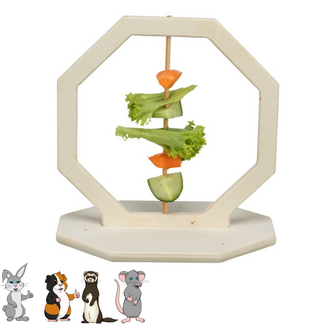
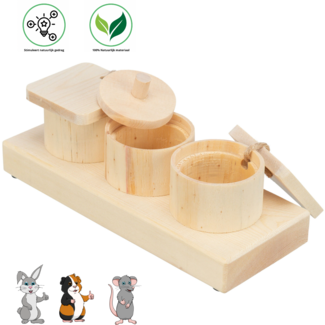
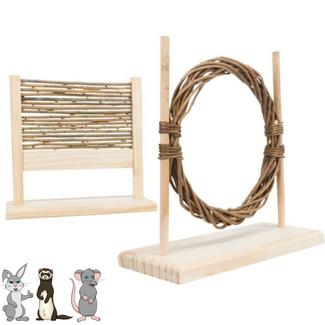
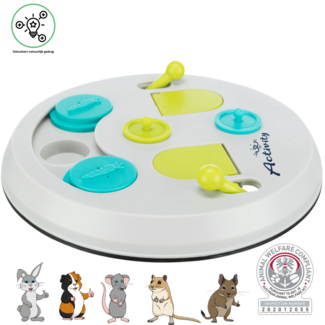
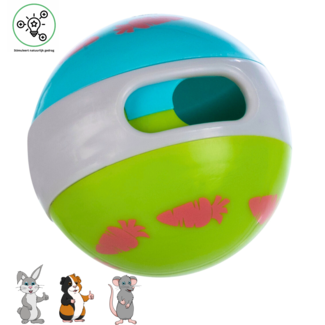
These are the most challenging toys for rats. On the Trixie Flip board (ø 23 cm) and Slide & Fun board (ø 23 cm) you hide food under flaps and sliders that your rat has to learn to open. The Snack board (ø 20 cm) is a simpler version to start with. The wooden Snack cube, Snack cups, Snack bowl and Snack box with lid work with openings, cups and lids in which you hide pieces of food. The Trixie treat ball (ø 6 cm) and the Zolux treat roller (ø 6 × 12 cm) drop a piece of food when your rat rolls them. According to the product information, the Trixie agility training set (28 × 26 × 11 cm), with a ring and a hurdle, is intended for rats among others and is fun to practise with your rat together.
Snuffle mats and snuffle box
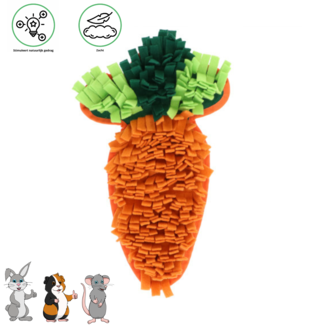
In a snuffle mat you hide food between fabric strips; your rat has to sniff and root around to find it. There is the Zolux Neolife snuffle mat (45 × 29 cm), a snuffle mat in the shape of a carrot (35 × 22 cm) and one in the shape of a sunflower (ø 30 cm). The JR Farm snuffle box works on the same idea. Rats like pulling at fabric; so check snuffle mats for loose threads and preferably use them under supervision.
Chew and shredding toys
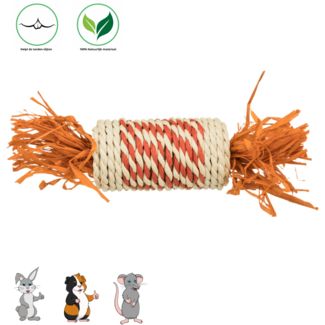
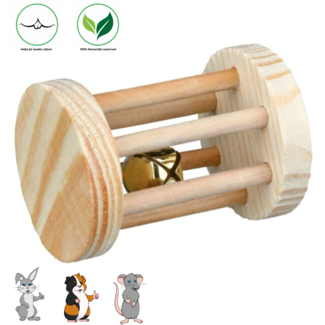
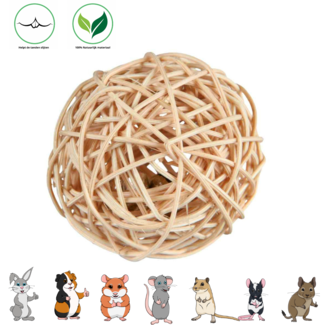
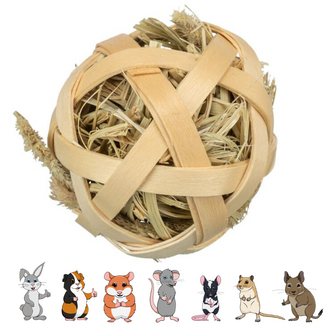
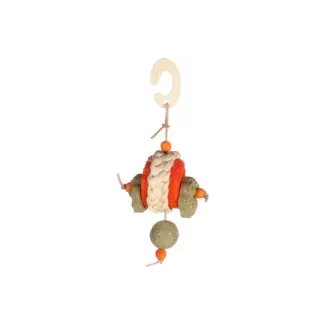
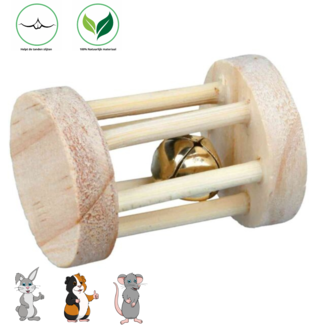
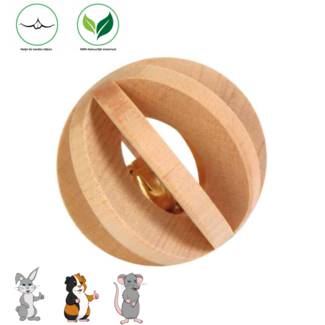
Rats love to destroy things, and that is allowed. For that purpose there are play balls made of dried grass (ø 6, 7 and 10 cm), a rattan ball, willow balls (ø 6 and 10 cm), a wooden slatted ball and a bamboo ball. Made of paper yarn, there is an 18 cm play roll and a 20 cm toy carrot. There are also straw toys in the shape of a corn cob, a carrot and radishes, wooden sticks with straw, play blocks with rope, wooden chew dumbbells and play rolls with a bell. The Flamingo hangers (Jao, Mareb and Oda) are made of materials including loofah, sisal, grass, corn leaves and wood, and you hang them on the bars.
Climbing branches and climbing toys
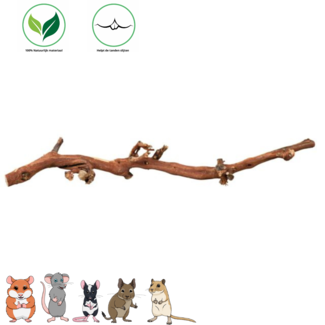
The Trixie grapevine branches are 100% natural grapevine wood, in lengths of 30–40, 40–60 and 55–80 cm. Rats climb over them and gnaw on them. There is also a bark wood climbing wall (16 × 20 cm), a wooden shelf to hang on the bars (10 × 15 cm), a platform with ladder (47 × 25 × 30 cm) and a bark wood shelter with lounging spot (45 × 27 × 35 cm).
What kind of toys suit rats?
Rats are natural foragers. In the wild they spend a large part of the day searching, digging and working out what is edible. Toys that mimic that behaviour suit them best: anything in which food can be hidden and that your rat has to make an effort for.
Rats also want to destroy things. Pulling apart a paper yarn roll or a grass ball is just as satisfying for a rat as the food inside it. Give them that kind of toy deliberately, and the hammocks and furnishings will stay more intact.
Finally, rats want to climb. Branches, climbing walls and shelves provide extra routes and lookout points in the cage.
How to use toys cleverly
Start simple. With a new puzzle toy, the first few times put the food in plain sight or half open, so your rat understands that there is something to get. Then make it harder step by step. Rats learn quickly; a puzzle that is tricky on the first day is often solved in a few seconds after a week. Then it is time for a harder version.
Use their own food. Rats quickly become overweight. So take part of the daily portion of Zooply Rat Food to hide in toys, instead of giving extra treats on top. A piece of Zooply walnut or a cricket is a nice reward when practising, but keep it small.
Spread and rotate. Put toys in different places in the cage, so every rat gets a turn. Do not put everything out at once; it is better to swap one or two items per week. Rats like familiar routes, so a cage that is completely different every day actually causes unrest.
Play together. Rats enjoy attention from their human. With puzzle toys, the agility training set or simply a few pieces of food in your hand, you can practise little tricks. That strengthens the bond and keeps your rats sharp.
Toys for young and older rats
Young rats are a bundle of energy. They climb on everything, destroy a lot and benefit from climbing branches, shredding toys and puzzles they learn quickly. Older rats become calmer and less agile. For them, snuffle mats and puzzle boards on the floor are more pleasant than toys high up in the cage. That way seniors also stay mentally active, without having to climb or jump. With older rats, pay extra attention to their weight and be sparing with treats as rewards.
Safety and cleaning
Rats sink their teeth into everything. So check toys regularly. Remove loose strings, threads and small parts, and replace toys that develop sharp edges or splinters. With fabric snuffle mats and rope, pay extra attention to loose threads in which little nails or toes can get caught.
Treat and puzzle toys get dirty from food leftovers and saliva. Clean wooden and plastic toys regularly with warm water and let them dry thoroughly. Wash snuffle mats and fabric toys according to the instructions, without perfume. Toys made of grass, straw and paper are meant to be used up; throw them away once they have become wet or dirty.
Useful combinations
Toys work best in a cage where the basics are right:
- Treats: Zooply insects and walnuts as a reward in puzzle toys.
- Gnawing material: Zooply apple branches and dandelion roots for daily gnawing.
- Rat scaping: toys as part of a naturally furnished cage.
- Hammocks & Hanging bridges: resting places and climbing routes alongside the toys.
- Dried flowers & grasses: Zooply flowers and grasses to hide food between.
Frequently asked questions about toys for rats
Do rats really need toys?
Rats need enrichment: something to search for, destroy and figure out. That can be done with toys, but also by hiding food in the bedding, with branches and with tunnels. Toys make it easier to offer some variety every day. Together with hammocks, climbing routes and daily free-roaming time, they keep your rats active and content.
My rats solved the puzzle within a minute. What now?
That is a compliment to your rats. Make the puzzle harder by combining several flaps, hiding the food deeper or putting the toy in a snuffle mat. You can also rotate between different puzzles, so there is something new to discover each time.
My rats destroy everything. Is that a problem?
No, destroying things is normal rat behaviour. Give them toys intended for that, such as paper yarn, grass balls and straw toys. Do make sure no large pieces of plastic or fabric are swallowed. Replace damaged plastic toys in good time.
How do I prevent squabbles over toys?
It is better to give a few small items in different places than one large toy in the middle. Hide the food in several places, so every rat can find something. If you notice one rat always grabbing everything, put out more and smaller portions.
Are toys for rabbits and guinea pigs also suitable for rats?
Many toys in this category are intended for several species and the product information often mentions rats. Pay particular attention to the size: toys for small rodents, such as a seesaw for hamsters, are too small for a rat.
Can I also use toys outside the cage?
Yes, that is actually a good idea. During daily free-roaming time, you can put a snuffle mat or puzzle board on the floor. Your rats will then explore the space and keep coming back to the toy. Keep an eye on them, so they do not start gnawing on cables or furniture.
Buying rat toys at Knaagplaza
At Knaagplaza, the webshop of 't Knaagplein, you will find toys that let your rats search, puzzle, destroy and climb. Complement them with Zooply, our own premium brand: rat food, treats, gnawing material and dried flowers that we use every day with our own animals. That way your group has something new to discover every day.