






Gnawing wood for guinea pigs: safe chewing alongside unlimited hay
A guinea pig's teeth keep growing throughout its whole life, both the incisors at the front and the molars at the back. That is normal, and it is exactly why a guinea pig chews all day long. The most important material for that is hay: long, fibre-rich strands that a guinea pig grinds away at for a long time. Gnawing wood is a supplement. It gives them something firm to gnaw on, keeps a guinea pig busy and is a safe alternative to the bars, the house or the edge of the cage base.
In this category you will find natural chewing material from Zooply, our own premium brand, and from Trixie, JR Farm and Flamingo. At Zooply, we deliberately choose pure, untreated products without artificial additives. We use them every day for the guinea pigs in our shop in Bodegraven and at our breeding facility.
In short
- ✓ Hay is the most important thing for the teeth and molars; gnawing wood is an extra and never replaces hay.
- ✓ Choose untreated wood without varnish, paint or glue, and no branches of unknown origin.
- ✓ Place gnawing wood in a dry spot, by a hideaway or along a walking route, and replace it when it is wet or dirty.
- ✓ If your guinea pig gnaws the bars a lot, also look at space, company and things to do.
- ✓ With drooling, dropping food or weight loss: have the teeth checked by a vet with rodent expertise.
What will you find in the Gnawing wood category?
Zooply Apple Branches
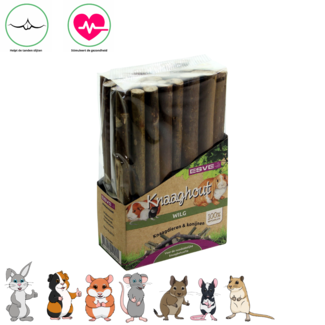
Zooply Apple Branches (275 grams) are dried branches from the apple tree. According to the product information, they are 100% natural and free from artificial additives, and they come in a resealable pack. Apple wood has a scent and taste that many guinea pigs find appealing, and the branches are sturdy enough to keep them busy for a while. Put one or two branches loose in the enclosure and replace them when they have been gnawed down or are dirty. Give them as a supplement alongside hay and guinea pig food, not instead of them.
Zooply Dandelion Roots
Zooply Dandelion Roots (250 grams) aren't wood, but dried dandelion roots with a firm, hard bite. That is why they are here: a guinea pig really has to chew on them. They are sugar-free and suitable as a small daily treat. The packaging gives a guideline of about one small handful of herbs per animal per day, and that is the total of all herbs together, not per type. Start with a small piece and check during the first few days that the droppings stay nice, firm and round.
Willow sticks
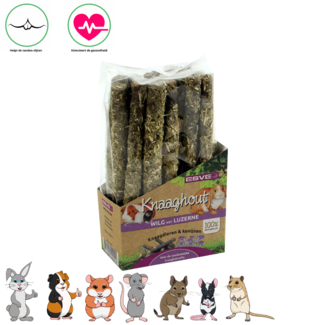
The Trixie dried willow sticks are about 18 cm long and come 20 to a pack. Willow is soft enough to gnaw on well, and many guinea pigs nibble the bark off first. You can put a few sticks down loose or push them between the hay in the rack.
Gnawing wood with something tasty
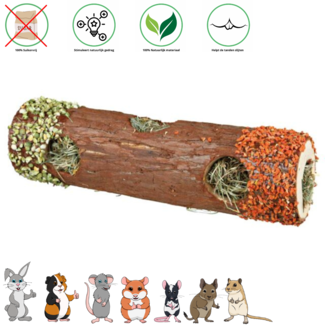
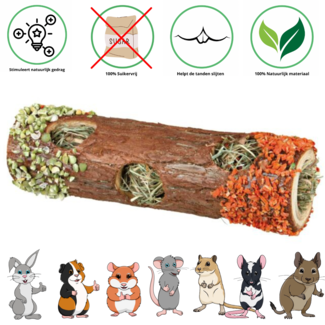
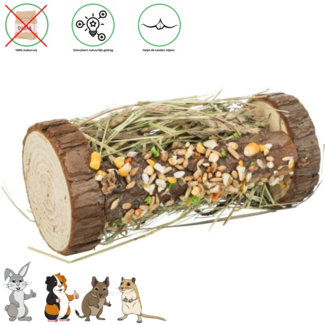
Some products combine wood with a filling. The JR Farm Wooden chew roll with carrot (150 grams) is untreated wood with carrot and millet. The Trixie Tower with mountain hay and seeds (13 × 17 × 13 cm) is made of natural wood filled with mountain meadow hay and seeds. The Trixie Tunnels with hay and vegetables (ø 6.5 × 20 cm and ø 9 × 30 cm) are wood filled with hay and pieces of vegetable. The Trixie Bridge with vegetables and nuts (16 × 8 × 20 cm) is made of bark wood. Because they contain seeds, millet or nuts, these are more snacks than pure gnawing wood: give them now and then and not as a permanent chewing spot. For an adult guinea pig, the large ø 9 cm tunnel is the better size.
Chew wood to attach
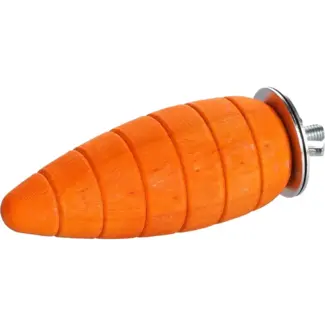
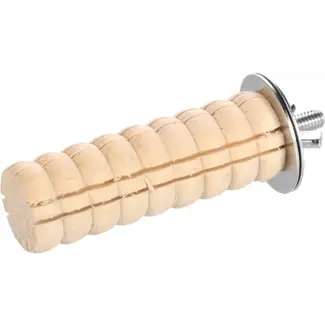
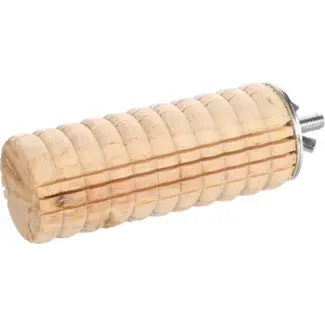
The Flamingo Chew wood Majs (7.5 × 2.5 cm and 10 × 3.5 cm) and the Flamingo Chew wood Carrot Caro (7.5 × 2 cm) are wooden chew blocks with a wing nut to attach to the mesh or bars. Hang them low, at head or chest height of your guinea pig when it is simply standing on all fours, so it can reach them easily.
Wooden platform
The Trixie Wooden platform made of bark wood (10 × 15 cm) is intended to hang on the bars as a place to sit or climb. Guinea pigs hardly climb at all; for guinea pigs, only use it very low down or as chewing material on the floor, never as a raised level a guinea pig could fall from.
Why do guinea pigs gnaw?
Gnawing and chewing are part of being a guinea pig. In the wild, it mainly eats grasses, which are tough and need a lot of chewing. As a result, the teeth and molars wear down at about the same rate as they grow. At home, hay takes over that role. Gnawing wood mainly helps with the incisors and provides something to do: a guinea pig investigates new things with its nose and teeth.
A guinea pig that gnaws the bars a lot is often bored, wants attention or has too little space. Gnawing wood at that spot can help, but also look at the cause. Is the enclosure roomy enough? Does your guinea pig have the company of its own kind? Is there enough hay and are there hideaways? Guinea pigs are herd animals and should be kept at least in pairs.
Which wood is safe for guinea pigs?
Only use wood and branches that are intended for rodents, or that you know for sure are untreated and unsprayed. Suitable options include apple, willow and birch. Avoid wood with varnish, paint, glue or stain, pressed board material and branches from unknown trees. Plants such as yew and thuja are poisonous and should never be in the enclosure. If you pick branches yourself, don't do so along busy roads or from gardens where spraying is done, and rinse them well.
Check gnawing wood regularly. Remove splinters, sharp edges and small leftover bits. Throw away wood that has become wet, smells musty or is mouldy.
How to offer gnawing wood
Place gnawing wood in a dry spot, not in the wee corner and not under the water bottle. Good spots are next to a house, at the entrance of a tunnel or along a regular walking route. Guinea pigs prefer to gnaw where they feel safe. Don't put everything down at once, but alternate: a week of apple branches, then willow sticks, then a piece of chew wood. That way it stays new and interesting.
You can also combine gnawing wood with hay. Push a few willow sticks or an apple branch between the hay in the rack, or put them in a pile of hay on the floor. Your guinea pig will then go searching and eat some hay at the same time.
Gnawing wood and dental health
Gnawing wood is not a solution for dental problems. In guinea pigs, problems with the teeth or molars often develop at the back of the mouth, where you can't see them yourself. Signs include drooling or a wet chin, picking up food and dropping it again, eating more slowly, eating less hay and losing weight. That is why you should weigh your guinea pig regularly. If you see any of these signs, contact a vet with rodent expertise. Don't wait and see: a guinea pig that isn't eating properly goes downhill quickly.
Useful combinations
Gnawing wood works best when the basics are right. These categories complement it:
- Hay: offer unlimited Zooply hay, the most important thing of all for teeth and molars.
- Hay racks: push chew sticks between the hay for extra foraging fun.
- Dried herbs: Zooply leaves and flowers to mix through the hay.
- Houses: a hideaway where your guinea pig can gnaw in peace.
- Toys: more enrichment for a guinea pig that gets bored quickly.
Frequently asked questions about gnawing wood for guinea pigs
Does my guinea pig need gnawing wood if it eats enough hay?
It is not strictly necessary: unlimited hay is the foundation for the teeth. Gnawing wood is a nice supplement, though. It provides something to do, especially in an indoor enclosure, and it is a safe alternative to the bars or the house. Many guinea pigs also simply enjoy investigating new things.
My guinea pig does nothing with the gnawing wood. Is that a problem?
No. Not every guinea pig gnaws wood to the same extent. As long as your guinea pig eats plenty of hay, maintains its weight and produces good droppings, there is nothing to worry about. Try a different type, such as Zooply Apple Branches or willow sticks, or put the wood in a different spot. A stick between the hay is often discovered more quickly.
How often should I replace gnawing wood?
Replace it as soon as it is wet, dirty or musty, or when it has been gnawed down so far that only small pieces are left. Sturdy pieces such as chew wood last a long time; sticks and roots are finished more quickly. Alternate too, to keep it interesting.
Are Zooply Dandelion Roots gnawing wood or a snack?
A bit of both. They are dried roots with a hard bite, so your guinea pig has to chew on them firmly. At the same time, they are edible and count as a treat. Follow the guideline on the packaging of about one small handful of herbs per animal per day, all herbs together, and build up gradually.
Can I give branches from my own garden?
Only if you know for sure which tree it is, that it hasn't been sprayed and that the species is safe, such as apple or willow. Rinse the branches and let them dry. If you are in doubt about the species, don't give them. Yew, thuja and other poisonous plants must never be in the enclosure.
My guinea pig is drooling and dropping food. Will gnawing wood help?
No. These are signs of possible dental problems. Contact a vet with rodent expertise, who can also check the molars at the back of the mouth. Gnawing wood won't solve this.
Gnawing wood for guinea pigs at Knaagplaza
At Knaagplaza, the webshop of 't Knaagplein, you will find safe chewing material for guinea pigs, led by Zooply Apple Branches and Dandelion Roots from our own premium brand. Combine gnawing wood with unlimited hay, guinea pig food with vitamin C and plenty of hideaways, and your guinea pigs will have something to chew on and discover every day.