








Accessories for mice: everything to make the enclosure complete and challenging
A mouse enclosure is more than a tank with bedding. Mice want to hide, nest, run, climb, gnaw and search for food, preferably all over again every night. With the right accessories, you turn an empty enclosure into a place where your mice can express all that natural behaviour. A well-furnished enclosure also brings more calm to the group: mice that have enough to do and enough places to retreat to get in each other's way less.
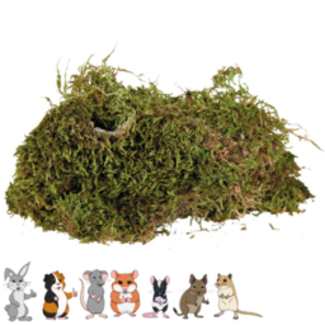
In this category you will find houses, tunnels, wheels, hammocks and hanging bridges, toys and everything for mouse scaping. For finishing off the enclosure we have our own products from Zooply, our own brand: Zooply Scatter Herbs, Scatter Flowers and Forest Mix to scatter through the bedding, and Zooply Stone Moss and Rodent Moss. We use these ourselves every day in our shop and breeding facility.
At a glance
- ✓ Give every mouse at least one hiding place, plus one extra, spread around the enclosure.
- ✓ Connect hiding places with tunnels and bridges, so your mice can move around under cover.
- ✓ Choose a wheel with a solid running surface and a diameter of at least about 20 cm.
- ✓ Use safe, untreated natural materials and check fabric and rope for loose threads.
- ✓ Swap one item now and then, but leave the fixed routes and the nest alone.
What will you find in the Accessories category?
Houses
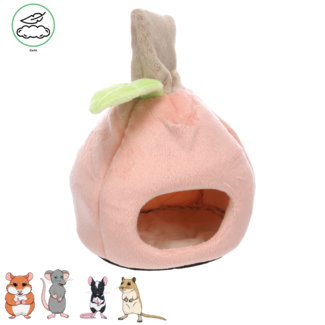
Under Houses you will find hideaways made of bark wood, birch wood, coconut, hay, ceramic and fabric, from small huts to play houses with several levels. A house is where your mice sleep and build their nest. In a group, houses with two openings are handy, so a mouse always has a way out.
Tunnels
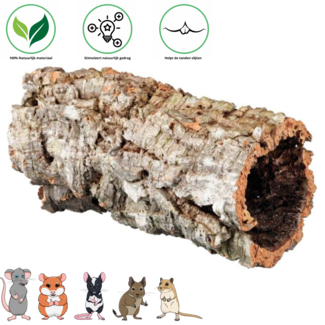
Under Tunnels you will find tunnels made of bark wood, willow, cork, wood, plastic and fabric, plus bridges and corner elements. Mice prefer to walk with something above and beside them. Tunnels along the walls and half buried in the bedding give them safe routes through the whole enclosure.
Wheels
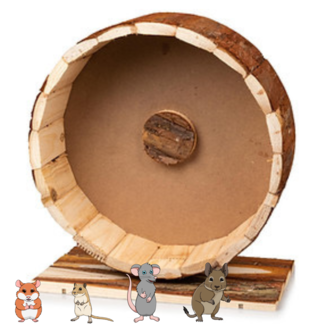
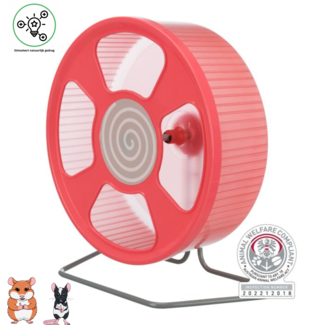
Under Wheels you will find wheels made of plastic and bark wood. Mice run considerable distances at night. A wheel of the right size, with a solid running surface and set up firmly, gives them the chance to burn off their energy.
Hammocks and hanging bridges
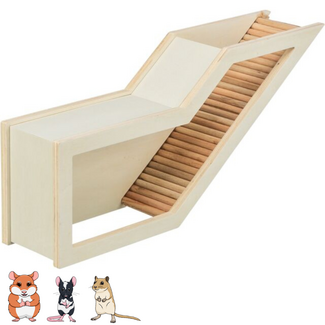
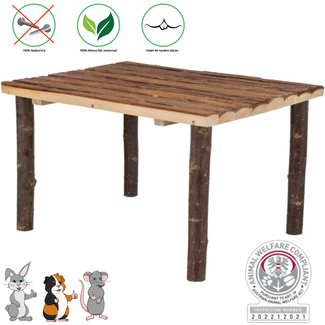
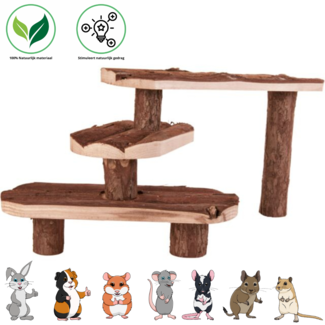
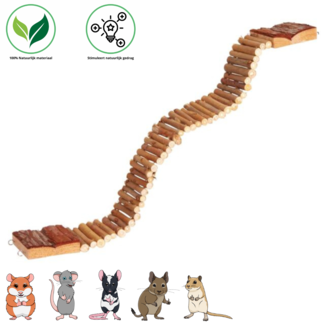
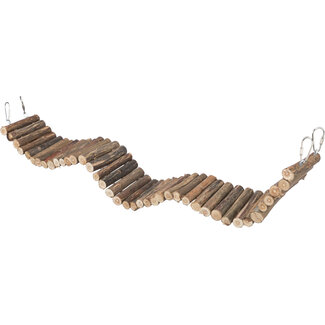
Under Hammocks & Hanging bridges you will find soft hammocks and hanging pouches, hanging bridges, ladders and platforms. With these you make use of the height of the enclosure and give your mice extra places to sleep and climb.
Toys
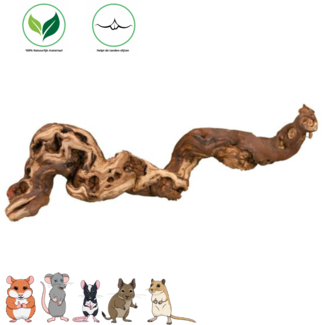
Under Toys you will find chew toys made of willow and straw, grapevine climbing branches, climbing walls and puzzle games in which you hide food. Toys keep mice busy and help against boredom.
Mouse scaping
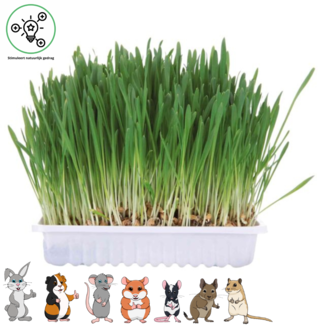
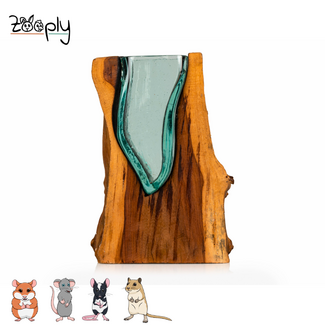
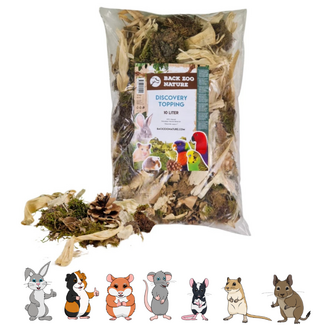
Under Mouse scaping you will find everything to furnish the enclosure as a little piece of nature. You scatter a small handful of Zooply Scatter Herbs (with seeds, nuts, millet, fruit or peas, among others) and Zooply Scatter Flowers through the bedding, so your mice have to search. Zooply Forest Mix, with various leaves and optionally nuts or seeds, provides a natural top layer. Zooply Stone Moss and Rodent Moss create sheltered paths. You will also find pine cones, coconut, cork, palm leaves and more natural materials.
Furnishing a mouse enclosure: where do you start?
1. The basics: floor and nest
Always start with a deep layer of low-dust bedding and safe nesting material. That is where your mice dig tunnels and build their nest. Only then come the accessories.
2. Hiding places
Mice are prey animals. A mouse that has nowhere to crawl away stays tense. So first put down the houses and hiding places, spread around the enclosure and along the walls. Allow at least one hiding place per mouse plus one extra.
3. Routes
Connect the hiding places with tunnels, cork and moss, so your mice can get from the nest to the feeding spot and the wheel without crossing open ground. In a group, create several routes, so one mouse cannot trap another.
4. Exercise
Put a wheel of the right size on a firm base. Create climbing routes to platforms and hammocks with ladders and bridges, and keep the fall height limited with intermediate stops and a soft floor.
5. Activity
Finish it off with chew toys, climbing branches and a handful of scatter mix. Leave enough open floor to dig and walk. An enclosure that is completely full is confusing for your mice and hard to keep clean.
Safe materials
Everything in a mouse enclosure gets gnawed. Natural, untreated materials such as bark, willow, cork, coconut and hay may be gnawed and are good for the teeth too, which keep growing throughout life. Plastic is easy to keep clean, but remove it as soon as sharp edges or loose bits appear. With fabric, rope, sisal and fibres, watch for loose threads and loops: thin threads can wrap around a little leg and cut off the circulation. That is why you do not use synthetic wadding or nesting fluff.
Accessories and the group
Female mice live in a small group with a pecking order. Enough accessories spread around the enclosure prevent one mouse from occupying the best spot, the wheel or the food bowl. In a group, provide several sleeping spots, several routes and possibly a second wheel. A male usually lives alone; for him, a richly furnished enclosure is extra important, because he misses the distraction of companions.
Young and older mice
Young mice are quick, curious and still a little clumsy. Keep hanging items low for them, choose narrow bridges with good grip and provide lots of small hiding places close to the floor. Older mice become calmer and sometimes stiffer. They benefit more from sleeping spots on the floor, low climbing routes and a wheel that turns easily. So adjust the furnishings as your mice get older; a mouse that can no longer reach her favourite hammock will choose another spot, but she does need to have one.
Think in zones
A handy way to furnish an enclosure is to divide it into zones. A quiet nest zone with houses and nesting material, preferably in a corner. An active zone with the wheel and toys. A feeding zone with the food bowl and the water bottle. And in between, routes with tunnels and moss. That way the nest stays quiet and clean, and your mice know exactly where to find what.
Variety without stress
Mice love new things, but also familiarity. They mark their routes with scent and get confused if everything changes at once. So every week or two, swap one or two items, such as a toy or a climbing branch, and leave houses, tunnels and the nest in place. Regularly scatter a new Zooply scatter mix or some leaves from the Forest Mix; that adds new scents without turning the enclosure upside down.
Cleaning and replacing
Do not clean all accessories at the same time. Brush wooden and bark wood items clean and let them dry thoroughly after wet cleaning. Wash plastic and ceramic with warm water and a mild cleaner. Wash fabric hammocks according to the instructions, but never all at once. Replace accessories that keep smelling musty, are soaked with urine, are frayed or have been gnawed away so much that they are no longer sturdy.
Useful combinations
Accessories work best together with a good foundation. These categories belong with them:
- Bedding: Zooply Hemp Fibre, Cotton Fibre or Shredded Cardboard as a deep digging layer.
- Nesting material: Zooply Nesting Material so your mice can furnish the houses themselves.
- Mouse food: Zooply Mouse Food, part of which you hide in toys and tunnels.
- Cages: a roomy enclosure with enough space for all the accessories.
Frequently asked questions about accessories for mice
Which accessories do I need at a minimum?
Start with hiding places (at least one per mouse plus one extra), a few tunnels, a wheel of the right size, chewing material, a food bowl and a water bottle. After that you can expand with hammocks, climbing branches, toys and scaping.
Can an enclosure be too full?
Yes. Mice also need open floor to dig and walk. In an overcrowded enclosure, routes are blocked and cleaning is difficult. It is better to choose a few good accessories and swap something now and then.
Are hamster accessories also suitable for mice?
Often yes; many houses, tunnels and wheels are made for hamsters, gerbils and mice alike. Do pay attention to size: mice are smaller. A house can be snug, a tunnel narrow. Large items for Syrian hamsters or rats are not dangerous, but feel less sheltered to a mouse.
How often do I scatter a Zooply scatter mix?
A small handful is enough for a fun search. The mixes are intended for foraging fun, not as the main food. Mixes with nuts, sunflower seeds or fruit are tasty but fattier or sweeter; mice quickly become overweight. Count them as an extra and alternate with a mix of mainly leaves and flowers.
My mice are not using a new accessory. What now?
New items smell strange. Put some used nesting material or old bedding with it, place it along an existing route and hide a few pieces of food in it. It is usually discovered within a few days.
Accessories for mice at Knaagplaza
At Knaagplaza, the webshop of 't Knaagplein, you will find everything to furnish a mouse enclosure safely and in a challenging way. Finish it off with the scatter mixes, the Forest Mix and the moss from Zooply, our own premium brand that we use every day for our own animals in the shop and breeding facility. That way you give your mice an enclosure where they can hide, run, climb and explore.