





Rat cages and enclosures: the foundation for a healthy group of rats
A rat spends most of its life in its enclosure. That is where it sleeps, eats, plays with its group mates and retreats when things get busy. Choosing a rat cage is therefore the most important purchase you make for your rats. Everything you add afterwards, from hammocks to toys, only works well if the enclosure itself is spacious, safe and easy to keep clean.
In the Cages category you will find two types of enclosure: wire cages with levels and platforms, and glass terrariums. Every enclosure needs good, low-dust bedding. For that, we use the bedding and nesting material from Zooply, our own premium brand, every day with our own animals.
In short
- ✓ Rats are social animals: keep at least two and choose the enclosure for the whole group.
- ✓ Rats love to climb; an enclosure with height and enough floor space per level suits them best.
- ✓ A shop-bought enclosure is the minimum base; daily free-roaming time outside the cage is still needed.
- ✓ Good ventilation and low-dust bedding are important for rats' sensitive airways.
- ✓ Place the cage in a quiet, draught-free spot, out of the sun and away from the radiator.
What will you find in the Cages category?
Rat cages
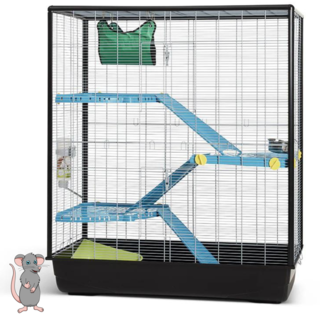
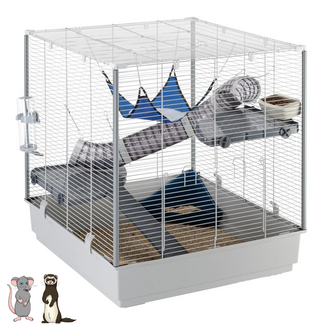
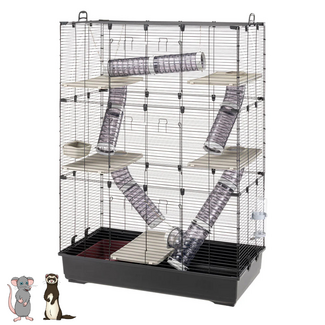
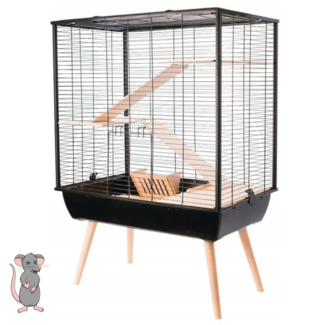
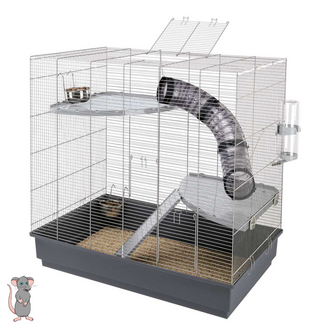
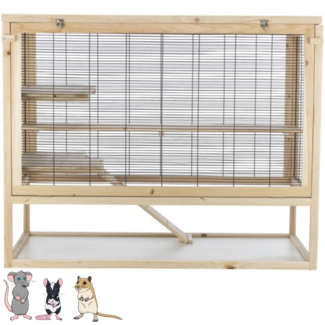
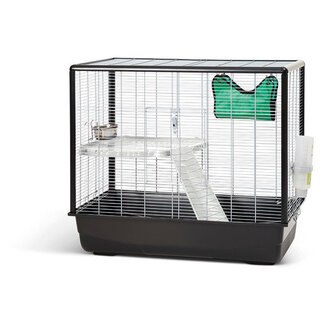
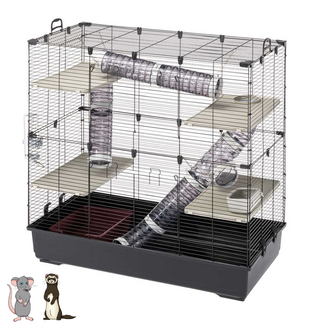
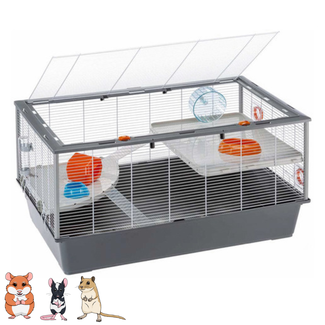
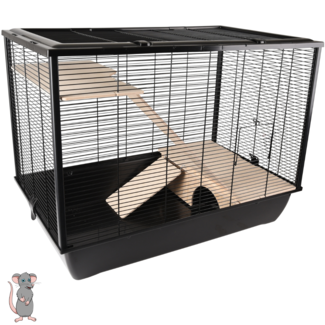
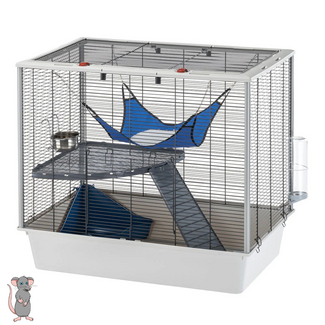
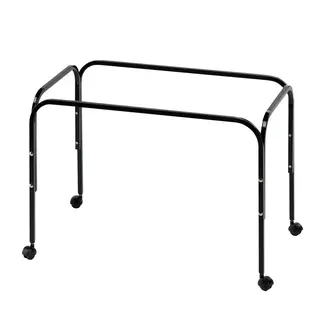
In the subcategory Cages you will find the wire cages for rats. There are tall rat and ferret cages from Ferplast up to 152 cm high, medium-sized cages around 80 cm wide from Ferplast, Savic and Zolux, a large Savic cage one metre wide, a wooden enclosure with platforms from Trixie and an enclosure for dwarf rats from Flamingo. The Ferplast stand on wheels, to put an 80 cm cage at working height, is also here. Wire cages are the standard choice for most rat owners: they ventilate well, you can hang hammocks and bridges anywhere on the bars and rats can climb upwards.
Terrariums
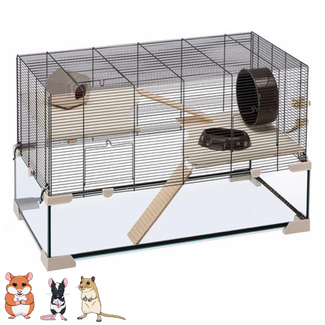
In the subcategory Terrariums you will find glass enclosures. A terrarium keeps bedding inside and feels calmer, but rats cannot climb along the walls and the ventilation must be well arranged. If you use a terrarium for rats, furnish it with sturdy platforms, branches and hammocks attached to the lid or to holders.
Wire cage or terrarium?
For rats, a wire cage with several levels is usually the most practical choice. Rats use the bars to climb, and you can hang hammocks, ropes and bridges anywhere. Air can circulate freely, which carries ammonia from urine away more quickly. One drawback is that bedding is sometimes kicked through the bars; a deep base helps with that.
A terrarium is calmer and cleaner in the room. You can fit a thicker layer of bedding in it, so rats can dig. Do pay close attention to ventilation, though: in a poorly ventilated glass enclosure, moist air with ammonia lingers, and that is bad for rats' airways. Glass also heats up quickly in the sun. So never place a terrarium in direct sunlight.
What to look for in a rat enclosure
Space for the group. A pair needs less space than a group of five, but even two rats must be able to avoid each other and each choose their own sleeping spot. Choose the enclosure based on the number of rats you have, and allow for a possible expansion.
Height and floor space. Rats like to use the height, but also want to be able to walk around on every level. An enclosure that is only tall but not very deep offers little play space per level.
Safety. The bars must be close enough together for the smallest rat in your group; young rats can squeeze through surprisingly small openings. Doors must close securely, because rats test everything.
Ease of cleaning. Large doors, a removable base and platforms you can take out make daily and weekly maintenance much easier. A cage that is awkward to clean gets cleaned properly less often, and you notice that in the smell.
Completing the enclosure
An empty cage is not yet a rat enclosure. Start with the basics: low-dust, absorbent bedding, a litter tray on the regular pee spot, a water bottle and a heavy food bowl. Then add sleeping places: several hammocks at different heights and at least one spacious house. Connect the levels with bridges, ladders or tunnels, so rats do not have to jump.
Then comes the enrichment: toys, gnawing material and a foraging corner with a forage mix. Scatter Zooply Scatter Herbs, Scatter Flowers and Forest Mix through the bedding, so your rats have to search for something tasty. Change something now and then, but do not change everything at once; rats like fixed routes.
The right spot in the home
Rats are social and like to be part of things. A living room or study where someone is regularly around often works well. Do place the cage out of draughts, out of the sun and not next to the radiator or stove, because rats cope poorly with heat. Also avoid spots next to a TV or speakers, and rooms where people smoke or where there are strong smells.
A cage at table height is pleasant for you and your rats: you can see them better, they are less startled by a hand coming from above and cleaning is easier. A bedroom is less suitable, because rats are active in the evening and at night and make noise.
Helping new rats settle into their enclosure
Set up the enclosure before your rats come home, so you can put them straight into a complete environment. Make sure water, food, a few sleeping places and a layer of bedding are ready. If possible, bring a tuft of familiar nesting material from their old enclosure; that scent gives them something to hold on to.
For the first few days, mostly leave your rats in peace. They will first sniff and explore everything, and then choose their own sleeping and pee spots. Only put the litter tray in its permanent place once you see which corner they use as their pee spot. After that, start making contact calmly: talk to your rats, offer a piece of food from your hand and let them come to you themselves.
Change the layout as little as possible during the first weeks. Rats learn their routes quickly, and a stable environment helps them feel safe.
Maintenance and hygiene
Every day, remove wet patches, food leftovers and perishable food and check the water bottle. Change the litter tray a few times a week. A bigger clean with fresh bedding and washed hammocks is usually done weekly; exactly how often depends on the number of rats and the size of the enclosure. Use warm water and a mild, unscented cleaner, and let everything dry thoroughly.
Watch for signs that the enclosure is not ventilating well enough or is dirty too often: a sharp ammonia smell, rats sneezing or red crusts around the eyes and nose. With breathing problems, contact a vet with experience of rodents.
Handy routes in the shop
- Bedding: low-dust Zooply bedding, nesting material and litter pellets for every enclosure.
- Accessories: hammocks, houses, tunnels, toys and rat scaping for furnishing.
- Care & grooming: water bottles, food bowls and carriers.
- Food & Snacks for Rats: Zooply Rat Food as the daily foundation.
Frequently asked questions about rat cages
How many rats can I keep together?
Rats should live in at least pairs, preferably in a small group of the same sex or with neutered males. How many rats you can keep depends mainly on the space you have. Choose the enclosure first and then decide on the group size, not the other way round.
Is a tall cage always better?
Height is nice, but only if rats can climb up and down safely and there is enough walking space on each level. A tall cage without intermediate levels, bridges and hammocks mainly creates large drops. So look at the combination of height, width, depth and the options for furnishing the cage.
Can rats live in a terrarium?
They can, if the terrarium is spacious and well ventilated. Rats have sensitive airways, so moist air with ammonia must be able to escape. Also provide climbing opportunities with platforms, branches and hammocks, because rats want to go up. Never place a terrarium in the sun.
Do rats need free-roaming time besides the cage?
Yes. Even in a large enclosure, rats need daily attention and free-roaming time in a safe space, without cables, poisonous plants or gaps they can disappear into. Free-roaming time is good for exercise, for the bond with you and for their curious nature.
How do I know if the enclosure is too small?
Signs include: rats often chasing each other, sleeping spots always being claimed by the same rat, a cage that smells very quickly, and no room left for extra hammocks or routes. A lot of bar chewing can also point to boredom or too little space.
Why does a rat cage smell?
Usually because urine is left for too long. Rats pee in fixed places and also scent-mark. A litter tray on the pee spot, removing wet patches daily and highly absorbent bedding make the biggest difference. Do not use scents or air fresheners; they put a strain on the airways.
Buying rat cages at Knaagplaza
At Knaagplaza, the webshop of 't Knaagplein, you will find rat cages and terrariums to build an enclosure that suits your group. Complete it with Zooply, our own premium brand: low-dust bedding, nesting material, forage mixes and rat food that we use every day with our own animals.