







Outdoor hutches for guinea pigs: dry, sheltered and safe
Many guinea pigs enjoy life in the garden: fresh air, daylight and, in summer, fresh grass under their feet. Yet guinea pigs are more sensitive to the weather than rabbits. They cope poorly with heat, and draughts, damp and frost are also a risk. An outdoor hutch for guinea pigs therefore above all needs to be dry and sheltered, with a resting place that stays out of the wind in every season. And because guinea pigs are prey animals, the hutch must be safe from cats, foxes, martens and birds of prey on all sides.
In this category you will find wooden outdoor hutches from Trixie, an insulated hutch and outdoor runs with net or roof. In outdoor enclosures we lay a thick layer of bedding with straw, and make sure there is always Zooply hay, our own premium brand. For guinea pigs, hay is not just food, but outdoors also a warm place to burrow into.
In short
- ✓ Place the hutch out of draughts, waterproof and sheltered from sun and frost.
- ✓ Guinea pigs cope poorly with heat: make sure the hutch is in the shade all day.
- ✓ Make the hutch and run predator-proof, including the top and the bottom.
- ✓ Guinea pigs hardly climb: mainly use the ground floor and a run as space to move.
- ✓ In winter: a frost-free, dry place, or bring the guinea pigs indoors.
What will you find in the Outdoor Hutches & Cages category?
Wooden rabbit and guinea pig hutches
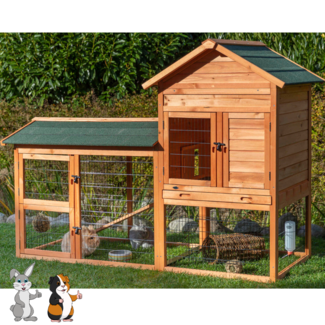
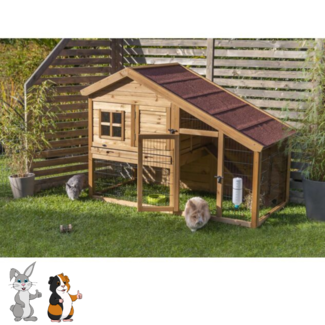
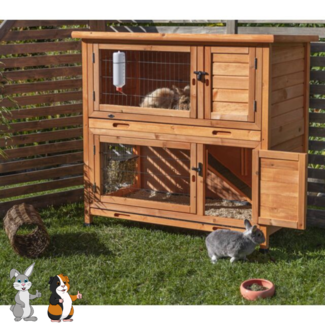
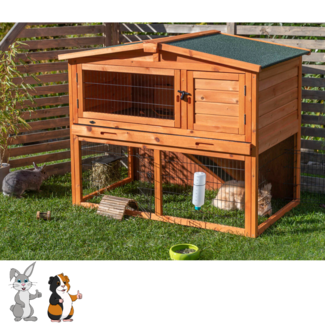
Trixie makes wooden outdoor hutches that are suitable for guinea pigs. The rabbit and guinea pig hutch of 116 × 111 × 65 cm (brown) is low and compact. The large rabbit and guinea pig hutch with run (199 × 146 × 93 cm) combines a sheltered sleeping compartment with a separate run for daily exercise. The Trixie Natura hutch (135 × 115 × 112 cm) has two levels. There are also two Trixie rabbit hutches in the category: 151 × 80 × 107 cm with a run and sloping roof, and 124 × 102 × 78 cm.
Insulated rabbit and guinea pig hutch
The insulated rabbit and guinea pig hutch from Trixie (116 × 113 × 65 cm) is made to better withstand cold and weather. For guinea pigs, insulation is a clear plus, because they cope worse with low temperatures than rabbits. Even an insulated hutch does not replace a frost-free place in severe frost.
Outdoor runs and shelter
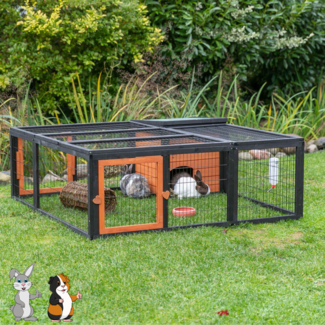
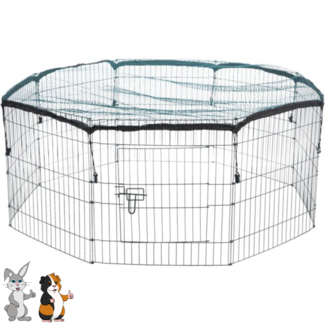
Here you will also find outdoor runs: the Trixie Natura run with cover XL (233 × 79 × 116 cm), a wooden run with house (150 × 53 × 150 cm), a metal run with protective net (ø 150 × 57 cm) and a metal run with roof (114 × 58 × 116 cm). The Trixie Natura small animal house (60 × 47 × 50 cm, grey-green) is an outdoor house for in the run, as a sheltered hiding place from rain or sun.
Why floor space matters more than levels
Many outdoor hutches are designed for rabbits, with a sleeping level upstairs and a living area downstairs. Guinea pigs hardly climb. They do not like using a steep ramp or ladder, and a fall can cause injury. For guinea pigs, it is therefore best to choose a low hutch with a large floor area, or, with a multi-level hutch, mainly use the ground floor and the run. If there is a ramp, make sure it is wide, gently sloping and non-slip.
The larger the enclosure, the better. Guinea pigs should live in at least pairs, and in a group everyone wants to be able to get out of each other's way. A hutch with a run attached, or a separate hutch with a large run next to it, gives your guinea pigs space to walk and graze every day.
The right spot in the garden
Place the hutch in a spot that is in the shade all day or where you can easily create shade. A guinea pig in a hutch in full sun can overheat within a short time; above about 25 °C it already becomes dangerous. Also choose a spot out of the wind and away from places where rainwater collects.
Put the hutch on legs, tiles or a raised base, so the floor does not get damp from the ground. Ideally, turn the open side away from the prevailing wind. That keeps the resting place dry and draught-free.
Predator-proof
Cats, foxes, martens, rats and birds of prey can attack guinea pigs, even during the day. Check that all doors close properly, the mesh is firmly attached and there are no gaps. A run on the grass must have a closed top. Foxes and rats dig; so lay mesh under the floor of a permanent run, or place the run on tiles. At night, guinea pigs belong in the closed sleeping compartment. If you want to replace or add mesh yourself, choose sturdy aviary mesh with small openings; thin chicken wire will not stop a fox or marten.
Summer and winter
In summer, heat is the main thing to watch. On warm days, check several times that there is shade, give extra water and a few more fresh vegetables for moisture. A cooling plate in the hutch can help. If it gets really hot, bring your guinea pigs to a cooler place indoors.
In winter, cold, damp and draughts are the risk. Put a thick layer of straw and hay in the sleeping compartment, check that the water does not freeze and look every day to see whether the floor is dry. Guinea pigs cannot tolerate frost. In frosty weather, put the hutch in a frost-free, well-ventilated shed or garage, or bring your guinea pigs indoors during the coldest months. Do this gradually, so they can get used to the difference in temperature.
How to set up the outdoor hutch
Divide the hutch into a dry sleeping area and a living area. In the sleeping area, lay a thick layer of bedding with straw and hay on top; that is where your guinea pigs will burrow in when it is cold or wet. In the living area, put a hay rack, a heavy food bowl for Zooply Guinea Pig Food and fresh vegetables, and a water bottle that you check daily. Give each guinea pig its own hiding place, preferably with two exits, and put a covered house in the run for when it rains.
From indoors to outdoors
If your guinea pigs move from indoors to outdoors in spring, let them get used to it gradually. Start on mild, dry days with a few hours in the run and build that up over a few weeks. Do the same with fresh grass. Only leave your guinea pigs outside at night once the nights are no longer cold. In autumn, do the reverse: bring them indoors before the first night frost.
Maintaining a wooden outdoor hutch
Remove wet patches in the hutch daily and replace the whole floor covering at least once a week. Regularly check the wood for rot, loose boards and gnawing damage, and the roof for leaks. Only treat the outside of the wood, with a product suitable for animal housing, and let it dry thoroughly before your guinea pigs go back in. That way the hutch will stay dry and safe for years.
Useful combinations
An outdoor hutch is complete with these products:
- Bedding: a thick, absorbent layer as the base of the hutch.
- Hay: Zooply hay to eat and burrow into, especially in winter.
- Houses: extra hiding places in hutch and run.
- Runs: extra space to move on the grass.
- Guinea pig food: Zooply Guinea Pig Food with vitamin C, every day for outdoor guinea pigs too.
- Health: cooling plates for hot summer days.
Frequently asked questions about outdoor hutches for guinea pigs
Can guinea pigs live outdoors all year round?
In the warmer months that works well in a dry, sheltered and predator-proof hutch. In winter, guinea pigs cannot tolerate frost, damp and draughts. In that case, put the hutch in a frost-free, ventilated space or bring your guinea pigs indoors. Even an insulated hutch is not enough in severe frost.
Is a rabbit hutch suitable for guinea pigs?
Sometimes. Pay particular attention to the floor area and the levels. Guinea pigs hardly use high levels and steep ramps. A low hutch with plenty of floor, possibly with a run attached, is a better fit than a tall hutch with a small ground floor.
Can guinea pigs and rabbits share one outdoor hutch?
We advise against it. Rabbits are bigger and stronger, communicate differently and can injure a guinea pig by accident. Their diets also differ: guinea pigs need vitamin C every day. Keep guinea pigs together with other guinea pigs.
How do I keep my guinea pigs cool in an outdoor hutch?
Place the hutch in the shade, make sure air can flow through without causing a draught, and give extra water and fresh vegetables. Put a cooling plate in the hutch. At temperatures above about 25 °C, it is better to bring your guinea pigs to a cool place indoors. A guinea pig that lies flat and breathes fast must be moved somewhere cooler straight away and taken to a vet with guinea pig experience.
What do I put on the floor of an outdoor hutch?
A thick layer of absorbent bedding, with straw on top in the sleeping compartment, especially in the cold months. Always put hay in a hay rack or corner, so your guinea pigs can eat all day. Clean wet patches daily; damp in an outdoor hutch is a risk for guinea pigs.
Outdoor hutches for guinea pigs at Knaagplaza
At Knaagplaza, the webshop of 't Knaagplein, you will find outdoor hutches and runs that let your guinea pigs enjoy the garden safely. Choose a dry, sheltered spot and furnish the hutch with a thick floor layer and unlimited Zooply hay, our own premium brand that we use every day with our own guinea pigs. And keep an eye on the weather: guinea pigs need your help in heat and cold.