










Houses for mice: a safe place to sleep, nest and hide
Mice are small prey animals. In the wild they live in burrows and tunnels, out of sight of predators. A mouse that has nowhere to crawl away stays tense. A mouse that knows where her safe place is, on the other hand, dares to explore, play and eat while you sit nearby.
A house is therefore not decoration, but a basic need. It is the place where your mice sleep during the day, where they build their nest from nesting material and where, in a group, they lie snuggled up close together. In this category you will find houses made of bark wood, birch wood, coconut, hay, ceramic and fabric, from small hideaways to play houses with several levels. What you put inside the house is what completes it: we use the nesting material and bedding from Zooply, our own brand, every day for our own mice.
In short
- ✓ Provide at least one hiding place per mouse plus one extra, so no single mouse can claim a spot.
- ✓ For a group, preferably choose houses with two openings, so a mouse being chased always has a way out.
- ✓ Untreated wood, bark, coconut and hay are safe to gnaw; replace a house if it has been gnawed to pieces or keeps smelling musty.
- ✓ Do not fill the house completely yourself; put nesting material next to it and let your mice build their own nest.
- ✓ Never clean a house completely and scent-free in one go; mice are attached to their own scent.
What will you find in the Houses category?
Hideouts made of bark wood and birch wood
Most of the range consists of bark wood houses from Trixie, such as the Hendrik house (14 × 11 × 11 cm), the Jerrik log cabin (15 × 14 × 13 cm), the Levin train (17 × 14 × 12 cm), the Mette house (18 × 12 × 12 cm) and the Jesper corner house in the small size (21 × 10 × 15 cm). These are compact sizes that suit one or more mice well. You will also find the Birch House made of 100% birch wood with a diameter of 10 cm, and the semicircular rodent houses and the oval bark wood house in 15 and 17 cm. Bark is a natural material that mice are allowed to gnaw on.
Wooden houses with a roof
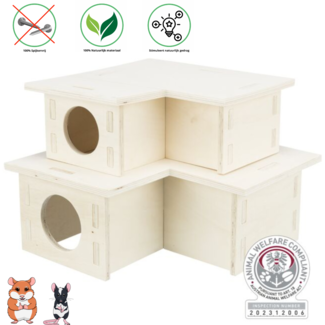
The wooden house with a pitched roof (15 × 11 × 15 cm) and the wooden house with a flat roof (15 × 12 × 15 cm) from Trixie are classic sleeping houses. Mice love to sit on the flat roof on the lookout. With the multi-chamber house with 3 rooms (25 × 10 × 25 cm) made of untreated wood, you provide a burrow system with several spaces.
Play houses with levels and climbing parts
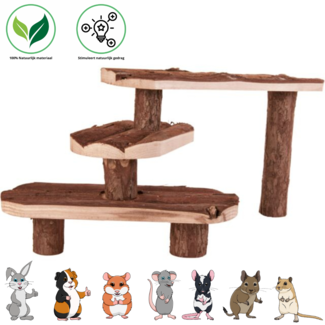
Mice love to climb and are good at it. The Matti play house (castle, 19 × 14 × 15 cm), the Tammo play house with three levels (25 × 30 × 12 cm), the Ida house with two levels and a swing, the Finn house with a little staircase and the Thordis house with two little staircases offer plenty of climbing and hiding space on little floor area. You will also find the labyrinth house, the shelters and the platform with ladder here.
Coconut houses
The coconut with a hole from Happy Pet (12 × 11 × 11 cm) is a sturdy, natural burrow that you lay on the floor or half bury. The Trixie coconut houses with a rope ladder, and the set of two coconut houses with a suspension bridge between them, are hung up. That way you create a sleeping spot up high, which mice reach via the ladder or bridge.
Edible hay house
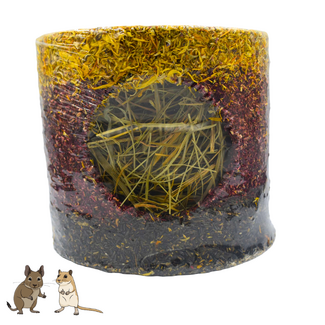
The JR Farm Hay House with carrot (75 grams) is a house made of hay with a roof of carrot. Your mice hide in it and slowly nibble it away. Because it is topped with carrot, treat the roof as a snack and not as daily food.
Soft sleeping houses and ceramic
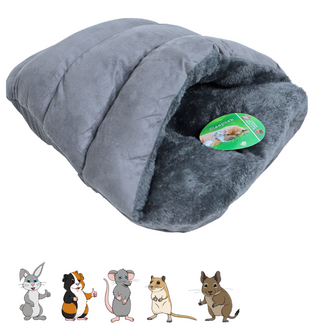
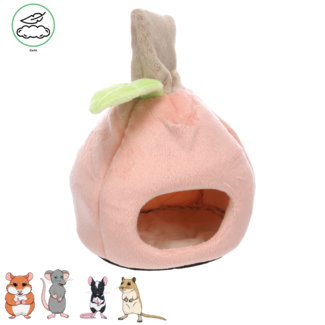
The Flamingo sleeping houses in the shape of a pumpkin, apple or pineapple are made of fabric and feel warm and soft. They are pleasant in a cooler room, but mice gnaw holes in them and sometimes pee in them. So check them often for loose threads and wash them regularly. The ceramic polka-dot hamster house from Zolux, on the other hand, is heavy, cool and easy to wash.
How many houses does a group of mice need?
Female mice like to live in a group and often sleep together in one nest. So you might think one house is enough. It is not, though. Even in a close-knit group there are moments when a mouse wants to be alone for a while, for example after a squabble, while moulting or when a mouse falls ill. If there is only one hiding place, she then has to choose between the group and sitting out in the open. That is why we advise at least one hiding place per mouse, plus one extra on top.
A male mouse usually lives alone, because males often fight among themselves. For him too, several hiding places make the enclosure more interesting. Tunnels and cork also count as hiding places.
What should you look for when choosing a mouse house?
The right size and opening
A mouse feels safest in a house that is cosy: roomy enough for the whole group to lie in, but not so big and open that it feels like a hall. The opening can be small; mice crawl through surprisingly small holes. Many houses in this category are also made for dwarf hamsters and gerbils. That is perfectly fine for mice. The larger models, such as the 25 cm semicircular house and the large Jesper corner house (30 × 13 × 21 cm), are actually intended for Syrian hamsters and rats. You can use them for a large group in a spacious enclosure, or as a 'canopy' under which your mice build their own nest.
Two exits
In a group, a house with two openings is a good idea. A mouse being bothered in the house can then slip away through the other side. With a house that has one entrance, you can solve this by placing enough other hiding places nearby.
Safe material
Mice gnaw everything they come across. So choose untreated wood, bark, coconut or hay without varnish, paint or glue residue. With fabric houses, watch out for loose threads: thin threads can wrap around a little leg and constrict it. If you see fraying, remove the house.
Where do you put the house?
Mice prefer to walk along edges and walls. So put a house in a corner or against the side, and not in the middle of an open area. Choose a dry spot, not directly under the water bottle and not in the corner where your mice usually pee. Connect houses with tunnels and bridges, so your mice have safe routes.
Nesting material: the real furnishing of the house
For a mouse, an empty house is only the beginning. Mice are true nest builders. They drag nesting material inside and build a warm little ball out of it. So put nesting material next to the house and let your mice carry it in themselves.
Only use safe nesting material made of natural fibres, paper or hay, such as Zooply Nesting Material. We advise against synthetic fluff or nesting wool: the long fibres can wrap around little legs. With a thick layer of bedding around it, for example Zooply Cardboard Shreds, Cotton Fibre or Hemp Fibre, your mice can also extend their nest underground.
Cleaning without stress
Mice mark their surroundings with scent. A house that is suddenly completely clean and scent-free feels like a strange place to them. That can cause unrest and even squabbles in the group. So do not clean everything at once. Remove wet and dirty patches regularly, partly refresh the nest and leave some of the old nesting material in place. When cleaning, also remove spoiled food leftovers from the nest, but feel free to leave a stash of dry mouse food.
Clean wood and bark with a brush and warm water, without strong-smelling products, and let them dry thoroughly. If a house keeps smelling musty or has been largely gnawed away, replace it, preferably one house at a time.
Useful combinations
A house works best together with the rest of the set-up. These categories complete your mice's enclosure:
- Nesting material: Zooply Nesting Material for your mice to furnish the house themselves.
- Bedding: a thick layer of Zooply bedding, so your mice can dig around their house.
- Tunnels: safe routes between the hiding places, along the edges of the enclosure.
- Hammocks & hanging bridges: extra sleeping spots up high and bridges to the houses at the top of the enclosure.
- Mouse food: Zooply Mouse Food, of which your mice love to keep a stash in their house.
Frequently asked questions about houses for mice
My mice all sleep in the same house. Are the other houses unnecessary then?
No. A group of females sleeping together is completely normal and a sign that they get on well. The extra houses are there for the moments when things are different for a while, for example when there is unrest in the group or when a mouse is ill and needs rest. So just leave the extra hiding places in place.
Why is there food in the house?
Mice build up a stash in a place that feels safe to them. You can leave dry food there. Do remove pieces of vegetable, fruit or other perishable snacks, because they will go mouldy in the warm nest. Only refill the food bowl once it has been eaten properly empty; that keeps the stash in the nest limited.
Is a fabric sleeping house safe for mice?
A fabric house is soft and warm, but mice gnaw holes in it. Check the house every week for loose threads and fraying; threads can wrap around a little leg. Wash it regularly, because fabric absorbs urine and odour. In an enclosure with keen gnawers, rather choose wood, bark, coconut or ceramic.
How high can I hang a house?
Mice are good climbers, but they can also fall. Do not hang a house too high above a hard floor. Make sure there is a thick layer of bedding underneath and that your mice can reach the house easily via a ladder, bridge or rope.
My mouse hardly ever comes out of her house. Is that normal?
Mice are mainly active in the evening and at night and sleep a lot during the day. A new mouse also needs a few days to settle in. If you notice that a mouse no longer comes out in the evening either, eats poorly, loses weight or breathes with difficulty, contact a vet with knowledge of small rodents.
Buying mouse houses at Knaagplaza
At Knaagplaza, the webshop of 't Knaagplein, you choose a house that suits your mice and their enclosure. Combine it with Zooply nesting material and Zooply bedding, our own premium brand that we use every day for our own animals in the shop and breeding facility. That way you give your mice a safe place to sleep and an enclosure in which they dare to explore.