








Accessories for degus: everything to furnish the enclosure
An empty enclosure is a boring place for a degu. Degus are clever, curious, day-active animals that naturally dig, climb, run, gnaw and forage. With the right accessories, you give all that behaviour a place. You create routes up high, hiding places to settle down in, tunnels to dart through and corners where there is something to discover. A well-furnished enclosure makes for active degus and, just as importantly, for calm in the group.
In this category you will find six subcategories: toys, hideouts, tunnels, running wheels, hammocks and hanging bridges, and everything for degu scaping. The latter also includes the scaping products from Zooply, our own brand, such as Zooply Forest Mix, Sprinkle Flowers, Sprinkle Herbs, Millet Spray pieces and Zooply Stone Moss. Whatever you choose, one common thread applies to degus: they gnaw wood and plastic to pieces, and they should not be given sugar.
At a glance
- ✓ Mainly choose accessories made of untreated natural material such as willow, cork, bark wood and grapevine wood.
- ✓ Degus quickly gnaw plastic and fabric to pieces; check such items often or only use them under supervision.
- ✓ Provide at least one hiding place per degu and preferably one extra, spread across the enclosure.
- ✓ Create several routes between the levels, so a dominant degu can't block anything.
- ✓ Everything you hide or scatter is sugar-free: no fruit, carrot or sweet snacks.
What will you find in the Accessories category for degus?
Toys
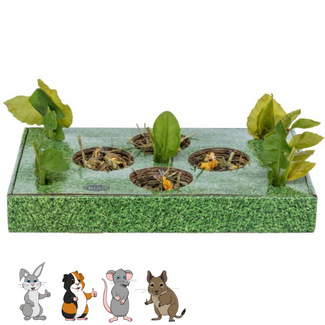
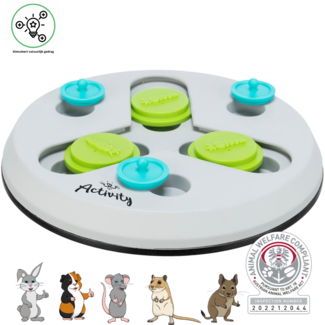
Under Toys you will find chew toys made of willow, straw and bamboo, such as the Trixie Willow Ball and wooden chew dumbbells, nibble hangers from Flamingo, climbing branches made of grapevine wood and foraging and puzzle games such as the Snack board and the Snack cups. Fill foraging games with part of the daily portion of Zooply Degu Food or with sugar-free herbs, so your degu has to search without getting anything extra.
Hideouts
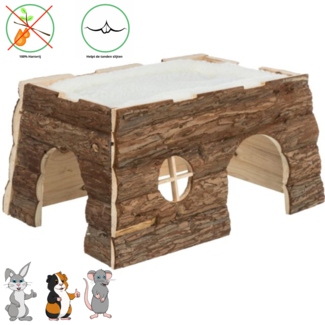
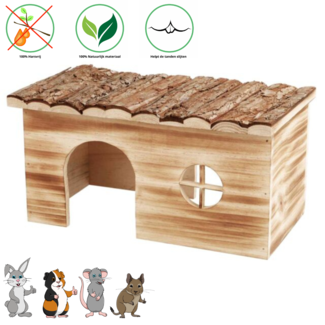
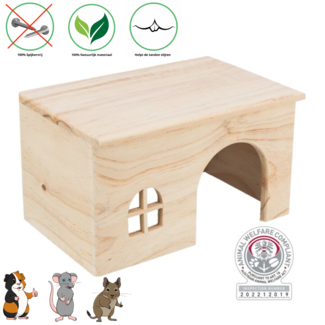
Under Hideouts you will find hideouts made of bark wood, flamed wood and willow in many sizes, from compact to a roomy group house. Think of the Hanna house, the Jerrik log cabin and the Grete house with two entrances. Two entrances are handy with degus: nobody gets trapped. A roomy sleeping house in which the whole group fits together is the basis.
Tunnels
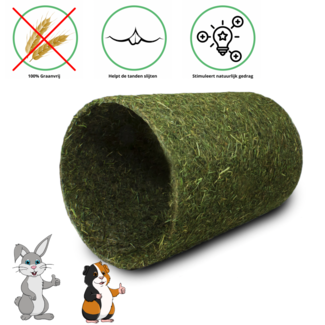
Under Tunnels you will find cork tunnels, willow tunnels, flexible wooden bridges and hay tunnels. In the wild, degus live in tunnel systems; with a cork tunnel half buried in the bedding, you give them a tunnel of their own. Tunnels are also safe routes between hideout, feeding spot and sand bath.
Running wheels
Under Running wheels you can read what a running wheel for degus needs: a diameter of at least about 30 cm, a solid running surface and a sturdy placement. In the current range, the Trixie plastic wheel of ø 33 cm is the size that suits an adult degu.
Hammocks & hanging bridges
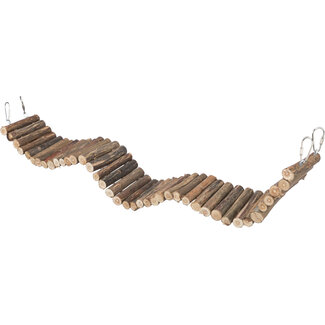
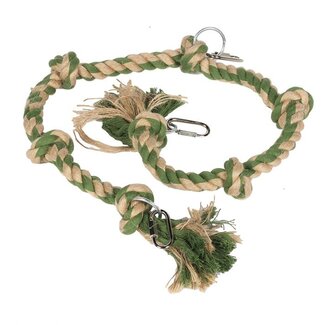
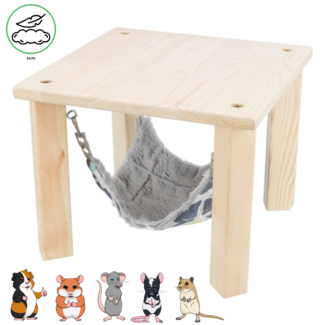
Under Hammocks & hanging bridges you will find hanging bridges and ladders made of bark wood, a hanging platform, climbing ropes and nets, and fabric hammocks. With these, you make the upper part of the enclosure accessible and provide resting places up high. Check fabric and rope regularly for fraying.
Degu scaping
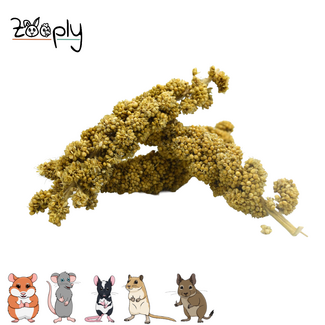
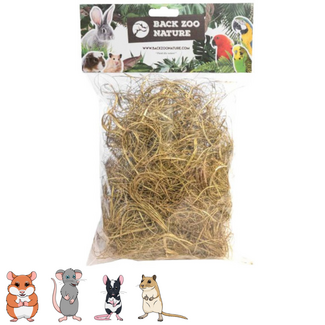
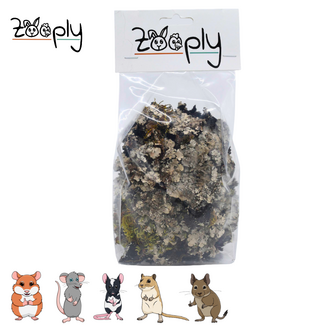
Under Degu scaping you will find everything to furnish the enclosure as a natural landscape: Zooply Forest Mix with various leaves, Zooply Sprinkle Flowers and Sprinkle Herbs to scatter through the top layer, Zooply Millet Spray pieces, Zooply Stone Moss and Rodent Moss, plus grapevine branches, coconuts, pine cones, moss and natural fibres. For degus, choose the foraging mixes without fruit.
How to build a complete degu enclosure
Start with the basics and work from the bottom up. On the floor goes a thick, low-dust digging layer with a few cork or willow tunnels in it. On top of that, place a roomy sleeping house and one or two extra hiding places. Then create routes upwards: a grapevine branch leaning against a platform, a hanging bridge between two levels, a ladder to a hanging platform. At the top, provide resting places, such as a platform or a hammock. A large running wheel, a fixed sand bath spot and a hay rack complete the picture. Finally, add toys and scaping materials, so there is something to do and find every day.
Accessories and the group
Degus live at least in pairs, preferably in a small same-sex group. In a group there is always a pecking order. If there is only one good hideout, one route upwards or one toy, the dominant degu can claim it. More choice brings calm. So spread hiding places, routes and toys across the whole enclosure and across different heights. That way every degu can find its own spot and they can avoid each other when needed.
Safe materials and maintenance
Degus gnaw at everything. With wood, willow, cork and straw that is not a problem; it is actually the idea, because their teeth keep growing throughout their life. Plastic and fabric are a different story: bits of plastic, loose threads and frayed edges can be dangerous. Check accessories weekly and replace them if sharp edges, loose parts, holes or fraying appear. Don't change the whole enclosure in one go. Degus like fixed routes; better to swap one item at a time.
What is best left out of a degu enclosure
Not everything sold in a small animal shop suits degus. A few things to look out for when choosing:
- Accessories with carrot, fruit or other sweet parts. There are edible hideouts and tunnels with a roof or filling of carrot or fruit. Degus are prone to diabetes; choose a plain hay tunnel or a tunnel made of cork or willow.
- Plastic toys and hideouts. Degus gnaw plastic to pieces. A plastic hideout or toy can develop sharp edges and shed bits.
- Synthetic nesting fluff or cotton wool. The threads can wrap around feet or toes. Use natural nesting material, hay or Zooply Nesting Material.
- Running wheels that are too small. Wheels for dwarf hamsters, mice or gerbils are too small; a degu needs a diameter of at least about 30 cm.
- Painted or varnished items. Preferably choose natural material in its own colour, so you know what your degu is swallowing when it gnaws through it.
Young and older degus
Young degus are extra lively and curious. They get a lot out of climbing routes, tunnels and foraging games, but they are also smaller and can get through larger openings or gaps. With young animals, check that bars, hanging bridges and nets have no holes they can get stuck in. Older degus often become a little less agile. In that case, make routes flatter, with smaller steps between the levels, and make sure there is also a nice sleeping spot low down in the enclosure. A hideout with two entrances on the floor and a hanging platform with a gently sloping bridge up to it make the enclosure accessible at every age.
Useful combinations
Accessories work best together with the rest of the care:
- Bedding: a thick digging layer of Zooply Hemp Fibre, Wood Fibre or Cotton Fibre.
- Gnawing wood: Zooply Apple Branches and Dandelion Roots as extra gnawing material.
- Hay: unlimited Zooply hay, the basis of every degu menu.
- Sand & sand baths: Zooply Bathing Sand for coat care.
- Cages: a spacious, gnaw-resistant enclosure to fit everything into.
Frequently asked questions about accessories for degus
What accessories does a degu need at a minimum?
At a minimum, a thick digging layer, a roomy sleeping house and extra hiding places, routes upwards, a running wheel of at least about 30 cm, a sand bath, a hay rack and gnawing material. Toys, tunnels and scaping materials then make the enclosure truly interesting.
How many hiding places do degus need?
At least one per degu, and preferably one extra. These can be hideouts, but also tunnels, shelters or a coconut. Make sure there is one sleeping spot in which the whole group fits together, and spread the other hiding places across the enclosure.
Are degus allowed to gnaw on the accessories?
On natural material such as wood, willow, cork and straw: yes, it is actually good for their teeth. On plastic and fabric, preferably not. Check those items often and remove them if they get damaged. Always provide enough other gnawing material, such as gnawing wood and hay.
How do I prevent squabbles over accessories?
By giving more choice. Several hiding places, several routes upwards, two feeding spots and toys in different places. Avoid dead-end corners and narrow passages where one degu can corner another.
How often should I change the setup?
Not too often. Degus like familiarity. Swap one item now and then to keep things interesting, but leave the sleeping house, the sand bath, the hay spot and the main routes where they are.
Which Zooply products suit the setup?
For furnishing, these are mainly the scaping products: Zooply Forest Mix with various leaves, Sprinkle Flowers and Sprinkle Herbs without fruit, Millet Spray pieces, Zooply Stone Moss and Rodent Moss. Also Zooply bedding for the digging layer, Zooply Bathing Sand and Zooply hay.
Are edible hideouts and tunnels suitable for degus?
A tunnel or hideout made of plain hay is fine, as long as it contains no carrot, fruit, honey or other sweet parts. Always read the ingredients. If in doubt, choose a tunnel made of cork or willow with some loose Zooply hay or sugar-free herbs inside; then you know exactly what your degus are eating.
Buying accessories for degus at Knaagplaza
At Knaagplaza, the webshop of 't Knaagplein, you will find everything to furnish your degus' enclosure, from tunnels and hideouts to hanging bridges and scaping materials. Zooply is our own premium brand, which we use every day for our own animals in the shop and breeding facility. That way you turn the enclosure into a place where your degus can be active all day long.