



Dried herbs for hamsters: scent, variety and foraging
Dried herbs, flowers and vegetables bring scent and variety to your hamster's enclosure. A hamster's sense of smell is much better than its eyesight. A pinch of chamomile or nettle in the bedding immediately sets it sniffing and searching. You use herbs as a natural addition to hamster food: mixed into the daily portion, hidden away or as a small treat from your hand.
This category consists almost entirely of Zooply, our own premium brand. Zooply specialises in herbs and snacks, because that is where things most often go wrong for many animals. Everything comes in resealable bags and we use it every day for the hamsters in our shop and breeding facility. Here you will find single herbs and flowers, dried vegetables, herb mixes, seeds and flakes, dried insects and also dried fruit. Not everything suits every hamster; below you can read what to choose for a Syrian hamster and what to choose for a dwarf hamster.
At a glance
- ✓ Herbs are an addition to hamster food: give a pinch, not a bowlful.
- ✓ Mix them into the food or hide them in the bedding, so your hamster has to search.
- ✓ Alternate between types for variety and to discover what your hamster likes best.
- ✓ Give dwarf hamsters only sugar-free herbs, flowers, vegetables and insects, no fruit.
- ✓ Store herbs dry, dark and tightly closed; that way the scent lasts longest.
What will you find in the Dried Herbs category?
Single herbs and leaves from Zooply
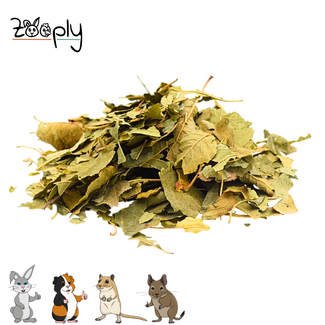
With one herb at a time, you can find out exactly what your hamster likes. You can choose from, among others, Zooply Nettle Leaf (firm and coarse, with a pronounced scent), Dandelion Leaf (light and fresh), Birch Leaf (fine and slightly bitter), Parsley Stalks, Alfalfa, Dill Stalks and Echinacea. According to the product information they are 100% dried and sugar-free. For a hamster, the large bags last a long time: you only need a tiny amount each time.
Dried flowers from Zooply
Flowers are light, colourful and fragrant. You will find Zooply Chamomile (150 and 600 grams), Blue Cornflower, Marigold and Marigold Petals, Rosebuds, Rose Petals and Sunflower Petals. A few petals in the bedding make the enclosure prettier and give your hamster something to search for. If you want several flowers in one go, the Zooply Flower Mix and the Zooply Meadow Flower Mix (marigold, chamomile, rose, cornflower and parsley) are handy.
Dried vegetables from Zooply
Dried vegetables are crunchy and have a distinct scent. This category includes Zooply Bell Pepper, Pumpkin, Beetroot, Parsnip, Spinach, Cucumber Slices, Carrot Slices and Carrot Pieces. The mixes Zooply Vegetable Mix, Salad Bar, Dutch Stew, Poke Bowl with Vegetables and Grandma's Vegetable Soup also combine vegetables with herbs, and sometimes with peas, rice or potato. A small piece of vegetable is a nice reward for a Syrian hamster. For a dwarf hamster, stick to a very small piece and preferably choose herbs and leaves.
Seeds, kernels and flakes
Hamsters are true seed eaters. Zooply Sunflower Seeds, Pumpkin Seeds and Peanuts in Shell are popular, but also fatty. So give them sparingly, for example as a reward when taming. The peanuts in their shells also give your hamster work to do: crack first, then eat. You will also find Zooply Corn Flakes, Wheat Flakes, Pea Flakes, Puffed Grains, Linseed Chunks, the Zooply Flake Mix and Carob. Carob is naturally sweet and therefore not suitable for dwarf hamsters.
Dried insects
Zooply's sugar-free insects are here too: Mealworms (80 grams), Crickets, Grasshoppers, Silkworms and the Zooply Insect Mix (100 grams) with mealworms, silkworms, grasshoppers and crickets. Hamsters also eat insects in the wild. A few at a time, a few times a week, complements the main food with animal protein.
Dried fruit and seasonal mixes
This category also contains dried fruit, such as Zooply Apple Cubes, Banana Slices, Cranberry, Pineapple, Papaya, Pear, Raspberry, Strawberry, Rowan Berries, Rosehip and Coconut, and fruity mixes. The seasonal mixes (Spring Mix, Summer Mix, Autumn Mix and Winter Mix) and the Herb Dream also contain fruit. Fruit naturally contains sugar. For a Syrian hamster, a small piece very occasionally is fine. Do not give a dwarf hamster fruit, nor any mix that contains fruit.
Which herbs suit a dwarf hamster?
Dwarf hamsters, especially Campbell's and Russian dwarf hamsters, are sensitive to sugar. So for them, choose products that are sugar-free and contain no fruit. Good choices are the single herbs and leaves (nettle, dandelion, birch leaf, parsley, dill), the flowers (chamomile, cornflower, marigold, rose) and the Zooply Meadow Flower Mix. The dried insects are sugar-free too. With dried vegetables such as parsnip, carrot and pumpkin, keep the portion extra small, because these are naturally a little sweet as well.
With a mix, always read the ingredients on the product page. If you see apple, banana, raisins, pineapple, cranberry or carob listed, that mix is not suitable for a dwarf hamster.
How do you give dried herbs to your hamster?
The most fun way is to let it forage. In the evening, scatter a pinch of herbs or flowers through the bedding. Your hamster smells them and starts digging and sniffing. You can also mix a little into the daily portion of hamster food. That makes the food more interesting without giving extra food. A third way is to tuck a few stalks or leaves between cork, branches or into a tunnel.
Start with one type and a small amount. That way you can see what your hamster likes and whether it tolerates it well. After that you can alternate. By giving a different herb every few days, things stay exciting. Never put the herbs in the nest while your hamster is sleeping. Leave the nest alone as much as possible.
How many herbs do you give?
For a hamster, a small pinch is enough: think of what you can pick up between your thumb and two fingers. For a dwarf hamster, even less. It is about scent, variety and foraging, not an extra meal. If your hamster immediately drags everything off to its store, you are probably giving too much. Then halve the amount. If your hamster is already getting snacks, give fewer herbs that day, so the main food remains the foundation.
Herbs and the hamster enclosure
Dried flowers and herbs fit well into a naturally furnished enclosure. With a deep layer of bedding, cork, branches, hiding places and some flowers mixed in, you create an environment where your hamster can dig, climb and gather. Many hamsters also use dry flowers and leaves as nesting material. That way a pinch of herbs serves a double purpose.
Storing dried herbs properly
Close the resealable bag properly straight after use and store it dry, cool and dark. Light and moisture make scent and colour fade faster. If a herb smells musty or feels damp, do not use it any more. With a hamster, a bag lasts a long time. So it is better to choose a few types your hamster really likes than to have lots of bags open at once.
Useful combinations
Herbs make your hamster's menu and enclosure more complete. Combine them with:
- Hamster food: Zooply Syrian Hamster Food or Dwarf Hamster Food as the daily foundation, with herbs mixed in.
- Bedding: a deep layer to hide herbs in.
- Dried flowers & grasses: to decorate the enclosure naturally and provide foraging.
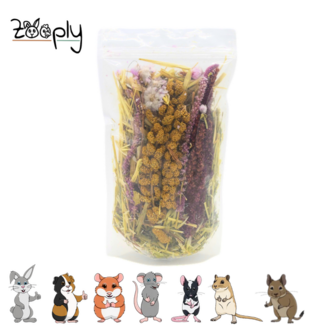
- Snacks: Zooply Fields and millet sprays for extra gnawing and foraging fun.
- Hamster scaping: cork, branches and hiding places to tuck herbs between.
Frequently asked questions about dried herbs for hamsters
Can my hamster have herbs every day?
Yes, a small pinch of sugar-free herbs or flowers is fine daily, as long as your hamster keeps eating its main food well. Do not give fruit and fatty seeds daily. Preferably alternate between types, so things stay interesting and your hamster does not develop a preference for just one thing.
Why is there fruit in the herbs category?
This category brings together all of Zooply's dried natural products: herbs, flowers, vegetables, seeds, insects and fruit. For a Syrian hamster, fruit is a very occasional treat. For a dwarf hamster, skip it because of the sugar.
My hamster does not eat the herbs. What now?
Not every hamster likes every herb. Try a different type, for example a flower instead of a leaf. Scatter it through the bedding instead of putting it in the food bowl. Sometimes a hamster mainly uses herbs for its nest. That is fine too: it is then enrichment rather than food.
Are sunflower seeds bad for a hamster?
No, but they are fatty. A few seeds as a reward is fine, a handful a day is not. Especially with a hamster that moves little or gains weight easily, really keep seeds and peanuts as an exception. The hamster food itself already contains seeds.
Can I give the rabbit herbs to my hamster too?
Many Zooply herbs are suitable for rabbits, guinea pigs and rodents, so for hamsters too. The difference is in the amount: where a rabbit gets a handful, a hamster gets a pinch. With a dwarf hamster, pay extra attention to sugar.
When should I go to the vet?
Herbs are food and enrichment, not medicine. If your hamster is eating poorly, losing weight, lethargic or has diarrhoea, a herb will not help. In that case, contact a vet with experience of rodents.
Buying dried herbs at Knaagplaza
At Knaagplaza, the webshop of 't Knaagplein, you will find a large range of dried herbs, flowers and vegetables from Zooply, our own premium brand. We use them every day for our own hamsters. Give a pinch, let your hamster search and switch types regularly. That way every evening becomes a small voyage of discovery.