





Nesting material for gerbils: a warm, soft nest chamber underground
Gerbils sleep in a nest chamber deep within their tunnel system. There they often lie close together with the whole group. They build a nest like that themselves: they gather soft material, gnaw it into pieces, drag it through their tunnels and shape it into a ball. With good nesting material, you give them the building blocks for a warm, dry sleeping place. At the same time, the gathering and building itself is already enrichment.
In this category you will find Zooply Nesting Material, from our own premium brand, which we use every day for the rodents in our shop and breeding facility. There is also natural kapok from Trixie. The range is deliberately small: better a few safe options than lots of doubtful ones.
At a glance
- ✓ Choose safe nesting material made of natural fibres, paper or hay; no synthetic cotton wool or nesting fluff.
- ✓ Put it down loose in the enclosure and let your gerbils build themselves; don't make the nest for them.
- ✓ A handful is enough to start with; top up when the nest gets smaller.
- ✓ Leave the nest in place as much as possible when cleaning; only remove dirty or wet material.
- ✓ Combine nesting material with hay and a thick digging layer of at least about 20 cm.
What will you find in the Nesting materials category?
Zooply Nesting Material
Zooply Nesting Material is soft, warm material with which your gerbils can build a nest themselves. According to the product information, it is soft enough not to constrict or tangle, and airy enough to drag around easily and fold into a nest. You can choose between 3 litres, handy for a few gerbils, or 10 litres for those with several enclosures or who top up more often. According to the packaging, one or two handfuls are enough to build a nest. Put it down loose and let your gerbils work it in themselves.
Trixie kapok nesting material
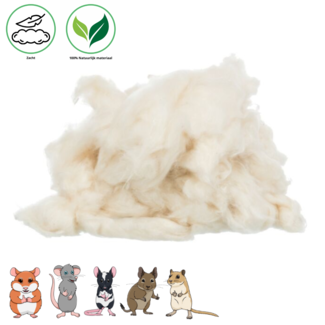
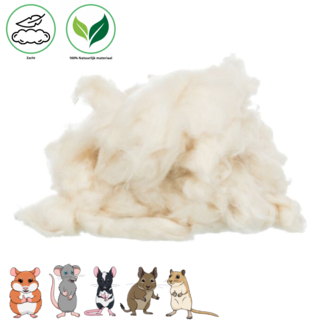
Kapok is a natural plant fibre from the seed fluff of the kapok tree. The kapok from Trixie is cream-coloured and available in 40 grams and 100 grams. According to the product information, it is intended for hamsters, gerbils, mice and rats. Kapok is light and soft; pull off a small tuft and place it by the entrance of a tunnel or hideout.
How do gerbils build their nest?
In the wild, gerbils dig a tunnel system with one or more nest chambers, often quite a way underground. It is quiet and dark there, and the temperature is stable. In a gerbilarium they do the same, provided the digging layer is deep enough. They choose a spot themselves, usually in a corner or under a buried hideout or piece of cork, and gather everything soft and usable there.
You will then see them running back and forth with a tuft of material in their mouth. They gnaw it into smaller pieces and push it into shape with their front paws. That is exactly the behaviour you want to see. That is why it is better to offer nesting material loose than to make a little nest yourself.
Choosing safe nesting material
Not every soft material is suitable. Synthetic cotton wool and nesting fluff made of synthetic fibres can form long, strong threads. These can wrap around feet or toes and constrict them, and swallowed fibres don't digest. So always choose nesting material made of natural fibres, paper, hay or hemp. Gerbils gnaw everything into pieces, so the material must also be safe if they swallow a little of it.
Scents and dyes aren't needed either. Gerbils live with their noses in the nest. Neutral, dry material is the most pleasant.
Where and how much nesting material should you give?
Put a handful of nesting material in a quiet spot, for example by the entrance of a hideout or next to a tunnel your gerbils have already dug. They will find it quickly and take it inside. If you put down more than necessary, the rest will just lie there or get worked into a tunnel somewhere else. That's not a problem, but it is a waste of material.
Top up when you see the nest getting smaller or when your gerbils are noticeably busy gathering. In colder periods they often build a thicker nest. Always place the enclosure out of draughts, out of full sun and not next to the radiator. A gerbil that is too warm will actually push the nest apart.
Nesting material when setting up a new enclosure
If you are setting up a new gerbilarium, first make a deep digging layer with hay mixed through it. Half bury a hideout or a piece of cork, so there is already a sheltered hollow. Put a handful of nesting material by the entrance and let your gerbils find their way calmly in the first few days. They will start digging and gathering almost immediately. After a few days you will see where they have chosen their nest chamber. From that moment, you also know which spot is best left alone when cleaning.
Recognising a good nest
A good nest is a thick, round ball of finely gnawed material, dry and without a musty smell. Often you see little of it, because it is underground or in a hideout. You notice it mainly from their behaviour: gerbils that sleep calmly together, come out actively and are not constantly digging restlessly usually feel good. If a gerbil often sleeps apart from the group, check whether there is tension and whether there is enough space and enough hiding places.
Combining nesting material with hay
Gerbils like to use several materials at the same time. Hay gives the nest firmness and structure, while soft nesting material makes it warm and comfortable inside. So, alongside nesting material, regularly give a tuft of Zooply hay too. Mixed into the digging layer, hay also makes sure the tunnels to the nest chamber stay up. Gerbils also love to shred and work in pieces of unbleached cardboard and unprinted kitchen paper.
The nest and cleaning
The nest is the safest place in the enclosure for gerbils. Don't remove it completely when cleaning. Gerbils orient themselves by smell, and a completely new nest can cause unrest in the group. Only remove material that is dirty, wet or musty, and leave the rest. Gerbils usually don't pee in their nest but in a fixed spot somewhere else, so the nest stays clean for a long time.
Gerbils sometimes build up a small store of food in or next to the nest. You can leave dry food there; remove fresh food, such as vegetables, before it goes off.
Nesting material and young gerbils
If you are expecting young gerbils, you will often see the mother gathering extra nesting material. Make sure there is enough material in good time, so she can calmly build a good nest. After the birth, leave the nest alone. Don't look in the nest and clean the enclosure around the nest site as little as possible for the first few weeks. Only top up what is needed, and do so at a distance from the nest.
Useful combinations
Nesting material is one part of a well-furnished gerbil enclosure. These categories go with it:
- Bedding: a deep Zooply digging layer in which your gerbils can make their nest chamber.
- Hay: Zooply hay as sturdy building material alongside soft nesting material.
- Hideouts: a buried hideout is often the favourite spot for the nest.
- Dried flowers & grasses: extra natural material to drag around and build with.
Frequently asked questions about nesting material for gerbils
Do gerbils need nesting material if they already have hay?
Hay alone is often usable, but soft nesting material makes the nest warmer and more comfortable. That is especially nice in colder periods and for groups that sleep together. Gathering and working in different materials also gives them extra things to do.
Why shouldn't I use ordinary cotton wool?
Cotton wool and synthetic nesting fluff can form long, strong threads that wrap around little feet and constrict them. Swallowed synthetic fibres also cannot be digested. So only use nesting material that is specially intended for rodents and made of natural fibres, paper, hay or hemp.
My gerbils drag the nesting material everywhere. Is that normal?
Yes. Gerbils sometimes make several small nests or line their tunnels as well. They also move their nest now and then. As long as they have a fixed sleeping spot where they lie together, there is nothing wrong.
How often should I give new nesting material?
That depends on your group and the season. Check now and then whether the nest is still a nice, thick ball. If it gets smaller or part of it has become dirty, give a new handful. During the weekly check, only remove what is damp or dirty.
My gerbils aren't building a nest. What can I do?
Usually the digging layer is too thin or there is no sheltered spot. Make the layer thicker, mix hay into it and half bury a hideout or piece of cork. Put the nesting material close by. Within a few days, most gerbils will start building after all.
Can I combine kapok and Zooply Nesting Material?
Yes, that works fine. Many gerbils actually find variety in material interesting. Start with a little of each and see which material your gerbils use most.
Nesting material for gerbils at Knaagplaza
At Knaagplaza, the webshop of 't Knaagplein, you will find safe nesting material for gerbils. Zooply is our own premium brand, which we use every day for our own animals. Give your gerbils a deep digging layer, some hay and a handful of nesting material, and they will build the warm nest chamber in which they sleep together themselves.