





Nesting material for rats: building a warm, soft nest themselves
Rats sleep for most of the day, huddled together, in a hammock, a house or a corner they have furnished themselves. They are keen builders too. Anything soft that can be dragged along goes to the sleeping spot: bits of paper, hay, a leaf, or a piece of your tea towel if you are not paying attention. With good nesting material you give them the chance to act out that building behaviour and make a nest that is warm, dry and exactly to their liking.
In this category you will find the soft Zooply Nesting Material from our own premium brand, in 3 and 10 litres, and natural kapok from Trixie in various packs. We use the Zooply Nesting Material ourselves in our shop and breeding facility.
In short
- ✓ Put nesting material loose in or next to the sleeping spot and let your rats build for themselves.
- ✓ Choose safe material made of natural fibres or nesting material made especially for rodents.
- ✓ Do not use synthetic cotton wool or nesting fluff: long threads can constrict feet.
- ✓ Replace nesting material as soon as it is damp or dirty.
- ✓ Rats sleep together: one big nest is often the favourite, but always offer several sleeping spots.
What will you find in the Nesting materials category?
Zooply Nesting Material
Zooply Nesting Material is soft, warm material with which your rats build their own nest. According to the product information it is soft enough not to constrict or entangle and airy enough to be easily dragged around and folded. It contains no harmful additives and is safe to chew. You can choose a bag of 3 litres for a pair or to try it out, or 10 litres if you have a group of rats or replace it often. The product information mentions one to two handfuls at a time as a guideline for small rodents. For a group of rats in a large enclosure it can be a bit more, divided over the sleeping spots.
Trixie Nesting Material kapok
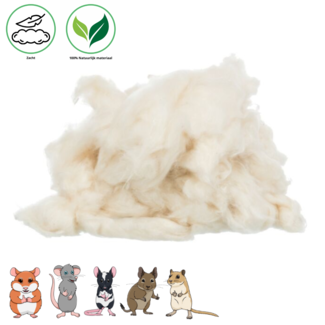
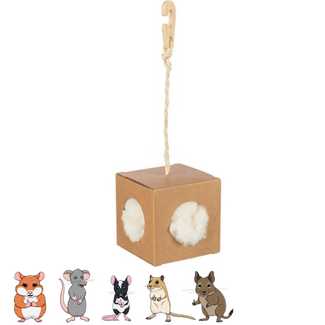
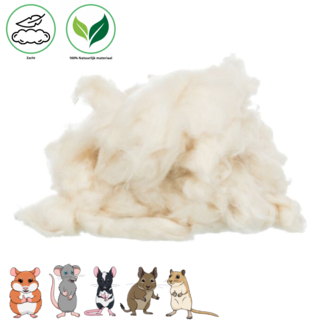
Kapok is a natural fibre from the fruit of the kapok tree. It feels light and cotton-like and is springy, creating an airy, warm nest. The Trixie kapok comes in bags of 40 grams and 100 grams, in a cream colour. There is also Kapok in a box (9 × 9 × 9 cm). According to the product information this box is intended for hamsters, gerbils and mice; for rats the loose bags are more practical, because you can take more material out at a time.
Why nesting material is important for rats
A nest of their own gives rats a place where they feel safe. Rats are prey animals by nature and prefer to sleep sheltered and close together. In a nest they can burrow in and keep warm. That is especially nice for young rats, older rats and rats that are a bit thinner or not in such good shape.
Nest building is also a form of enrichment in itself. Rats collect material, drag it around the enclosure, tear it into pieces and arrange it until they are satisfied. That keeps them busy and suits their natural behaviour. You will see that they regularly move or rebuild their nest; that is normal.
Which nesting material is safe?
Safe nesting material is made of natural fibres or is made especially for rodents. Think of Zooply Nesting Material, kapok, unscented paper, kitchen roll without print or scent, and hay. The soft bedding in your enclosure, such as Zooply Cotton Fibre, is also often used by rats to line a nest.
Do not use synthetic cotton wool or nesting fluff. Long, strong synthetic threads can get wrapped around feet and toes and constrict them, and if a rat swallows them, they are not digested. Also avoid scented paper, newspaper with a lot of ink and fabric with loose threads sticking out. Rats have sensitive airways, so always choose material that produces as little dust as possible.
How to offer nesting material
Put a handful of nesting material in or next to the house, the hammock or another sleeping spot. You do not need to arrange it yourself: rats prefer to build their own nest and will drag the material to the place they like best anyway. Now and then, put a handful on another level or hide it in a cardboard box, so they have to work for it first.
Rats often all sleep together in one nest, but in a group it is wise to always offer more than one sleeping spot. That way a rat that wants some rest can withdraw. So offer nesting material in several places, for example in a house on the floor and in a hammock higher up.
Nesting material throughout the year
Rats are usually kept indoors, but even indoors the temperature varies with the season. In winter, in a cold room or with draughts, you will see rats collecting more nesting material and building a thicker, denser nest. Give them some extra then. In summer, in warm weather, they often use less and prefer to lie stretched out loosely in a hammock. Feel free to remove part of the nesting material then, so the nest does not get too warm. Always keep the enclosure free from draughts and not in full sun or next to the radiator.
What the nest tells you
The nest is also a handy indicator of how your rats are doing. Healthy rats usually sleep together, build actively and rebuild their nest regularly. If you notice that one rat keeps lying apart, no longer helps build, sleeps noticeably more or sits in a corner with a hunched back and fluffed-up coat, take a closer look. Pay attention to eating, weight and breathing. If you hear squeaking or rattling, the rat is eating less or is lethargic, contact a vet with rat experience. A nest can improve comfort, but it does not replace treatment.
If, on the other hand, you see that the whole nest is in a different place from yesterday, there is nothing wrong. Rats move their sleeping spot regularly, for example if a place is too warm, too light or too busy.
Keeping it clean and replacing it
Rats usually keep their nest reasonably clean, but urine, food and dirt still end up in it. Rats also like to hide food in their nest. So during your daily round, take a quick look in the sleeping spots. Remove wet, dirty or musty-smelling parts and take out spoiled food leftovers. Top up with a little fresh nesting material.
Replace the whole nest when it is no longer fresh, usually at the same time as replacing the bedding. During the big clean-out, you can leave behind a small amount of clean, dry old nesting material. Then the new nest immediately smells familiar and your rats settle down more quickly.
Useful combinations
Nesting material is at its best in an enclosure with good sleeping spots and a dry floor:
- Houses: a sheltered sleeping spot to build the nest in.
- Hammocks & Hanging bridges: the favourite sleeping spot of many rats, extra cosy with a handful of nesting material.
- Bedding: low-dust Zooply bedding that your rats also use as nest filling.
- Dried flowers and grasses: Zooply grasses and moss as natural building material.
Frequently asked questions about nesting material for rats
Do rats need nesting material if they have a hammock?
A hammock is a nice sleeping spot, but rats also like to build for themselves. Many rats drag nesting material into the hammock, or use it to make a separate nest in a house. By offering nesting material, you let them choose for themselves. A built nest is especially pleasant in the cold, for older rats and for young rats.
Is kapok safe for rats?
Kapok is a natural fibre and has long been used as nesting material for small rodents. The product information for the Trixie kapok mentions rats, among others. Give it in small handfuls and, as with any nesting material, check that it stays dry and clean. If in doubt, choose Zooply Nesting Material, which according to the product information does not constrict or entangle and is safe to chew.
Can I use kitchen roll or toilet paper?
Unscented, unprinted kitchen roll or toilet paper is safe and rats love to shred it. It does absorb a lot of moisture and gets dirty quickly. So combine it with Zooply Nesting Material or kapok and replace it regularly.
My rats drag all the nesting material to one spot. Is that OK?
Yes, that is completely normal. Rats like to sleep together and choose a regular favourite spot. Still keep putting a small amount of nesting material in a second spot, so there is always an alternative if a rat wants to lie alone for a while or if it is warm.
How much nesting material do I need for a group of rats?
Start with a generous handful per sleeping spot and see what your rats do with it. If everything has been worked into the nest within a day and you still see them searching for more, give a little extra. If a lot is left lying loose in the enclosure, it is enough. For a group, the 10-litre bag of Zooply Nesting Material is the most practical, because it lasts you longer.
How often should I replace the nesting material?
Remove wet or dirty patches daily and replace the whole nest when it no longer smells fresh, usually together with the bedding. While doing so, also look for hidden food, especially if it is fresh food.
Nesting material for rats at Knaagplaza
At Knaagplaza, the webshop of 't Knaagplein, you will find safe nesting material with which your rats can build a warm nest themselves. Our own premium brand Zooply is also in the nests of our own animals. Put Zooply Nesting Material in a house or hammock, combine it with low-dust Zooply bedding, and your rats have a sleeping spot they love to snuggle into.